
B. Works on Paper & Early Sculpture (Click here)
C. Objets Poétiques (Click here)
D. Print Portfolios (Click here)

1. Chess Set Drawings (Click here)
2. Architectural Drawings (Click here)
3. Drawing Portfolios (Click here)
Section 1. PUBLICATIONS of CHESS SET DRAWINGS
Click here to return to top of page
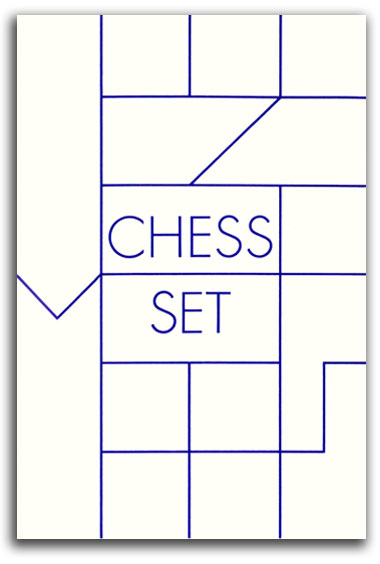 “MoMA Chess Set, Plan View as Boxed,” page 1 (cover) of
CHESS SET: A NOTE BY THE DESIGNER
New York: Museum of Modern Art, 1968. 1st Edition
[printed blue on white]
NOTE: Chess was my favorite game as a boy. I designed a number of sets. The best one I designed in 1966, while interning at MoMA. Much to my surprise and delight, MoMA decided to add it to their permanent collection, and then hired me as a Curatorial Assistant. The decision to acquire were made by Arthur Drexler, head of the Department of Architecture & Design, and then ratified by the Acquisitions Committee (Philip Johnson and Alfred Barr). In 1967 the set was exhibited in a Recent Acquisitions show at MoMA. The object was so well received (by Marcel Duchamp, among others) that MoMA decided to produce an edition and sell it in their store. The set was manufactured by Bernard Walsh and funded by the Junior Council. From a retail point-of-view, that decision to edition was an historic step. Until then museum stores sold only books, cards, and posters. This was the first object to be sold by an art museum. Now many museums sell objects, and objects account for a large percentage of the profits. At my suggestion, a second object was editioned and sold by MoMA at the same time. That was Betty Thompson’s “Multiplications.” In 2010, at the recommendation of Barry Bergdoll, Chief Curator of the Department of Architecture & Design, MoMA decided to produce a Second Edition of this “historic” object and call it the MoMA CHESS SET. During the ‘60s, many magazines featured the set. In 2010 & 2011, many bloggers featured the set. Two art museums in Europe have added it to their permanent collections: the Vitra Museum in Germany, and the Musée des Arts Décoratifs in France (the modern collection of which is now part of the National Museum of Modern Art, Centre Pompidou, in Paris). For the position of this object in design history (CLICK HERE for a link to PLAYART CHRONOLOGY)
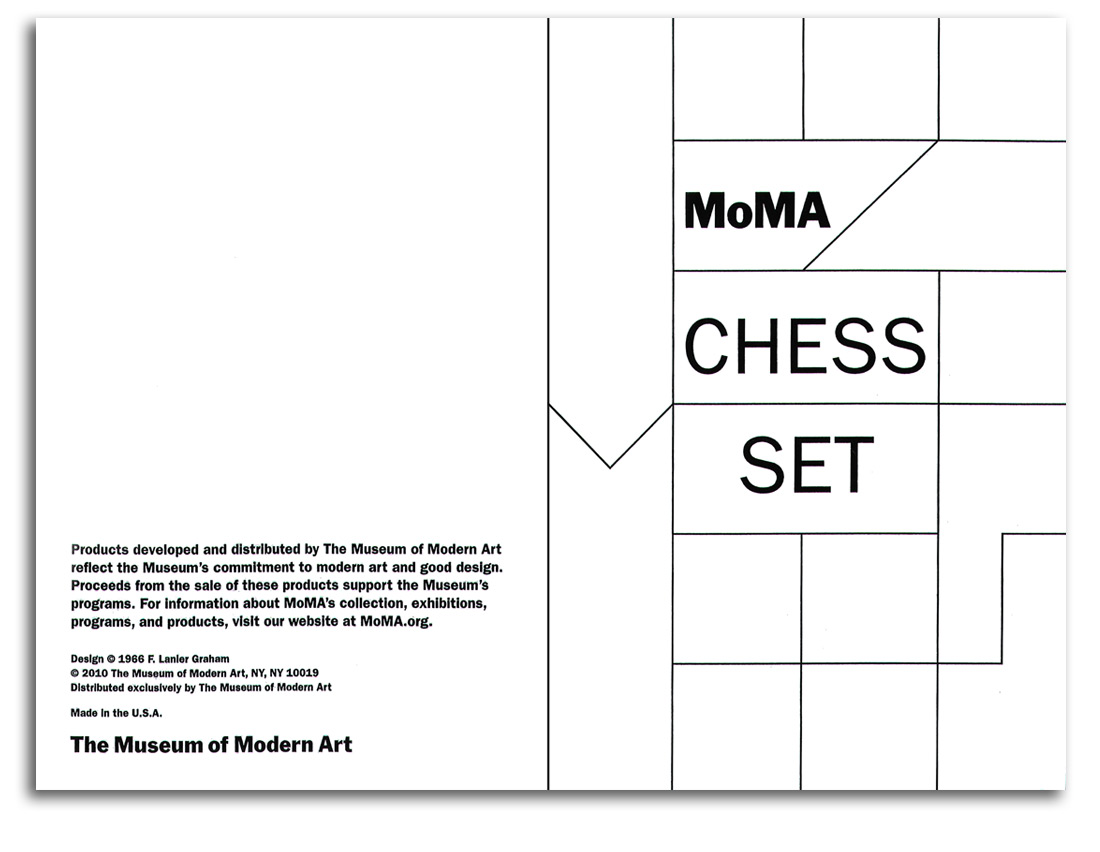
“MoMA Chess Set, Plan View as Boxed, page 1 (cover) of
CHESS SET: A NOTE BY THE DESIGNER
New York: Museum of Modern Art, 2010. 2nd Edition
[printed black on white]
CLICK HERE for a larger view of this image
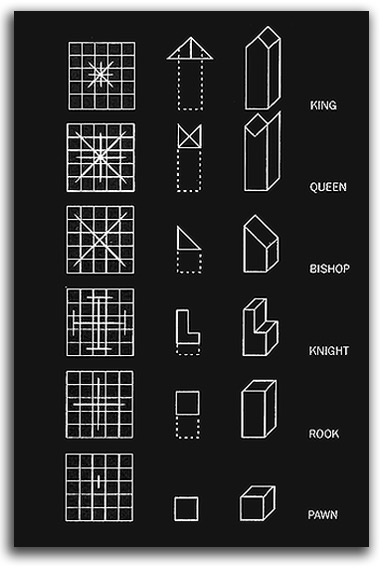 “MoMA Chess Set, Perspectives, Sections, & Fields of Play,” page 3 of
CHESS SET: A NOTE BY THE DESIGNER
New York: MoMA, 2010. 2nd Edition
“Modular Design Elements for the MoMA Chess Set,” page 79 in
CHESS SETS
New York: Walker & Company, 1968. 1st Edition [drawn 1967]
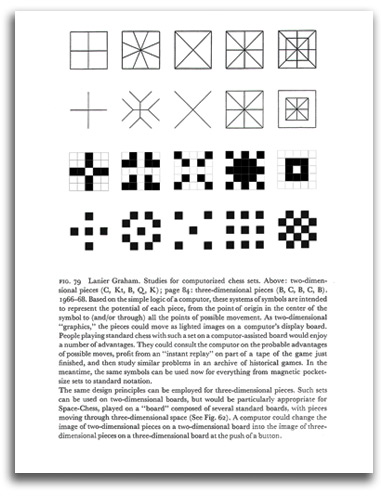 Click here for a closer view of this image
“Studies for Computerized Chess Sets” (4 sets), page 83 in
CHESS SETS
New York: Walker & Company, 1968. 1st Edition [drawn 1968]
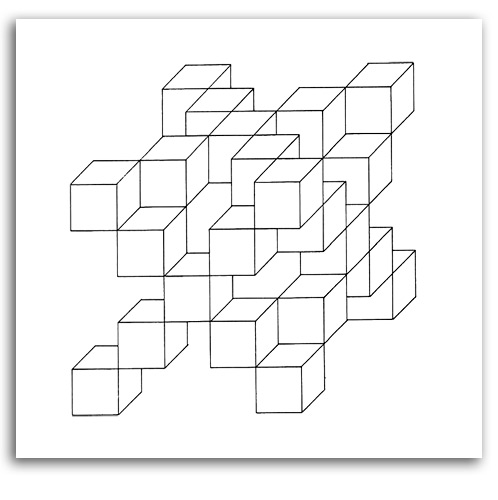
“Bishop from a Chess Set Design for playing 3-D Chess,” page 84 in
CHESS SETS
New York: Walker & Company, 1968. 1st Edition [drawn 1968]
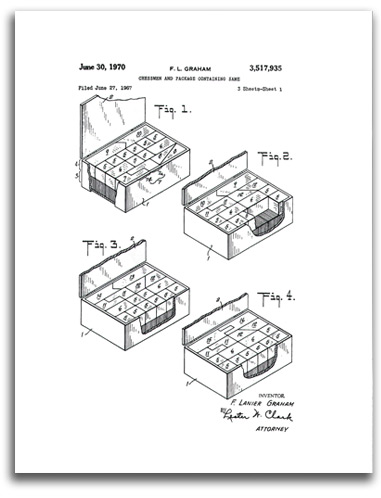
“CHESSMEN and PACKAGE CONTAINING SAME”
U.S. PATENT # 3,517,935. Filed June 27, 1967. Patented June 30, 1970
www.freepatentsonline.com
(Legal drawings by Lester Clark, esq. based on FLG’s drawings)
“MoMA Set, Plan View as Boxed”
reproduced online at
LOG 24 by Steven H. Cullinane @ http://m759.net/wordpress/?m=200901
Jan. 2009
Pages 36 & 44 of 66
“MoMA Set, King’s Field of Play” reproduced online at
LOG 24 by Steven H. Cullinane @ http://m759.net/wordpress/?m=200901
Jan. 2009
Pages 31 & 32 of 66
“MoMA Set, Perspectives” reproduced online at
LOG 24 by Steven H. Cullinane @ http://m759.net/wordpress/?m=200901
Jan. 2009
Pages 31 & 32 of 66
An Analysis of the Design modules of the MoMA Set
Compared with FLG’s plan drawing of the MoMA Set
& a photograph of Humphry Bogart by a door with
a grid pattern somewhat like the above
reproduced online at
LOG 24 by Steven H. Cullinane @ http://m759.net/wordpress/?m=200901
Jan. 2009
Pages 35 & 36 of 66
Click here to return to top of page
Section 2. PUBLICATIONS of ARCHITECTURAL DESIGNS from DRAWINGS by FLG
Click here to return to top of page
1968 INDUSTRIAL DESIGN September “A New Dimension for Design Education” by JRG (J. Roger Guilfoyle)
New York Apartment:
1968 NEW YORK TIMES Dec. 28 “When There’s Not Enough Room…Build One” by Rita Reif {First Edition of the 1968 Interview}
1972 “A Room within a Room” in LIVING WITH BOOKS by Rita Reif New York: New York Times Books {Second Edition of the 1968 Interview)
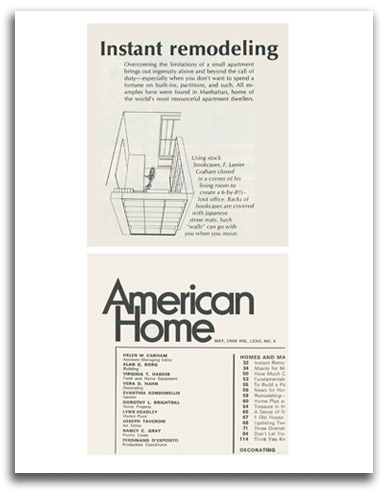 1969 AMERICAN HOME May “Overcoming the Limitations of a Small Apartment…”
1969 CAVALIER June “Cavalier of the Month: Lanier Graham, A Short Course in the wearing of Many Hats – Curator, Designer, Collector, and Writer” by Parker Hodges
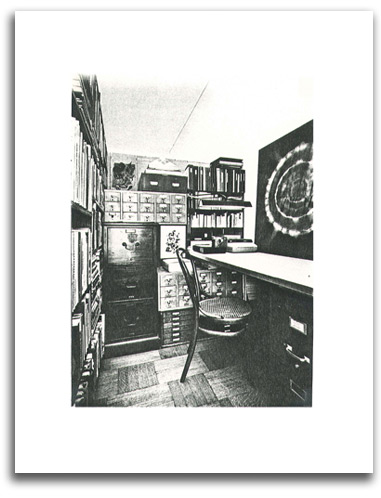 1970 GLAMOUR March “Small Apartment: Bookcase Walls make a Room.…”
NOTE: Since middle school I had dreamed of being an architect. For three years in high school I took classes in Mechanical Drawing to sharpen my mind for thinking of spaces and proportions and rendering precise details. Those drawings came out well, and I won ribbons for the work. But what kind of architect did I want to be? I college I liked designing my apartments, but I did not want to design other people’s apartments. I loved looking at buildings, old & new, and criticizing their designs, but I did not want to build them. Once I began work at MoMA it became clear that what I wanted to do in the design field was work as an Exhibition Designer. This aspect of being a curator occupied a good deal of my time thereafter.
Of my museum design time, about 75% has been devoted to temporary shows and about 25% to permanent exhibitions. In the 1960s that was the MoMA study center. In the 1970s that was the remodeled Legion of Honor & the de Young museums. For both I was in charge of designing the program plan for all existing galleries, as well as new construction. My highest focus was on the new American Galleries, future home of the Rockefeller Collection. After I left that museum to head the Institute for Aesthetic Development in 1976, I and my associates at IAD designed three long-term masterplans for the Golden Gate National Recreational Area of the National Park Service, which is the largest “urban park” in the United States: The Ft. Mason Center on the San Francisco waterfront in the 1970s, the Headlands Center for the Arts on the Pacific Coast in the 1980s (both of which are flourishing), and in the 1990s the California Indian Museum & Cultural Center in the San Francisco Presidio which did not fit there and has moved to Santa Rosa. Since 1998, in addition to producing 4 shows a year in the University Art Gallery of California State University, East Bay (working with a devoted staff of associates such as Philip Ringler and Jill Ringler), my primary focus as an exhibition designer has been on a “Teaching Museum of World Art” that I first proposed to CSUEB in 1998.
The following exhibition installations are illustrated above in the INDEX under “Sacred Spaces.” Yes, I use the term “sacred” not only for religious structures. In the modern world, the art museum has become a kind of temple, and museum exhibitions are widely considered (consciously or unconsciously) as sacred spaces in a secular world..
1970 HECTOR GUIMARD
1971 19TH CENTURY FRENCH PAINTING
1973 THREE CENTURIES OF FRENCH ART
1975 THE SPECTRAL PASSAGE
1987 THE SPONTANEOUS GESTURE
1991 IMPOSSIBLE REALITIES: MARCEL DUCHAMP
2000 ANDY WARHOL & SOCIAL CONSCIOUSNESS
2001 THE LION’S ROAR: TIBETAN THANGKAS
2001 MARCEL DUCHAMP
2002 ZEN & MODERN ART
2004 MINIATURE MUSEUM OF WORLD ART
2007 SPIRIT OF THE RENAISSANCE
2006 GLOBAL VISION: A Survey of World Art, Part 1
2008 GLOBAL VISION: A Survey of World Art, Part 2
2010 WORLD HISTORY LEARNING CENTER, Plan #3
2011 TRIBAL WORLD STUDY GALLERY
2011 MODERN WORLD STUDY GALLERY
2011 WORLD HISTORY LEARNING CENTER, Plan #4
2006 THE PIONEER Oct. 5 “Global Vision: A Survey of World Art Comes to CSUEB
2006 GLOBAL VISION: A SURVEY OF WORLD ART, Part 1
AFRICA, OCEANIA, ASIA, & MODERNISM
illustrating 2006 exhibition galleries
photographed by Philip Ringler
2008 GLOBAL VISION: A SURVEY OF WORLD ART, Part 2
THE STONE AGE & THE PRE-COLUMBIA AMERICAS
illustrating 2008 exhibition galleries
photographed by Philips Ringler
2010 GLOBAL VISION: A SURVEY OF WORLD ART, Part 3
THE BRONZE AGE
illustrating 2008 exhibition galleries
photographed by Philip Ringler
2011 86 DEGREES, Feb-Mar (Walnut Creek, CA magazine) “A New World Vision Museum”
illustrating three 2006 exhibition galleries of Asian Art
photographed by Philip Ringler
Click here to return to top of page
Section 3. DRAWING PORTFOLIOS
Click here to return to top of page
NOTE: Of all the magical things in this world, none was more fascinating to me as a child than the act of drawing. Things appear “from out of the blue.” I’ve been drawing for as long as I can remember. At first the goal was the usual one – make something that looks like something. The traditional rule was: the more detail the better. During my middle school years, Blake was my guide to rendering detail packed with emotion. Then the more open and fluid linearity of Matisse became my inspiration during high school. Matisse and Mallarmé introduced me to the Modern concept of DO NOT DESCRIBE… SUGGEST…EVOKE!
And that’s what I’ve been doing ever since (in both visual art & poetry). As my work matured, my eye-mind moved farther and farther away from descriptions of the visible world and closer to the process of visualizing “thought-forms,” or more precisely thought-feelings. My last portfolio of ‘descriptive’ drawings was SOUL-MATE: VISIONS FROM NIRVANA (1960).
By 1963 I was operating from a very different level of awareness. Starting with the illustrations for the 2nd Edition of NATURE POEMS: SONGS OF THE FOUR SEASONS (1963) I was dancing on the edge of total abstraction. Soon after, with ENLIGHTENING INSIGHTS and CALLIGRAPHIC CONCEPTS, I had entered the world of total abstraction. Encouraged by the career of O’Keeffe, I freely moved between various modes of naturalism, abstractions, and combinations. From that time on, I used figure-forms only as expressions of thought-feelings. Typical of my later portfolios are FIRE EATER and INQUIRING MIND.
I had dipped my toe into the stream of Dada-Surrealism in college during the late ‘50s. Working at the Museum of Modern Art during the ‘60s enabled me to meet two of my major heroes, Duchamp and Rauschenberg, and to savor Schwitters. Cornell plunged me into the bottomless depths of shadow-boxes. I found I loved swimming in these waters, and started moving from prints based on free-hand drawings to prints based on the multidimensional dynamics of collage, assemblage, & (in 1976) painted photographs.
I owe a considerable debt to all these artists, from Blake and Matisse to the stream-of-consciousness in which swim the “Post-Symbolists” of the Dada-Surrealist tradition. They lifted me out of the ordinary realities of the material world up into the realm of the imagination.
It took me a while to realize why my intuition was drawing me into this rushing river of visual Modernism that runs from Manet (and his dear friend Baudelaire) and Monet (and his dear friend Mallarmé) through the Post Impressionists, Matisse, and the Surrealists, to the Abstract Expressionists. My understanding grew gradually after having illuminating conversations over the years with Eliade on Brancusi and the endless, with Duchamp on Mallarmé and nothingness, and with Motherwell on abstraction as a modern form of mysticism.
By the ‘60s my head was catching up with my heart. I finally had a rational understanding of Modernism as a whole. I could see that at the core of Modernism is a non-religion quest for the transcendent. Baudelaire wrote of it as discovering the eternal in the ordinary. Arp spoke of finding the infinite in the finite. Matisse talked about radiance this way: “Color helps to express light, not the physical phenomenon, but the only light that really exists – the light in the artist’s mind.” Dali told me about finding freedom from the prison of mechanical time. Newman explained to me how the New York School was reaching visually for reflections of that luminosity that shines inside the mind when awareness transcends self-centeredness.
These are not unusual statements from the outside edges of the Modern movement. They are typical expressions. Everywhere I looked I found in the statements of the most important artists of the period, from the Impressionists and Post Impressionists at the beginning of Modernism to the Abstract Expressionists at the end of Modernism, this essential concentricity of intention. The primary animating impulse of Modern art is a secular search for the sacred. In the general psychological structure of this inter-dimensional realm, the central focus of all the major practitioners has been on the meeting place of the physical and the metaphysical. All the greatest works of Modern art evoke this co-reality. [Eventually I documented the statements of many of the major Modernists for my art history students in IMAGES OF THE INFINITE: SPIRITUAL PHILOSOPHY IN MODERN ART, 1st study guide, 1968 MoMA Study Center; 2nd study guide, 1979 California Institute of Asian Studies, 3rd study guide, 1998 California State University, Hayward]
LINES-OF-LIGHT, 1958
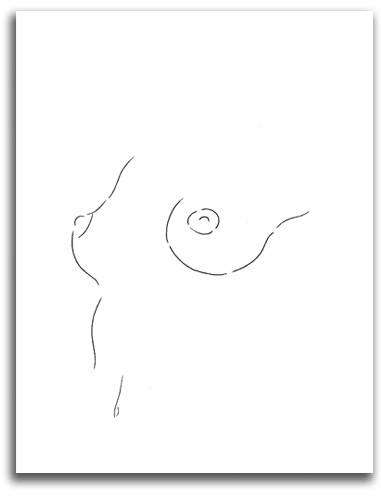 SOUL-MATE: Visions from Nirvana, 1960
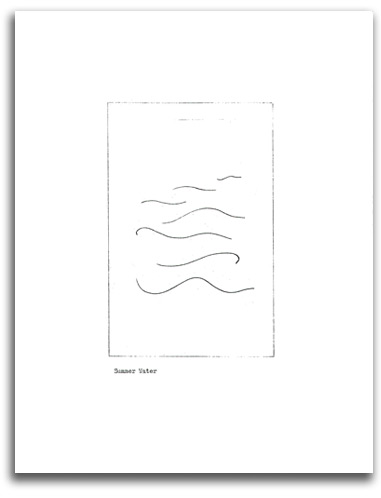 NATURE POEMS, 1963. 2nd Edition (5 drawings)
The Four Elements:
Autumn Earth
Winter Air
Spring Fire
Summer Water
ENLIGHTENING INSIGHTS, 1963
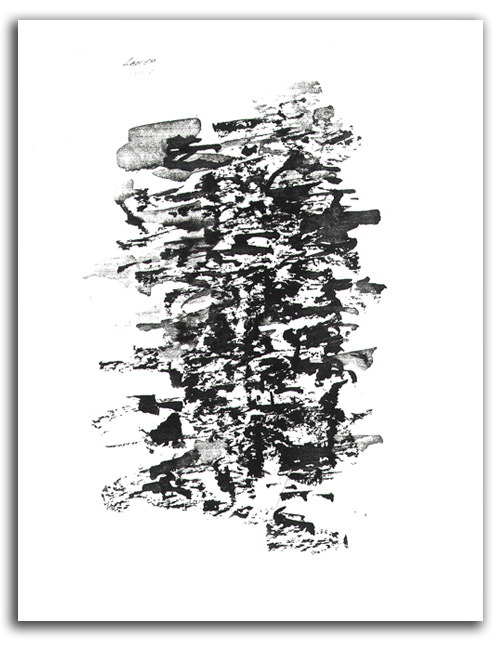 “Shimmering Light” (aka “Liquifying Light or Hudson River School Revisited”), 1964
NOTE: In my final year of Zen practice with Master Chi, I was beginning to explore the outside edges of representational art during my drawing meditations. How abstract can an image be and still relate to the visible world? In my 1963 portfolio NATURE POEMS I was working under the inspiration of both Zen calligraphy and Jackson Pollock. I drew the four Alchemical Elements as bare suggestions of the essence of Fire, Air, Earth, & Water. I wanted to do abstract work but could not. As I struggled to wrestle forms from the void, my efforts were just meaningless hen-scratchings, doodles that had no soul.
Master Chi stepped in and pointed out that only when the intuitive side of the mind is as active as the rational side of the mind can one appreciate and/or generate abstract art. The rational mind needs to interact with a rational form in order to have an aesthetic experience. The intuitive mind can reach beyond reason. “Moreover,” he gently reminded me “only when there is no effort does the Tao dance.” As we parted, Master Chi encouraged me to trade the linearity of the pen for the universe of the brush. I was using the sumi brush he gave me when I painted “Shimmering Light.”
I painted “Shimmering Light” while looking down on the sparkling surface of the Hudson River from The Cloisters during the summer of 1964. I was inspired by what I was seeing and by one of my favorite Hudson River paintings: “River of Light” by Frederick Church. That day I was dancing on the edge of total abstraction. The next day I dove over that edge and painted my first total abstraction: “Zen Dance.” That remains the favorite of all the paintings I have ever made. The sumi brush that painted it remains in the ink pot on my desk.
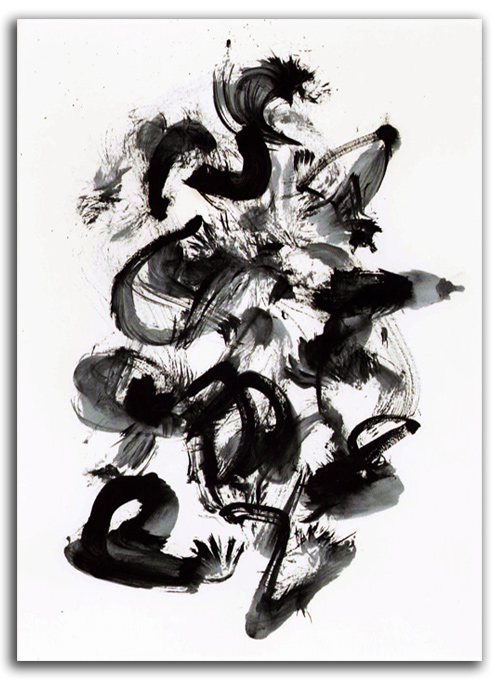 Zen Dance, 1964
CALLIGRAPHIC CONCEPTS, 1964
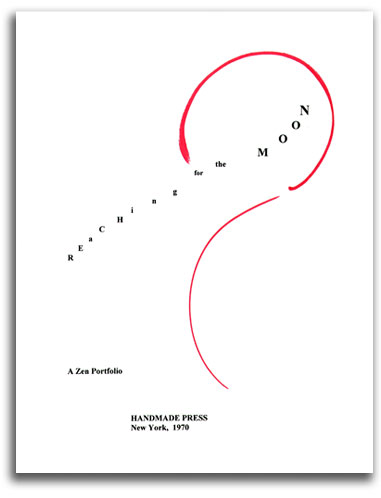 REACHING FOR THE MOON: A Zen Portfolio, 1970
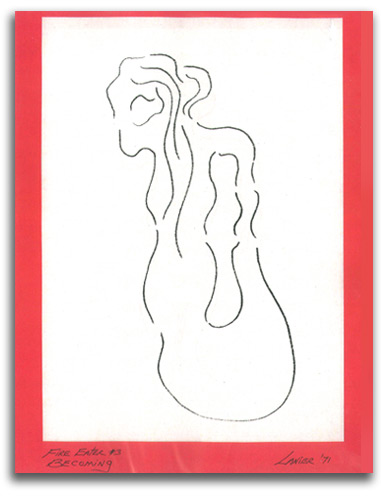 FIRE EATER, 1971
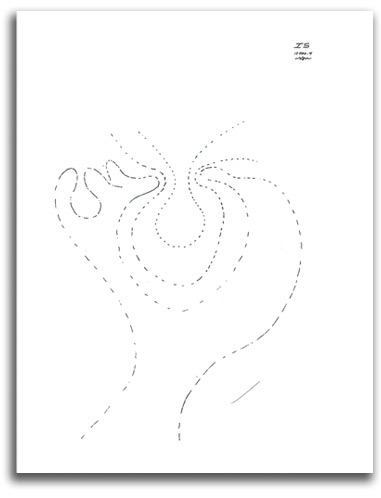 INQUIRING MIND, 1972
SUN MOON DANCERS, 1974
W / HERE DOES LIGHT ORIGINATE?, 1975
A PILGRIM’S PROGRESS, 1976
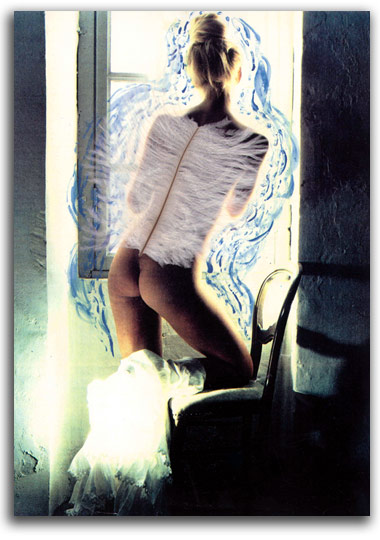
PRIVATE PORTRAITS, 1977
“She was an Angel”
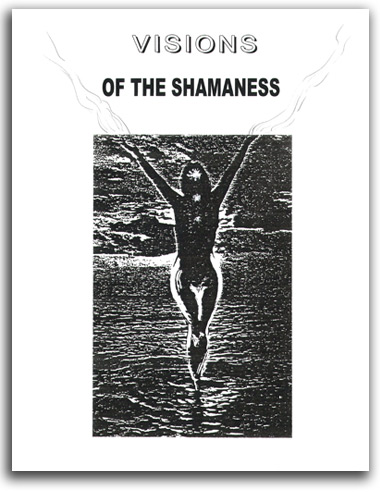
VISIONS OF THE SHAMANESS, vol. 1, 1994
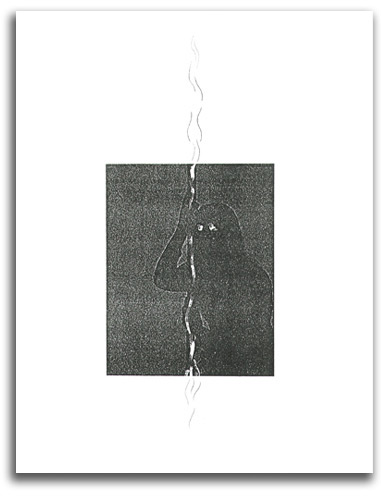
VISIONS OF THE SHAMANESS, vol. 2, 1995
Click here to return to top of page
A PILGRIM’S PROGRESS:
A Portfolio of Self-Images seen along the Path, 1975
NOTE: At the age of 13, at the suggestion of my Godfather, A.B.B. MacLeMore, I started keeping a daily journal, and started making self-portrait drawings every year (on my birthday) as a form of psychological evaluation. He showed me how Durer had done it, and how Rembrandt had done it, and encouraged me to do it as a serious meditation. Godfather also taught me other forms of meditation. He was an Elder in our Episcopalian Church. I was born and raised in this tradition but was drawn to other traditions, as he taught me the remarkable history of each of the World Religions. In 1960 I became a Buddhist and began more advanced forms of meditation. My early practices were Zen, and later Tibetan.
In 1976 I stopped making these ritual self-portraits. After many years of Buddhist practice, my self was no longer what it once was. The subject was no longer of particular interest. However, my ego had not entirely disappeared. There was still some more questioning to be done. As a kind of “farewell” to my earlier self-absorption, and to learn from tracing my psychological footsteps, I went back and collected those yearly Looks-in-the-Mirror into a portfolio called A PILGRIM’S PROGRESS.
Dharma Bum, 1959
Moon Reach – Arms too Short, 1961
Licking Nothingness, 1962
Zen Dance, 1964
Zen Dragon, 1970
A Self-portrait of my Me sensing all Eternity, 1971
Sun Moon Dancers dancing into Light, 1972
Shiva-Shakti Androgyne, 1973
Touching all the Stars, 1974
(aka I heard a Sound that let me Touch all the Starry Sky.)
Alchemical Poet measuring Spectral Haiku, 1975
Published in THE RAINBOW BOOK, 1975
Buddha’s Eye, 1976
(aka Buddha’s Eye is a bright Flame that burns the “I” away.)
A gift for The Venerable Chogyam Trungpa, Rinpoche, 1976
Zen Dance, 1964
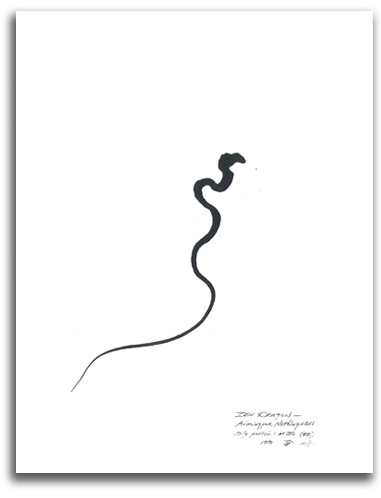
Zen Dragon, 1970
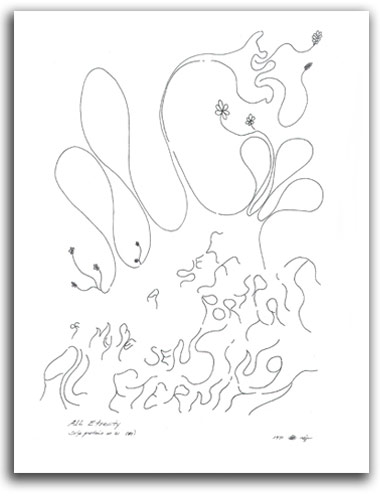
Sensing All Eternity, 1971
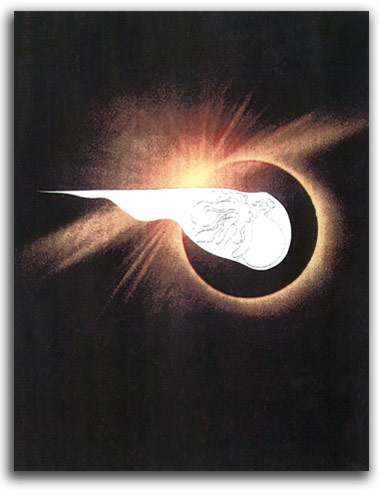
Sun Moon Dancers, 1972
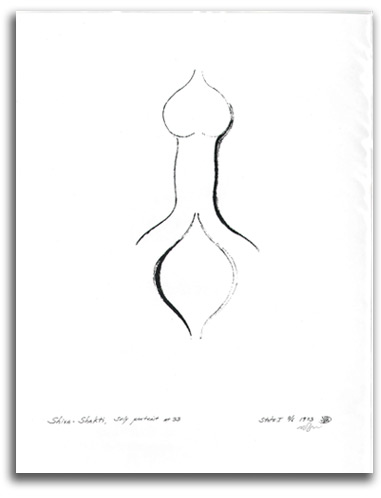
Shiva-Shakti Androgyne, 1973
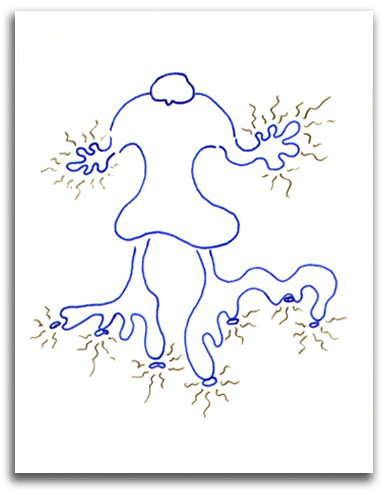
Touching all the Stars in the Sky, 1974
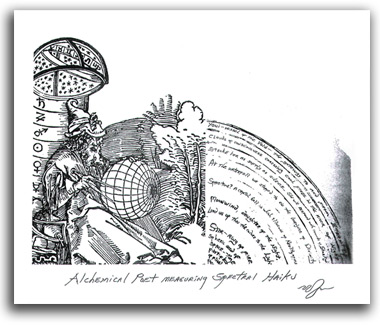
Alchemical Poet, 1975
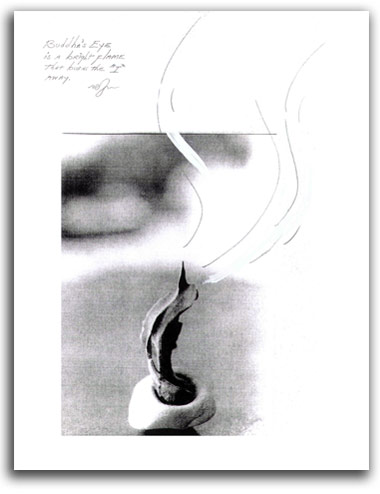
Buddha’s Eye, 1976
Click here to return to top of page
Part B. PUBLIC EXHIBITIONS of
WORKS ON PAPER & EARLY SCULPTURE
Click here to return to top of page
1956 May: “Design for a Modern House”
Annual Student Art Show, Oakwood High School, Oakwood Ohio
1958 Nov: “Lines of Light” (a portfolio of Christmas Cards)
West Wing Gallery, Kenyon College
1959 Nov: “Songs of the Seasons” (a portfolio of Prints & Poems)
West Wing Gallery, Kenyon College
1964 June: “Zen Dance” and “Shimmering Light” (aka “Liquifying Light or Hudson River School Revisited”)
Annual Washington Square Outdoor Art Show,
Greenwich Village, New York
1965 Oct: “Zen Dance”
Terrain Gallery, 39 Grove St., Greenwich Village, New York
1967 Sep: “Chess Set” in
Recent Acquisitions: The Design Collection
New York: Museum of Modern Art, Checklist number 61
1968 “Chess Set” in “Modern Industrial Design”
Paris: Musée des Arts Décoratifs
1975 Mar: “W / HERE DOES LIGHT ORIGINATE?”
including “The Alchemical Poet: Alchemical Poet measuring Spectral Haiku,” (with 7 haiku),
and “The Sun is Everyone’s Aura (twelve 1975 journal pages)” in
THE RAINBOW BOOK (1st edition only)
Boulder, Colo.: Shambhala & Fine Arts Museums of San Francisco pp.240-241
1996 June:Relgious Studies website, “Goddesses in World Art”
(1996 photoshop collage published on FLG’s HSU Religious Studies webs)
1996 June:“Androgynes from Around the World #1”
(1996 photoshop collage published on FLG’s HSU Religious Studies website)
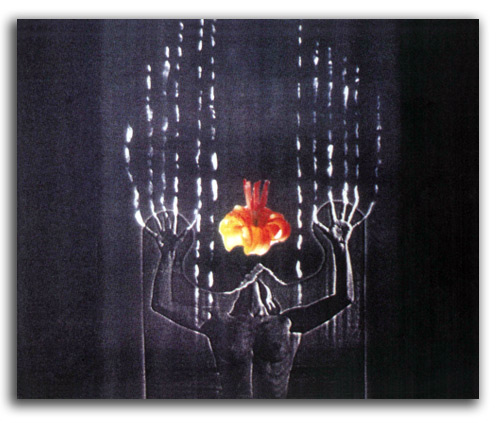
1997 May: “Persephone Rising” in
GODDESSES
New York: Abbeville, p.163
(1994 painted print ‘signed’ by Laughing Water) {ENGLISH EDITION}
1997 May: “Perséfone Surgiendo” in
DIOSAS
New York: Abbeville & Catedra, p.163
(1994 painted print ‘signed’ by Laughing Water) {SPANISH EDITION}
1997 May: “Persephone Rising” in
GOTTINNEN
New York: Abbeville & ArsEditions, p.163
(1994 painted print ‘signed’ by Laughing Water) {GERMAN EDITION}
1997 May: “Persephone Rising” in
GODDESSES IN ART
New York: Artabras / Abbeville, p.81 {ENGLISH EDITION}
(1994 painted print ‘signed’ by Laughing Water)
1997 May: “Naissance de Perséphone”
DEESSES
Paris: Abbeville, p.81 {FRENCH EDITION}
(1994 painted print ‘signed’ by Laughing Water)
1998 Feb: Annual Art Faculty Exhibition, CSUEB
VISIONS OF THE SHAMANESS, vol. Two (a portfolio of painted prints)
1998 Apr: “Venus & Kuan Yin” on the cover of
COMMON GROUND (collage conceived by FLG
using two photographic plates from the front & back covers of
GODDESSES IN ART, executed by their art director)
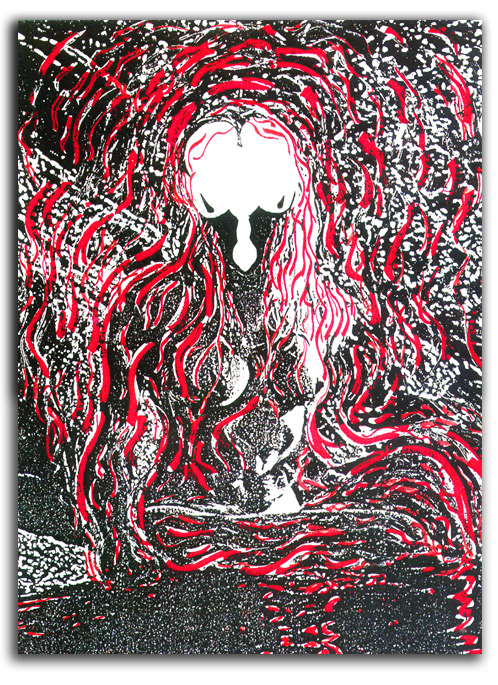
1999 Jan: Annual Art Faculty Exhibition, CSUEB
TRIPTYCH: “Persephone Rising,”
“Kali, Goddess of Life, Death, & Rebirth,” &
“Song of the Goddess (Homage to Mallarmé)
2000 Mar: Annual Art Faculty Exhibition, CSUEB
“Beloved Ancestors: Mr & Mrs ADR Lanier”
{Deep wooden shadowbox Portraits with each person’s Objects,
both later modified & donated to the East Tennessee Historical Museum, Knoxville}
2001 Mar: Annual Art Faculty Exhibition, CSUEB
“Zen Dance” (sumi watercolor of 1964)
2002 Apr: Annual Art Faculty Exhibition, CSUEB
“Farewell to Duchamp” (collage of 1968 & 2002)
2003 “Androgynes from Around the World #2:
Europe, India, China, the Middle East, & the Americas” in
DUCHAMP & ANDROGYNY:
ART, GENDER, AND METAPHYSICS
Berkeley: No-Thing Press, p.24 {‘signed’ Laughing Water}
(Photoshop collage of 1996. Slight changes made for the book plate of 2003).
2003 Apr: Annual Art Faculty Exhibition, CSUEB
“Nike, Goddess of Victory” (cylindrical assemblage with feathers of 2003)
Published on the cover of THE VIEW, the magazine of CSUEB
2004 Feb: Annual Art Faculty Exhibition, CSUEB
“Hecate, Goddess of the Underworld,
Conjoining Life & Death” (painted print of 1987)
[Over the next 5 years all public exhibitions were Sculpted Poems at CSUEB]
Click here to return to top of page
Part C. EXHIBITIONS OF SCULPTED POEMS
(aka Objets Poétiques)
at the University Art Gallery, CSUEB
Click here to return to top of page

Time & Eternity are Lovers: A Portrait of William Blake #1, 1956
NOTE: The first “poetic objects” I made were constructed during the 1950s & ‘60s. The very first in 1956 was “Time & Eternity are Lovers: A Portrait of William Blake” under a bell jar. Version #1 consisted of the insides of a clock. Version #2 consisted of the insides of a watch mounted on a small pedestal. Blake was my favorite poet in middle school (after Sidney Lanier). Blake for me was not just a poet. He also was a teacher. He gave me a feeling for the artificial veil that must be ripped away if we are to really KNOW that Time and Eternity are united. I made Version #2 of this Blake piece in 1959 when I felt strong enough to try a radical experiment. In an effort to rip away the constant assumption of mechanical time, I smashed my watch. That gave me a wonderful feeling of freedom. I felt a little closer to Eternity. Version #2 is what’s left of that watch.

Time & Eternity are Lovers: A Portrait of William Blake #2, 1959
In 1957 came “Clouds of Glory: A Portrait of William Wordsworth.” That consisted of a most beloved sea-shell, a spiral nautilus, with a print of glowing clouds pasted inside. Wordsworth was my favorite poet in high school.
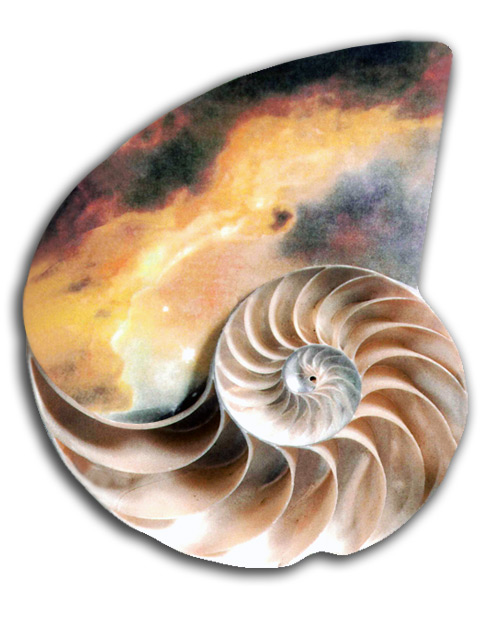
Clouds of Glory: A Portrait of William Wordsworth, 1957
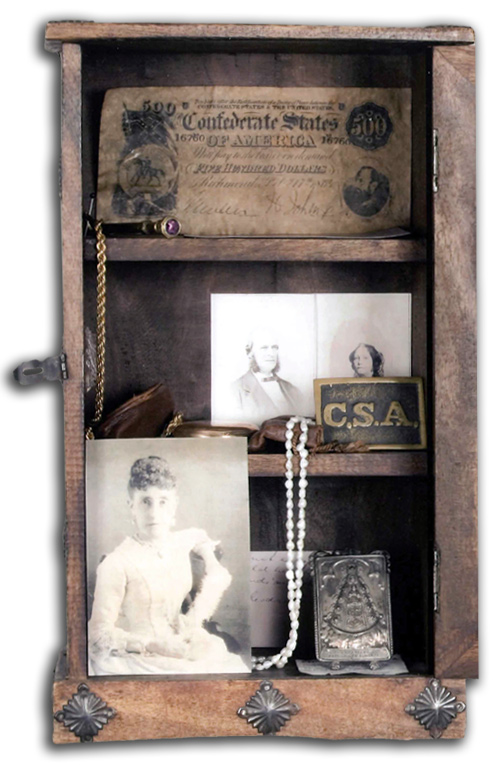
Then in 1958 I started to construct “portrait-boxes” – actual boxes that are portraits, boxes that usually were owned and loved by the individuals being portrayed. The first one was a portrait of my Great Grandmother, Mary Theodora Lanier, using some of her belongings inside a wooden box she collected while living in Mexico.
Next came a boxed portrait of my Godfather. Inside is a “thank you” poem for him. The poem is a little stiff because I did it as an academic assignment in Senior English, where we were required to compose poems using various historical styles of writing. (That was good training – a bit like young painters copying Old Master paintings in The Louvre.) “The Philosopher” was composed in the medieval manner of Chaucer – the Father of English Literature. The upper image is a modern collage called “Starfish beside a Man of Light.” It symbolizes me (Starfish) looking at Uncle Arthur. The lower 17th-century image is from the Alchemical tradition to which he introduced me.
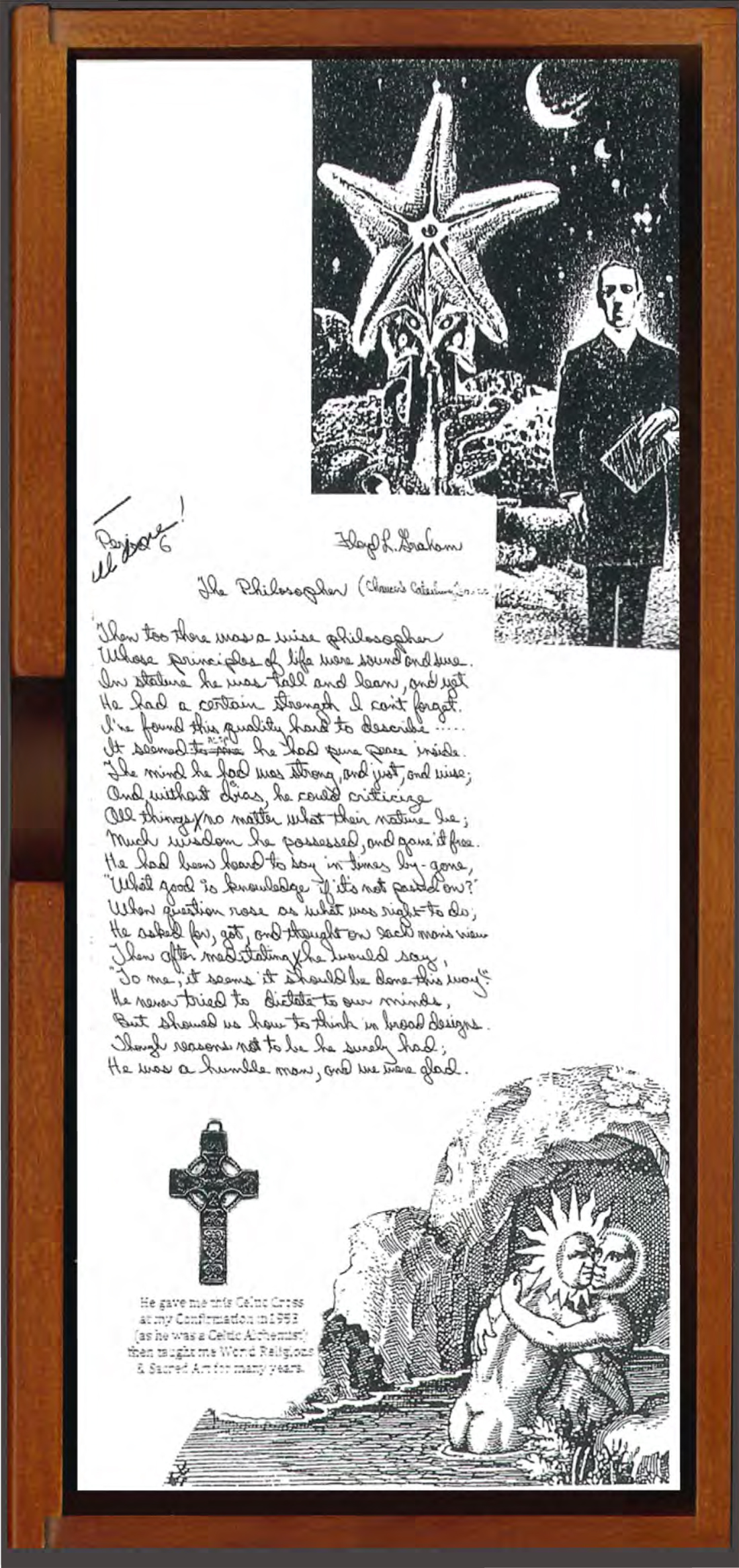
Alchemical Philosopher: A Portrait of A.B.B. MacLeMore, 1958 (modified 1998)
Click here or on image above for close-up view of “Alchemical Philosopher”
He amplified what I had learned from Blake, and from Grandmother Bertie, about Sun & Moon symbolism. He explained that the metaphorical “Sacred Marriage” of Father Sun & Mother Moon is the penultimate stage of higher awareness. It is at this point that previously separated reason & intuition, thought & feeling, head & heart, unite to form an ongoing psychological equality, a powerful singularity. This stage of awareness develops just before those “parents” (the Sun & Moon) give birth to the “Philosopher’s Stone” that represents the ultimate level of consciousness. This “stone” is not a material object, as so many think. Rather, he told me, it is the indestructible form of awareness known to Alchemists as Golden Consciousness (and to Tibetan Buddhists as Diamond Consciousness.) In other words, the end-state of the Alchemical path is the same as the end-state of the practice of Sufi Dancing or Tantric Yoga or Zen – Enlightenment. Materialists of the Middle Ages and the Renaissance who called themselves alchemists worked toward the making of physical gold. They were short-sighted. True Alchemists work toward the creation of Golden Consciousness.
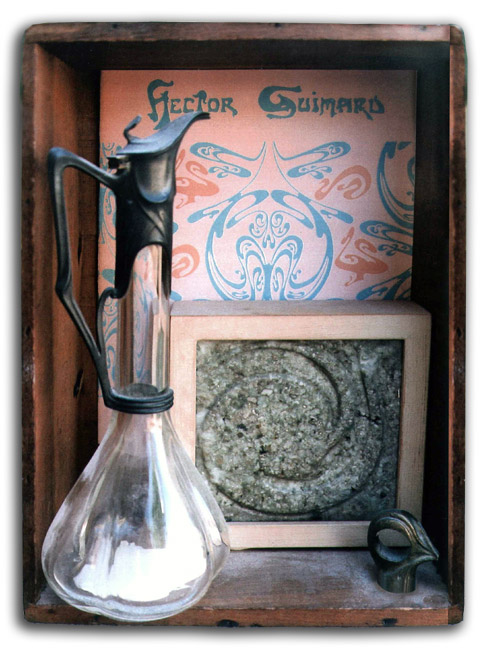
Abstract Naturalism: A Portrait of Hector Guimard, 1970-71.
A wooden box that contains original Guimard objects that had been in the MoMA exhibition.
There was not another “portrait-box” until “Abstract Naturalism: A Portrait of Hector Guimard” (1970-71). I made a sea-shell portrait of “Mother & Child” in 1971 when Jennifer was born. That pair of shells was gathered from the shore of the Pacific Ocean where she was conceived.
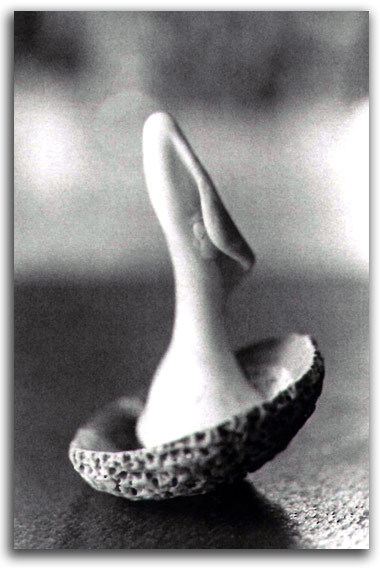
Mother and Child: A Portrait of Rosemary & Jennifer, 1971
The years between 1974 & 1976 found me returning to boxes & objects. I lovingly ‘boxed’ my Lanier ancestors and hung three in my office in the de Young Museum. Those shadow-boxes earned serious praise from William Lieberman, Curator of Modern Art at the New York’s Metropolitan Museum of Art & William Wolfenden, Director of the Archives of American Art. They both said my boxes could hang beside boxes by Joseph Cornell! I was quite surprised but very happy to hear it. After all, my heroes in the assemblage field had long been Cornell and Rauschenberg.
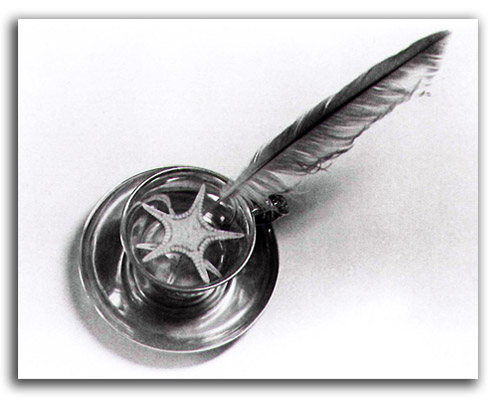
Ink Well: A Self-Portrait by a Poet named Starfish, 1974
Then I began making objects that were self-portraits and portraits of people dear to me. The first in 1974 was “Ink Well” (aka “The Ink Well of a Poet named Starfish”). It was made during a summer vacation in Vermont at the home of David & Elena. Like the murmurings of an ancient oracle, this serious reflection on “Who am I?” told me I was going to leave the museum for a new adventure. In 1976, after leaving the museum and being divorced, my first ‘poetic object’ was about Gloria, for whom I had never stopped longing. “Armchair Eyes” is a miniature armchair with a Magritte eye, & a poem about longing.
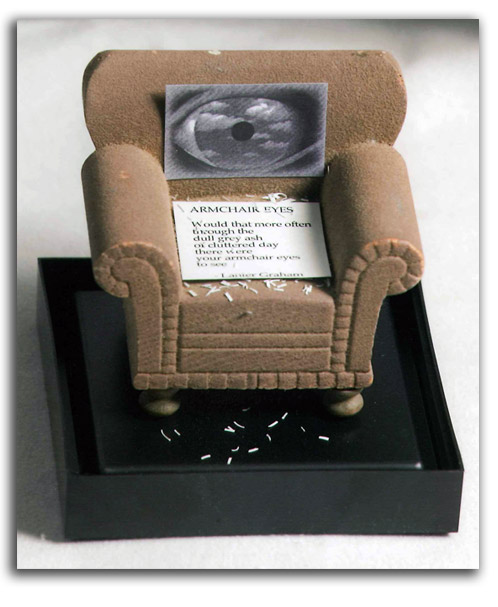
Armchair Eyes, 1976
In the years between 2004 & 2008 I was deeply engaged in making boxes & objects, as a balance to a great deal of ye olde left-brain writing. In 2004 I polished up “Beloved Ancestors” boxes and donated the Lanier Family group to the East Tennessee Historical Museum in Knoxville. The same year I conceived & executed a “Miniature Museum of World Art” to display in the University Art Gallery at CSUEB as a promotion for the proposed Teaching Museum. That project got me even deeper into the magical world of miniatures. Soon my studio in the garage was overflowing. I had so many sculpted poems that I began showing them regularly in the Annual Art Faculty Exhibitions at CSUEB.
The objects in this Objets Poétiques series are fusions of poetry & sculpture. Because they also were made as teaching-aides for my students, I often call them “philosophical objects.” My point-of-departure was the Dada-Surrealist tradition of objets trouvé (found-objects), and especially the tradition of theObjets Poétiques. The best-known form of the latter tradition started in 1936 with the “Exposition Surréaliste d’Objets” (Surrealist Exhibition of Objets) in Paris at the Galerie Charles Ratton. Ratton was an authority on tribal art. André Breton wrote the introduction to the legendary six-page catalogue. This appears to have been the first exhibition to be devoted exclusively to objects – natural objects (unchanged by human hands), tribal objects (by shamans), and and “post-tribal” Surrealist objects (made by artists who regarded themselves, to one degree or another, as modern urban shamans). These objects come to life from a realm beyond reason. Many of the Surrealist objects were directly inspired by shamanic fetishes. Some of the most interesting objects were made by Breton who incorporated actual lines of poetry. Neo-Dada movements have continued the aesthetic of found-objects into contemporary times.
In my 1st show of objects in 2005, “Portraits of Poets,” I exhibited poem-portraits of Europeans and Americans. I usually melted together a line from one of my favorite poets with a found-object that evokes the spirit of that line. The 2nd show, “Personal Poems,” (later in 2005) presented similar fusions using lines from my own poems. The 3rd show of 2007 was “Images of Nothingness.” In 2008 came the 4th show: “Surrealist Portraits.” My 5th & final object show at CSUEB in 2009 was “Inside of NOW.” Every object in this series is small enough to hold in your hand. This adds a certain intimacy to the communication. They are not remote and cold. They are warm and friendly. What follows is a selection of “philosophical objects” from those exhibitions. IN-JOY!
Click here to return to top of page
2005 Feb: Annual Art Faculty Show,
PORTRAITS OF POETS:
An Exhibition of Sculpted Poems
(items numbered 1 – 9, below):
Click here to return to top of page
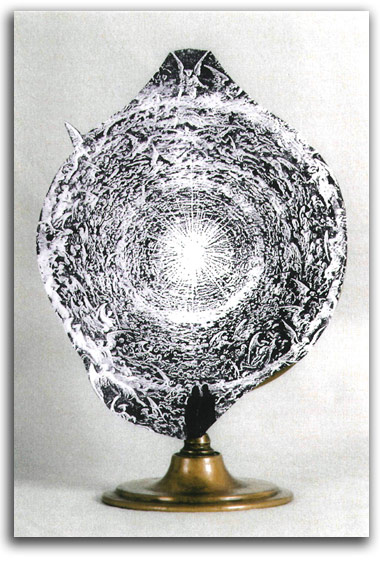
1 DANTE: THE WHITE ROSE
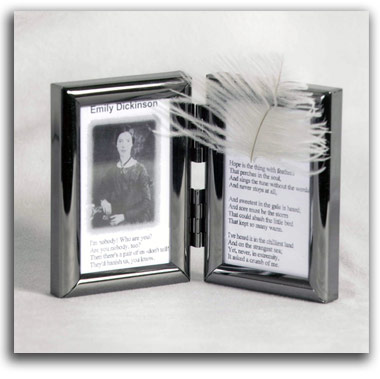
2 DICKINSON: I’M NOBODY
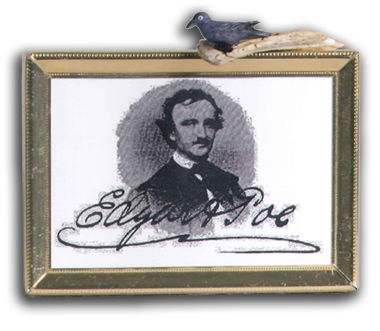
3 POE: QUOTH THE RAVEN ‘NEVERMORE.’
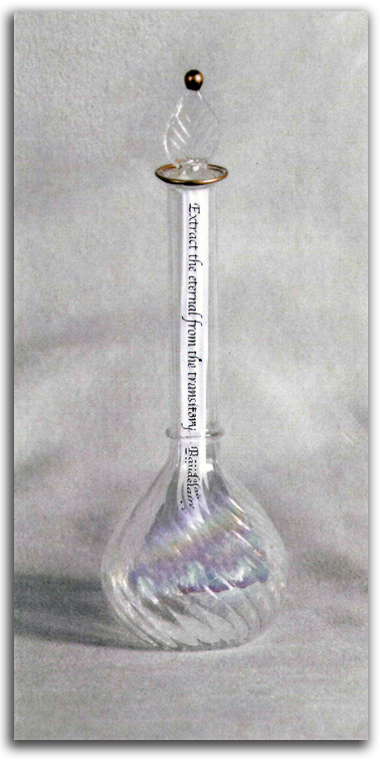
4 BAUDELAIRE: EXTRACT THE ETERNAL
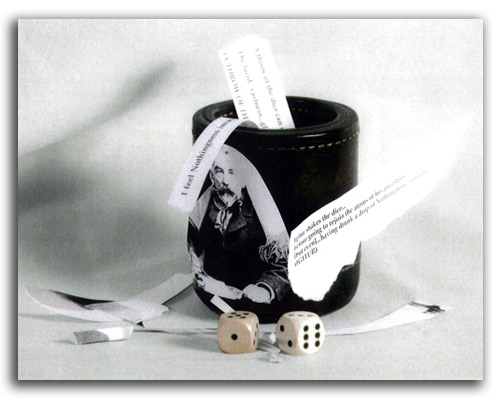
5 MALLARME: A THROW OF THE DICE
Click here for a closer look at “A Throw of the Dice”
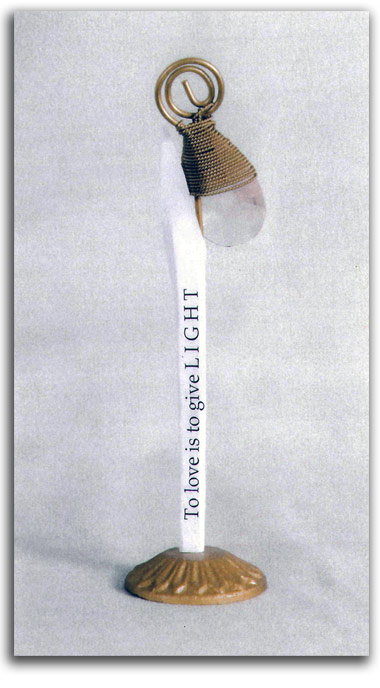
6 RILKE: TO LOVE IS TO GIVE LIGHT
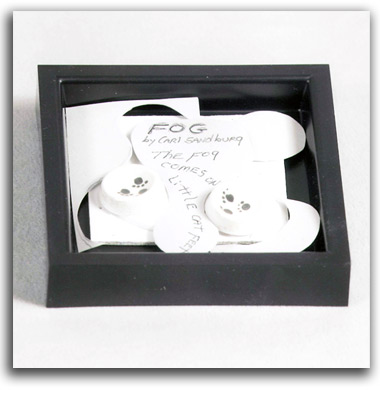
7 SANDBURG: LITTLE CAT FEET
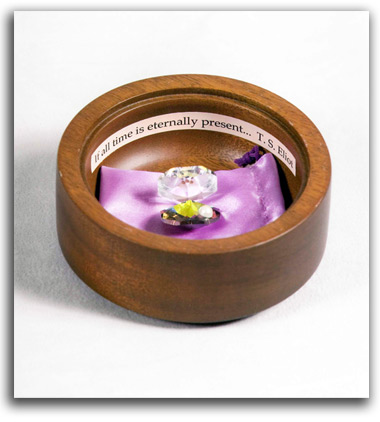
8 ELIOT: IF ALL TIME IS ETERNALLY PRESENT
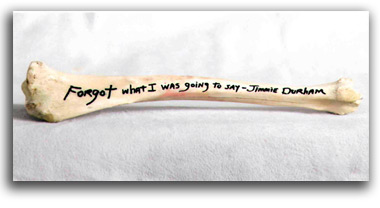
9 DURHAM: FORGOT WHAT I WAS GOING TO SAY
Click here to return to top of page
2005 Oct: Annual Art Faculty Show,
PERSONAL POEMS:
An Exhibition of Sculpted Poems
(items numbered 10 – 15, below):
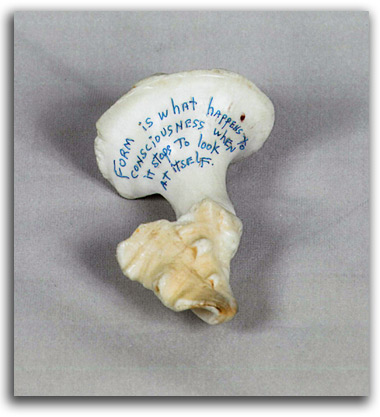
10 FORM IS WHAT HAPPENS TO CONSCIOUSNESS
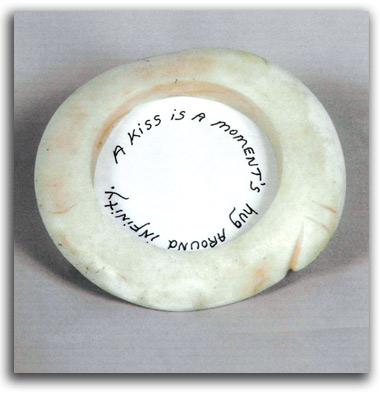
11 A KISS IS A MOMENT’S HOLD AROUND INFINITY
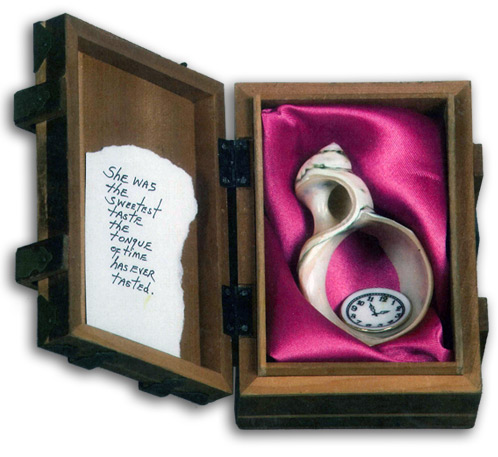
12 SHE WAS THE SWEETEST TASTE
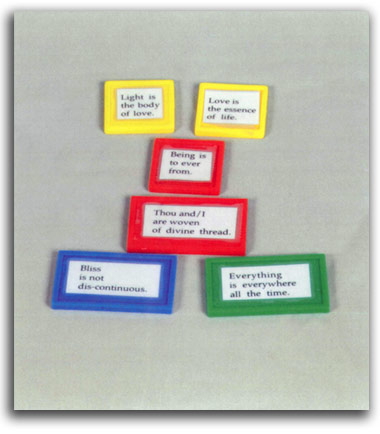
13 LITTLE GAME CHIPS
Click here for a closer look at “Game Chips”
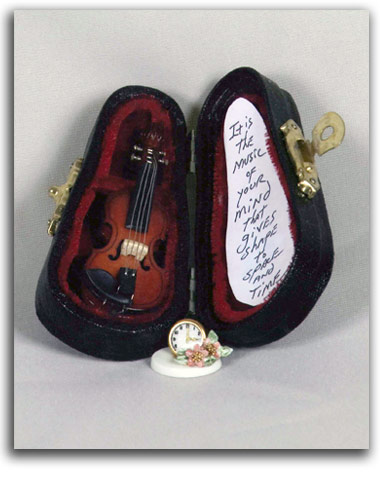
14 THE MUSIC OF YOUR MIND
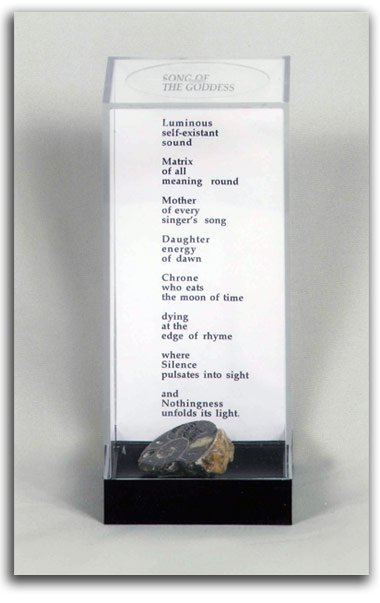
15 SONG OF THE GODDESS
Click here to return to top of page
2007 Feb: Annual Art Faculty Show,
IMAGES OF NOTHINGNESS:
A Collection of Philosophical Objects
(in honor of the publication of
Mark Levy’s VOID IN ART)
(items numbered 16 – 19, below):
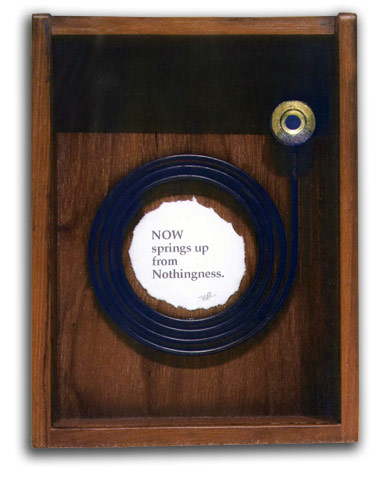
16 NOW SPRINGS UP FROM NOTHINGNESS
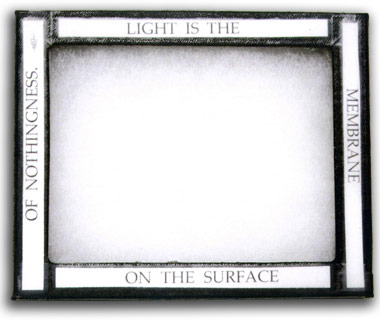
17 LIGHT IS THE MEMBRANE ON THE SURFACE OF NOTHINGNESS
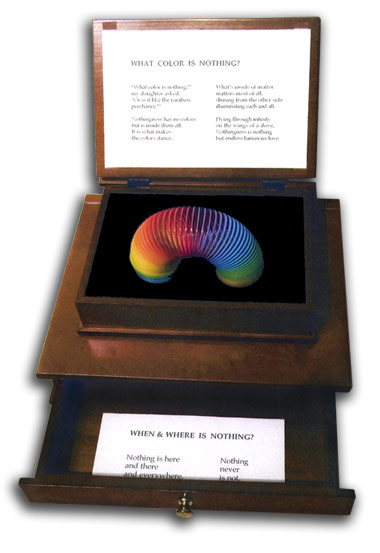
18 WHAT COLOR IS NOTHING?
Click here for a closer view of “What Color Is Nothing?”
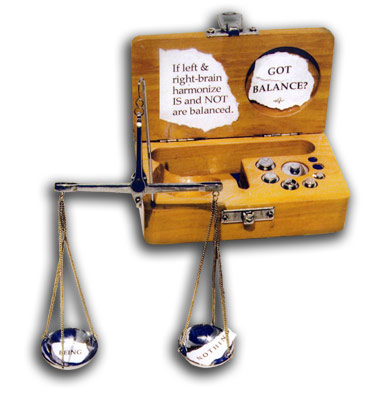
19 GOT BALANCE?
Click here to return to top of page
2008 Jan: Annual Art Faculty Show,
SURREALIST PORTRAITS:
A Collection of Philosophical Objects with Portrait-Poems
(items numbered 20 – 24, below):
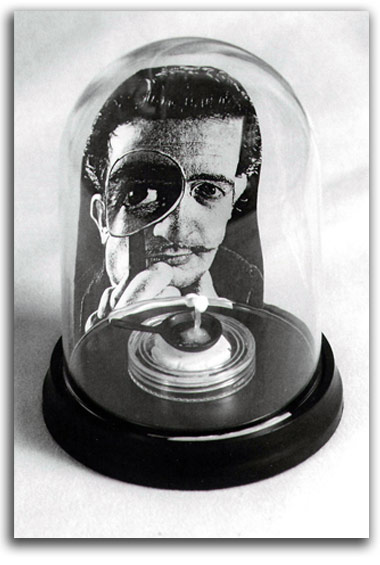
20 FRIED EGGS: A PORTRAIT OF DALI
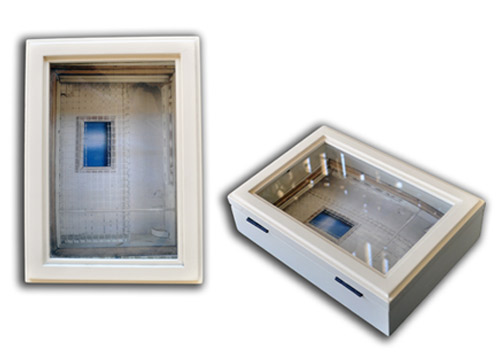
21 AN ETERNI-DAY OF BLUE: A PORTRAIT OF CORNELL
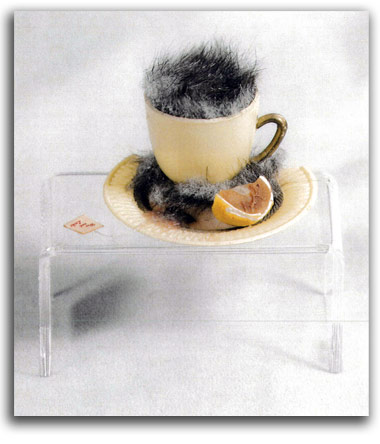
22 FUR-LINED TEA CUP: A PORTRAIT OF OPPENHEIM
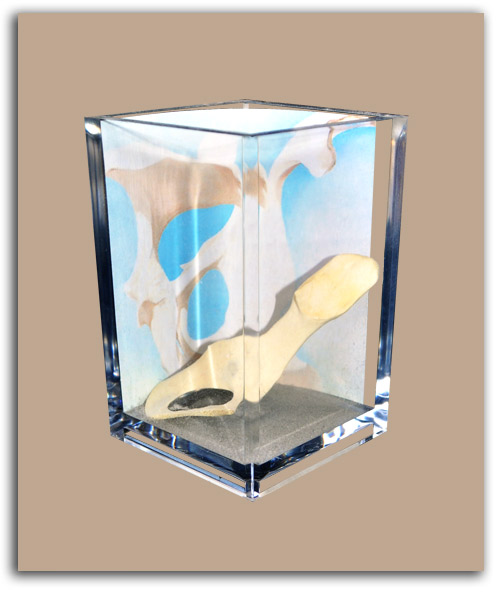
23 NOTHING IS INANIMATE: A PORTRAIT OF O’KEEFFE
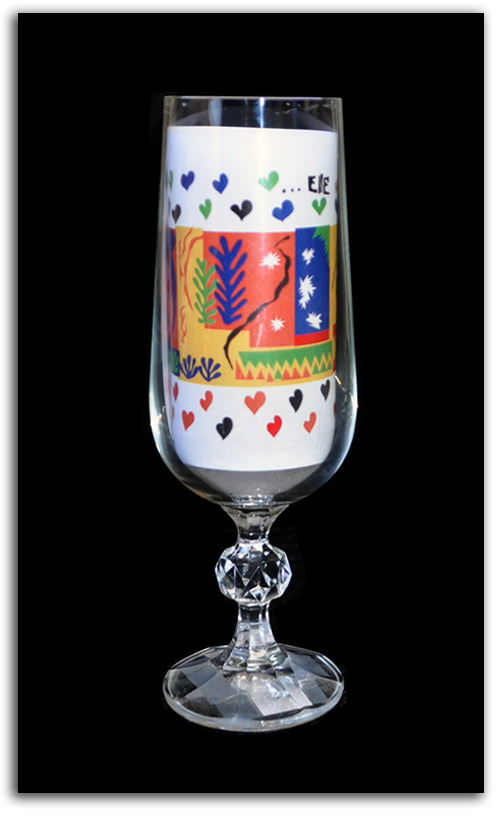
24 WOULD YOU LIKE A SIP OF COLOR? A PORTRAIT OF MATISSE
Click here to return to top of page
2009 Jan: Annual Art Faculty Show,
INSIDE OF NOW:
A Collection of Philosophical Objects
[Last Objects shown at CSUEB]
(items numbered 25 – 31, below):
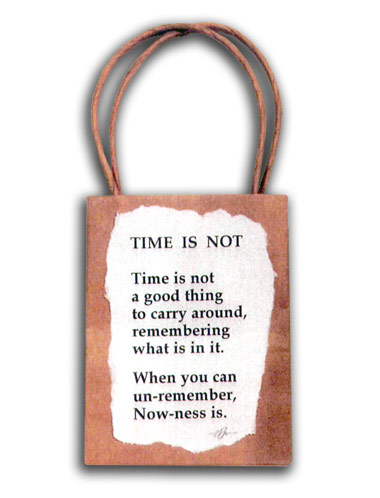
25TIME IS NOT A GOOD THING TO CARRY AROUND
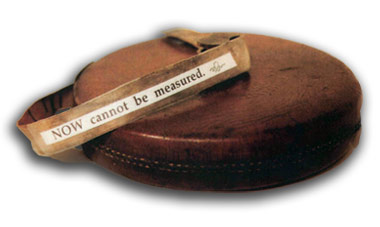
26 NOW CANNOT BE MEASURED
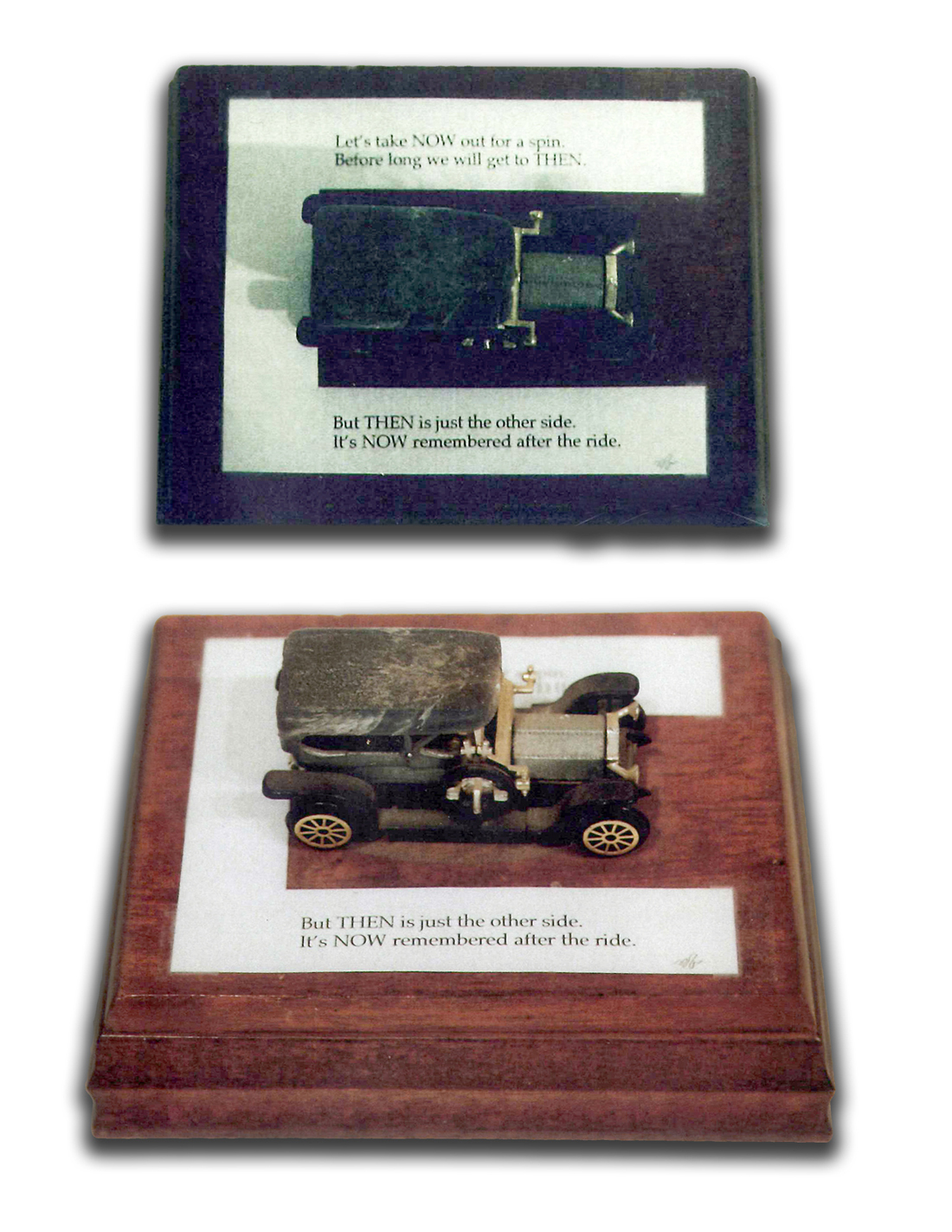
27 NOW & THEN
Click here or on image above for close-up view of this objet
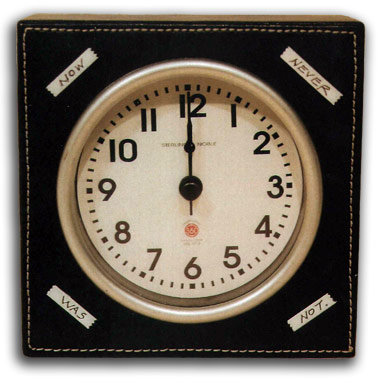
28 NOW NEVER WAS NOT
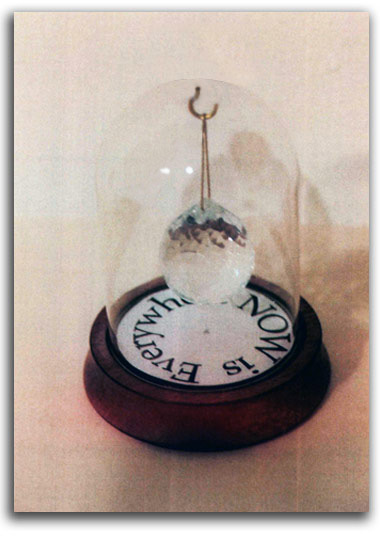
29 NOW IS EVERYWHERE
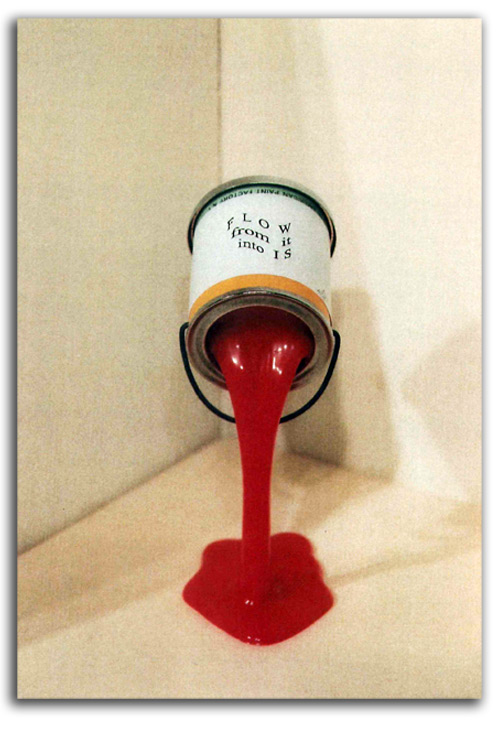
30 FLOW FROM IT INTO IS
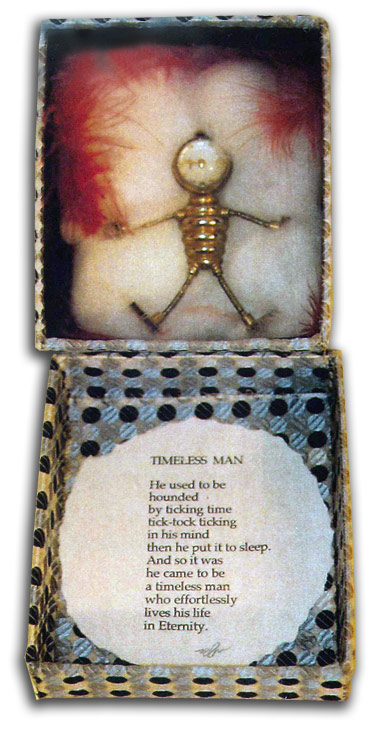
31 TIMELESS MAN
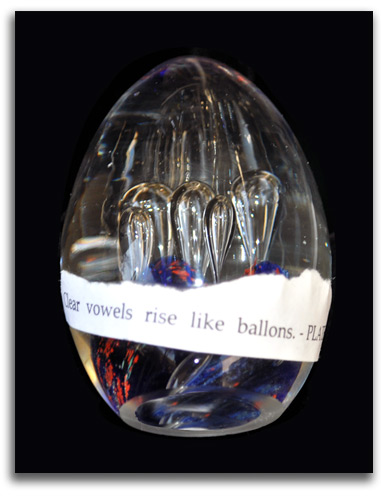
32 Addenda to PORTRAITS OF POETS:
AN EXHIBITION OF SCULPTED POEMS
PLATH: CLEAR VOWELS RISE
Click here to return to top of page
Part D. PRINT PORTFOLIOS / NARRATIVE IMAGES
Click here to return to top of page
NOTE: FLG collected & bound the following print portfolios under the title NARRATIVE IMAGES: The Collected Print Portfolios of F. Lanier Graham (2000). Most of these prints were made from drawings, photographs, or collages by the printmaker. Most were conceived for and used as illustrations in the poetry books he was writing. After experimenting with traditional slow techniques such as etching and lithography, he decided to specialize in rapid “xerox prints” which he called “electrographs.” Some are portfolios without words, but his usual joy was making visual-verbal harmonies in the form of illustrated books. While most were issued in small editions, editions of from 5 to 10, some were published in large editions ranging from 5,000 to 50,000.
Graham’s best known multiple original is not a piece of paper but an object: “The MOMA Chess Set” published by The Museum of Modern Art, New York, in 1967 as their first “art-object,” and then published by MoMA again in 2010. That sculptural multiple is in the collection of MoMA, the collection of the National Museum of Modern Art in Paris (transferred from the Musée des Arts Décoratifs), and in the collection of the Vitra Museum in Germany.
FLG’s best-selling multiple original is the cover of THE RAINBOW BOOK, the whole of which he designed while directing a studio of three graphic designers for several months. He worked on each page as a “fine print” and gathered each chapter into a “portfolio” of colored pages. Collectively the colored chapters form a spectral sequence. For the cover he selected a black & white woodcut that pictures Ezekial breaking thorough material reality to a higher level of consciousness. Then FLG guided one of his technicians with highly precise details on how to color the print in a spectral manner. The three editions of the book together sold over 100,000 copies. The original black+white image was an obscure woodcut. The colored image became a cultural icon that has appeared in many variations and many formats and sold millions of copies. ~ GKS

NARRATIVE IMAGES, Part One, 1958-1975
1958 NATURE POEMS, 1st ed.
1963 NATURE POEMS, 2nd ed.
1960 LUMINOUS DARKNESS
1960 SOUL-MATE
1962 SEA LOVE, 1st ed.
1985 SEA LOVE, 2nd ed.
1963 ENLIGHTENING INSIGHTS
1964 CALLIGRAPHIC CONCEPTS
1965 ALCHEMICAL DREAM
1967 THE SIN OF 100 DEBTS
1968 CHESS SETS: A PORTFOLIO
1968 MARCEL DUCHAMP: CONVERSATIONS
1968 MARCEL DUCHAMP: IN MEMORIUM
1968 MINIMAL NOTES
1970 BARNETT NEWMAN: IN MEMORIUM
1970 REACHING FOR THE MOON: A ZEN MEDITATION
1970 A COLOR POEM FOR MARK ROTHKO
1970 REFLECTION ON WAR & PEACE
1971 FAMILY LOVE
1971 FIRE EATER
1972 INQUIRING MIND
1972 FLOWER MIND
1972 FIRE FLOWERS
1973 SUN-MOON DANCERS DANCING INTO LIGHT
1974 WATERFLAMES
1974 MUSICAL RELATIONSHIP
1975 W/HERE DOES LIGHT ORIGINATE?
NARRATIVE IMAGES, Part Two, 1976-2000
1976 SACRED SYMBOLS
1976 THE GIFTS OF MASTER DARSHAN
1976 YOUNG LADIES
1976 FAMILY PORTRAITS
1977 IMPRESSIONIST PORTRAITS
1985 PRIVATE PORTRAITS
1986 FEATHERSTONE
1988 THREE MASTERS & THEIR EYES OF LIGHT
1990 GLORIA PORTRAITS
1991 SURREALIST PORTRAITS of FAMILY & FRIENDS
1994 VISIONS OF THE SHAMANESS, Part 1
1995 VISIONS OF THE SHAMANESS, Part 2
1996 VENERABLE TEACHERS OF WISDOM
1996 WORLD MYTHOLOGY
1998 GODDESS POEMS
1998 GODDESSES, EAST & WEST
1998 GODDESS ICONS
1999 TANTRA
2000 BELOVED ANCESTORS, Series IV
2000 MOMENTS OF LOVE
Click here to return to top of page
Part E. BROADSIDES aka PICTURE-POEMS
Click here to return to top of page
NOTE: In the tradition of printing, broadsides are single sheets of paper printed on one side. Historically, they were advertising posters, ballads to be sung, or proclamations often posted on walls or handed out in the street. The most famous proclamations were those written by Martin Luther at the start of the 16th century Reformation, and the American Declaration of Independence in 1776. In our contemporary world, two modern forms of the broadside have emerged. Those who love print have developed the broadside as a variant of the “fine print,” usually poems suitable for framing. Those who love computer screens write blogs. A blog can reach millions, but it’s not quite the same as a beloved piece of paper that can be touched and smelled and treasured. If one happens to be both a poet and a visual artist, the broadside is a tightly focused opportunity to dance a visual/verbal dance of nonduality. I call my broadsides “picture-poems.” They are not just pictures, and not just poems. They are both at once. So they speak to both sides of our brain simultaneously.
1 MARCEL DUCHAMP
Shaman/Trickster of Dada-Surrealism
IN MEMORIUM, 1968
2 THE PERSISTENCE OF FLUIDITY:
A Portrait of Salvador Dali, 1969
(color edition 2011)
3 SOUL-FLIGHT:
The Golden Bird of Constantin Brancusi, 1969
(color edition 2011)
4 BARNETT NEWMAN
Shaman of Abstract Expressionism
IN MEMORIUM, 1970
5 REFLECTION ON WAR & PEACE, 1970
6 RAINBOW HAIKU, 1975 (color edition 1999)
7 RAINBOW LIGHT, 1981 (color edition 1999)
8 SONG OF THE GODDESS, 1987 (color edition 1999)
9 THE DOUBLE-SERPENT OF VALENTINE’S DAY, 1998
10 TANTRA, 2000
11 MEASURING IBRAM LASSAW, 2004
12 THE FULLNESS OF ETERNITY, 2008
13 ETERNITY ENVELOPS TIME, 2009
14 FLORAL NUDE: A Portrait of Arp, 2010
15 FLOWER-OF-LIGHT, 2011
16 DUALITY BOXED, 2011
17 SONG FOR THE PASSING, 2011
18 THE FINAL FLIGHT OF MOTHER LOVE, 2011
Click here to return to top of page
Click here to return to top of page
NOTE: I began constructing this series of portrait-boxes in 1958. I have named the series “Beloved Ancestors.” Included are portraits from both sides of my family, the Laniers & the Grahams. It was my great good fortune to inherit objects that each of them owned and loved, including the actual boxes in which they kept their precious belongings. Many of those objects came to me housed inside those boxes. It occurred to me that if I added a photograph of the person to each box, and arranged the objects in a meaningful way (instead of in a random way), the result would be a very intimate portrait, a portrait to be enjoyed by future generations. I started with Great Grandmother Mary. When Grandmother Bertie saw what I was doing she suggested I call this portrait-box a “reliquary.” The term usually refers to sacred vessels that hold the remains of saints, especially their bones. Well, these objects are what remain of my ancestors. So I agreed with Bertie’s suggestion and have used that term ever since. In the esoteric traditions, it has long been held that objects owned by individuals hold and radiate the “vibrations” of these people long after these people have passed away. To me, echoes of the spirits of my beloved ancestors are still inside these treasure chests. Members of my line of Laniers have lived in Eastern Tennessee since the 1850s. Most of the Lanier reliquaries I have donated to the East Tennessee Historical Museum in Knoxville, along with original letters and other documents. Members of my line of Grahams have lived in and around Oklahoma city for 5 generations, starting in the 1880s. I plan to donate the Graham reliquaries and documents to an Oklahoma museum when I have finished the construction of the series.
Section A.
THE LANIER FAMILY in East Tennessee
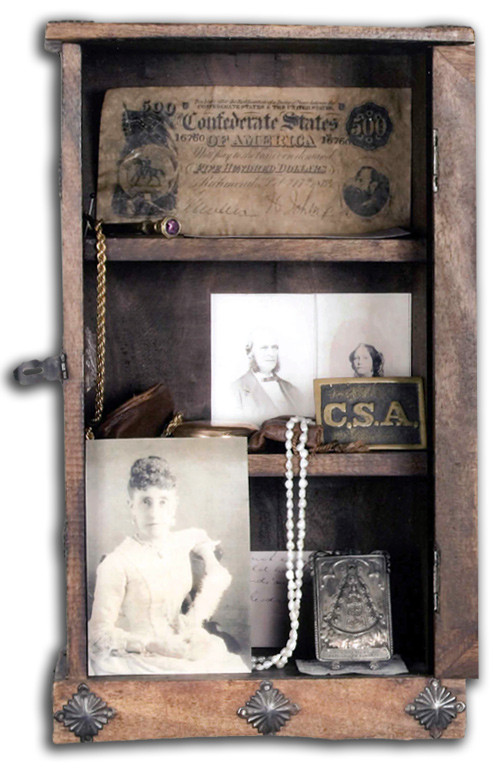 1.MARY THEODORA BROWN LANIER
& some of her Belongings in her Mexican Box.
1958 & 2004. Collection: ETHS. Gift of FLG
NOTE: She was socially prominent young lady in New York City who married in 1858. Her husband was Sidney Cook Lanier. SCL and his father, Sampson Lanier, owned a string of hotels in New York City, Birmingham, Alabama; Macon, Georgia; and Montvale Springs, near Knoxville, Tennessee. They decided to make Montvale Springs their family’s home shortly before the Civil War. Their first son, Sterling Sidney Lanier, was born there. The Lanier family, Southerners for generations and good friends of Jefferson Davis, were active supporters of the Confederacy. SCL also was a prominent member of the Cotton Exchange which sent a great deal of “illegal” cotton to England during the War. SCL was on one of the boats running the Yankee blockage when he was captured and tried for treason. Happily, the judge, A. D. Russel, was his wife’s stepfather. So SCL was given the choice of death or exile. He chose exile.
The family moved to Jalapa, Mexico, where he was an unofficial ambassador from the Confederate State of America to the court of Emperor Maximillian. Their second son, A. D. Russel Lanier, was born in Mexico in 1865. SCL died there in 1866. SCL’s nephew was Sidney Lanier, the famous poet of the Old South, who was named for this uncle. Mrs. Lanier (MTL) was a poet herself, and played a major role in encouraging her young nephew to follow his heart into poetry. This special relationship began during their summers together at Montvale Springs. He called her his “Montvale Muse.”
She also introduced him to the parallel divinities of World Religions. To this she has been introduced by her friend, Ralph Waldo Emerson. MTL and her son ADRL attended the legendary World Parliament of Religions in Chicago in 1893 where Hinduism was introduced to America not by books but by a living teacher, Vivekananda. MTL, her son and his wife became members of the Theosophical Society which is dedicated to helping people in the West comprehend Asian spiritual traditions and to develop a universal morality.
Wonderful letters to MTL survive from her nephew and Jefferson Davis. They are documented in the archives of the East Tennessee Historical Society in Knoxville. MTL spent her later years in the home of Mr. & Mrs. A.D.R. Lanier in Tennessee. She died there in 1908 with both sons at her side.
Above MTL’s photograph in this box are carte-de-visite photographs of her parents: her stepfather Judge A. D. Russel of the Supreme Court of New York (a good friend of General Grant, later President Grant), and her mother (the former Eliza Kirkby Taylor of Virginia, a relative of President Taylor). In the corner of the box is a Catholic icon that was important to her, after she converted to Catholicism in Mexico. It pictures Mary standing on a Crescent Moon. Over Her head, Sun & Moon conjoin. In between is a ladder of flowers, a mystical ladder that she told my Grandmother represented the chakras, or stages of awareness, in traditional Tantric yoga. MTL wrote a poem about this striking symbolism, a poem called “Christian Nirvana.”
Mother Mary, Queen of Light
Guide us up to God’s True Sight.
Up the Ladder spirit climbs
Up to where the Sun-Moon shines.
On her deathbed, MTL (my Great Grandmother) gave her sacred icon to her daughter-in-law (my Grandmother Bertie). Bertie first showed me this treasured icon and read me the poem in 1954 when I was 14. I was haunted by the image of the sun & moon in conjunction. I had become a member of the Junior Astronomers of Dayton Ohio, so I thought the image over Mary’s head was of a solar eclipse. Bertie explained this is not an “external” image of a solar eclipse, but rather an “internal” image of what happens when heart and mind become harmonious.
That same year I started to pour through the illuminated books of Blake in the huge library of my Godfather, A.B.B. MacLeMore, who was teaching me the history of World Religions in general, and Sacred Art in particular, at the request of my Episcopal minister. “Uncle Arthur” (as I called him) was my weekend teacher all through high school. It is thanks to this special education my Godfather gave me that I was able to teach a course on Comparative Religion during my sophomore year at Kenyon College. He was steeped in Christian Alchemy but loved all spiritual traditions. He said he was in favor of “whatever glows in the dark.” I told him that my experience of Blake was “like drinking a rainbow.” He smiled and gave me a facsimile edition to take home and savor. That was the 1947 Falcon Press edition of SONGS OF INNOCENCE & EXPERIENCE. I was so moved by Blake’s profound spirit that I decided I wanted to become a poet, an artist, and a booksmith who could combine word and image on the printed page. I started a small “private press” in the attic and named it Sun Moon Press. The first steps on my career path had been taken.
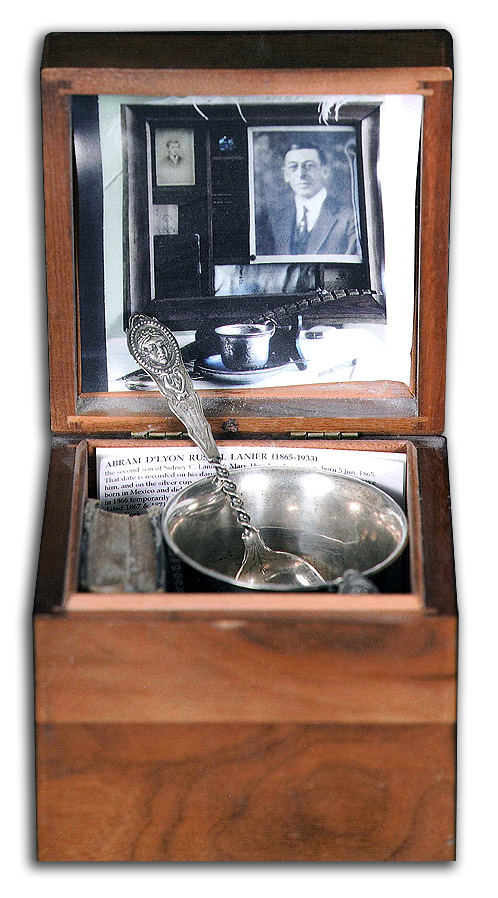
2.A. D. RUSSEL LANIER
& some of his Belongings in his Martha’s Vineyard Compass Box
1975-76 (& 2004). Collection: ETHS, Knoxville. Gift of FLG
NOTE: He was born in Jalapa, Mexico, in 1865. He was named for his mother’s stepfather, Judge A. D. Russel. The silver cup & spoon in this box was given to him when he was born by his namesake. The cup is so inscribed. He did not speak English until the family returned to the United States. After college at the University of Alabama, he became a civil engineer. He and his brother started a prosperous company, Monroe Warrior Coal & Coke. However, he left the company because he preferred the fresh air of forests and mountains to the dirty air of mines. He spent most of his career designing and executing plans for the Tennessee Coal, Iron, & Railroad Company, which he helped to sell to U.S. Steel in 1901. His primary tasks were carving away mountains for railroad tracks. Half in jest, he liked to call himself a “sculptor.” His innovative engineering concepts and elegant landscape drawings were widely admired. He made periodic visits to Mexico to maintain the grave of his father, and to collect Pre-Columbian art. His library was quite large, included books on many subjects, including books on all religions. His favorite book was the PARLIAMENT OF WORLD RELIGIONS. He often told his daughter that he “feels God everywhere.” His hobby was sailing. His fondest childhood memories were spending time with Sidney “The Poet” (who was his first cousin and friendly “uncle”) and sailing off Martha’s Vineyard. He died in 1933.
In the lid of this box is a photograph of the first version of this assemblage portrait, the shadow box of 1974-76.
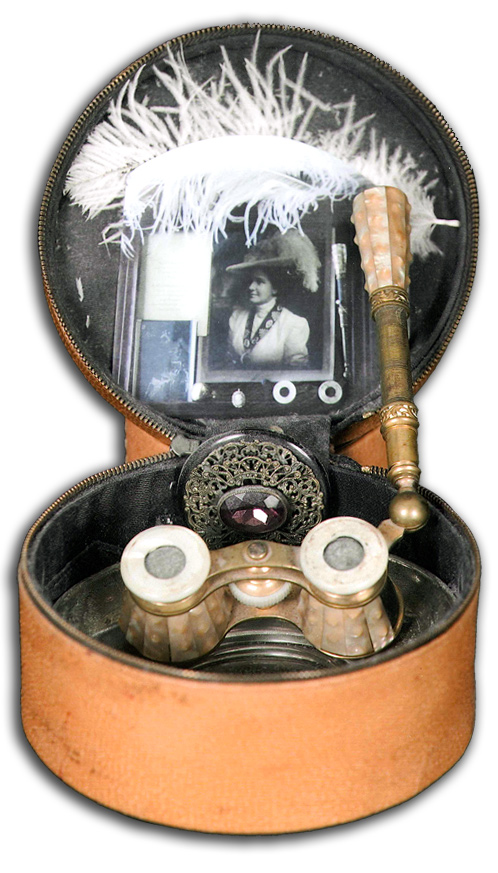
3.ALBERTA BENTON MANKIN LANIER
& some of her Belongings in her Trinket Box
1974-76 & 2004. Collection: ETHS, Knoxville. Gift of FLG
NOTE: She was born in Murfreesboro, Tennessee, the only child of John Wesley Mankin & Martha Elizabeth Mankin. He was a gentleman of some means who raised throughbred horses. Both parents died when she was young. She was raised by family members and married A.D.R. Lanier in 1904. Their only child, Martha Elizabeth Lanier, was born in 1909. A gifted hostess, her home was at the center of Chattanooga society during the 1920s and early ‘30s. The Lanier House was one of the most beautiful houses in the city. Gatherings there were often reported in the newspaper. She spent her later years as a member of the household of her daughter, acting as the “nanny” of her grandchildren whose parents were away from home during World War II. Her grandchildren fondly remember “Bertie” (as she was called) as “full of positivity.” Her collection of miniature portraits of the Lanier Family, going back several generations, was their introduction to the history of art. Bertie’s favorite color was pink which she called the “color of love.” She died in 1971.
In the lid of this box is a photograph of the first version of this assemblage portrait, the shadow box of 1974-76.
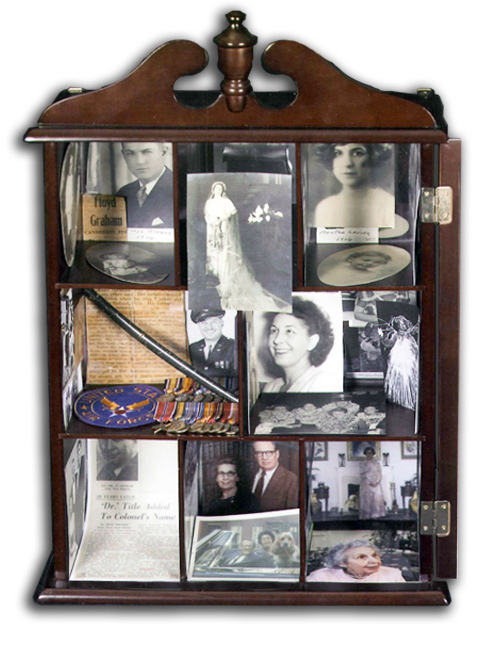 4.MARTHA ELIZABETH LANIER GRAHAM
and LT. COL. FLOYD GRAHAM
and some of their Belongings in her Hepplewhite Cabinet
2004. Collection: FLG
NOTE: She was born and raised in Chattanooga. She studied at GPS where she was May Queen in 1927, then she went to St. Mary’s College in North Carolina. Her boundless energy was first focused on dancing, and then on marketing fashion magazines. After debutante parties in Chattanooga, Atlanta, and Birmingham in 1929, she sold VOGUE and VANITY FAIR for Condé Nast in New York where she was able to visit with the window of Sidney Lanier. She met her future husband, Floyd Graham, in Oklahoma City. They married in 1933. Their two children, Mary Katherine (“Kit”) and Lanier, were born in Oklahoma in 1936 and 1940.
She founded the Junior Service League in Shawnee based on her experience in the original Junior League. At the start of World War II the family moved to L.A. where she was an air traffic controller, while her husband fought in the Pacific. The family later lived in Hawaii (where she wrote a society column) and Ohio (where she managed the Junior League Shop).
Starting in 1966, they spent their later years in Atlanta where she founded the Sustaining Members of the Junior League, and joined the Colonial Dames. She expanded the Pre-Columbian collection inherited from her parents and grandparents, largely through her lifelong friendship with Miquel Covarrubias with whom she worked in New York before she married. She loved all the great artistic traditions of the world, and shared her knowledge as a museum docent. Being a military family, the Grahams often moved every three years to a different city. The homes she designed for her family reflected her international taste. Each room was often an evocation of a different culture. It was a bit like growing up in a museum.
Their Episcopal Church was St. Phillips, where their ashes are buried. The Grahams were “Ambassadors of Good Will.” For half a century they welcomed visitors to the United States, from diplomats to foreign-exchange students. In their Golden Years the Grahams did a great deal of international travel, often visiting people in Europe and Asia whom they had entertained. In her 80s she walked the Great Wall of China, rode a camel, and climbed up the inner ramp of the Great Pyramid of Egypt. She continued to dance, and to teach dancing, regularly until she was 95. Her last home was the elegant senior-living condo tower in Buckhead on Peachtree Road called Lenbrook. She and her fellow residents usually ate at roundtables. Her favorite hobby was socializing. The many lively dinner parties she organized there gave her the reputation of being “Queen Martha of the Roundtable” and the “youngest person in Lenbrook.” She died in 2007.
Click here to return to top of page
Section B.
THE GRAHAM FAMILY
in Oklahoma City & Pottawatomie County
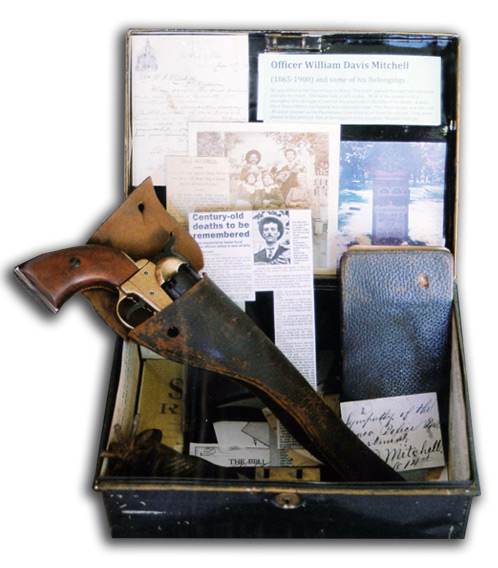 1.OFFICER WILLIAM DAVIS MITCHELL
& some of his Belongings in his Strongbox
NOTE: He was a Peace Officer, killed in the line-of-duty in 1900. The fatal bullet went into his heart through the leather book in his shirt pocket. The hole is still visible. His Colt 45 was inherited by his daughter Maydee and used by Maydee’s husband, the Rev. Thomas E. Graham, when he was a Deputy Sheriff in Tulsa.
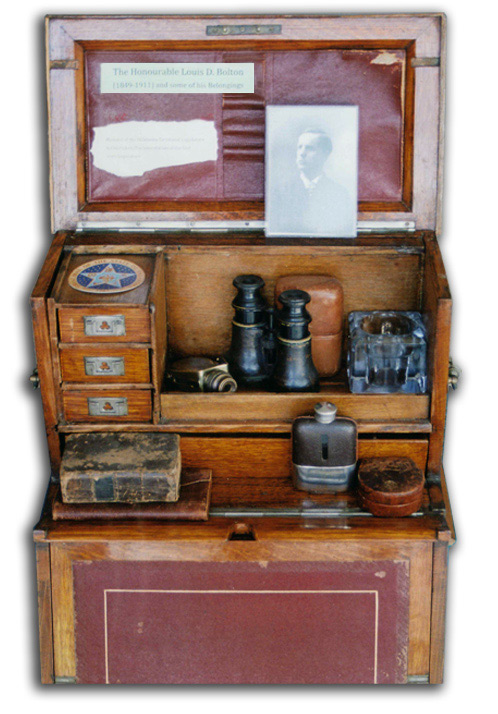 2.THE HONORABLE LOUIS DIXON BOLTON
& some of his Belongings in his Portable Desk
NOTE: He grew up in Missouri as the son a General Lewis Bolton, and was noted for his exceptional intelligence and fine horsemanship. He decided on a career that mixed real estate development and democratic politics. He served in the Missouri State Legislature as Chief Clerk & Parliamentarian. He moved to the Oklahoma Territory in 1899. He played an active role in the establishment of Oklahoma as a State (1907), and served in the first Oklahoma State Legislature. He died in 1911.
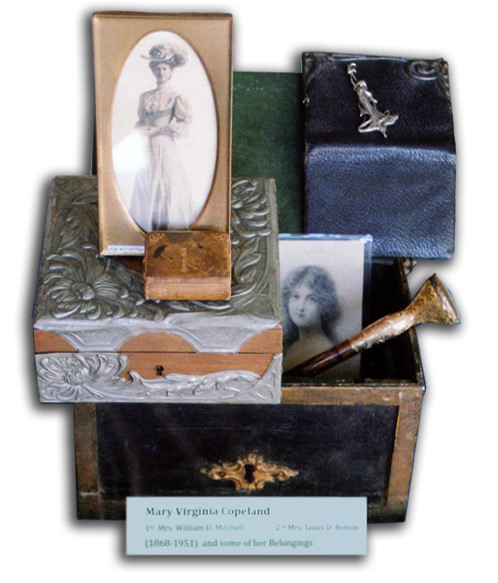 3.MARY VIRGINIA COPELAND MITCHELL BOLTON
& some of her Belonging including three of her Boxes
NOTE: Her first husband was Officer Will Mitchell with whom she had three daughters. Two survived: Maydee and Willie Agnes. He was killed in the line-of-duty in 1900. In 1906 she married her second husband Louis D. Bolton, a wealthy real estate man and an active politician. During most of her life she lived in Oklahoma City often volunteering at the Children’s Welfare League. She also formed a collection of Art Nouveau objects. She died in 1951.
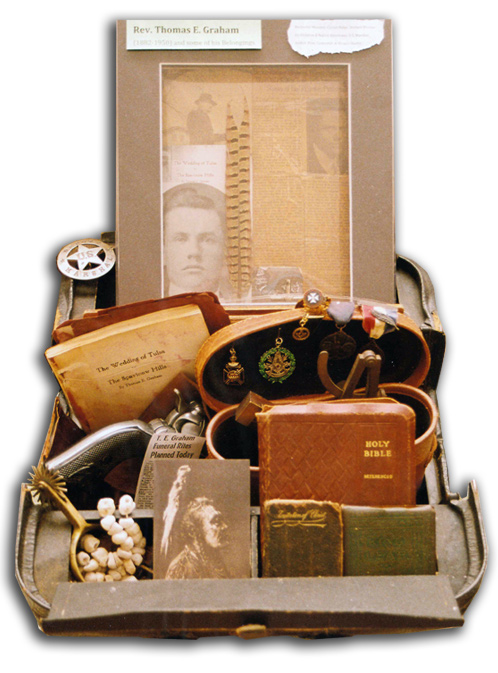 4.REV. THOMAS EDWARD GRAHAM
& some of his Belongings in his Medical Bag
NOTE: After graduating from Clarendon College he became a Methodist minister who travelled by horse to many parts of Oklahoma and Texas ministering as a “Circuit Rider” to both whites and Indians. He was assigned areas as far west as Aztec, New Mexico. Many were moved by his enthusiastic preaching. That was fortunate, as he was singing for his supper. There was no salary for Circuit Riders in those days. Like Buddhist monks who walk among the devoted with begging bowls, the Grahams lived on the food they were given by grateful Christians. The custom was called “pounding.” He also was known as a “bronco buster” and as a radical theologian who said: “God and the Great Spirit are the same.” He also was a poet, a gifted wood carver, and a part-time law officer. In 1924 he published an autobiography, THE WEDDING OF TULSA TO THE SPAVINAW HILLS. During most of his later years he lived in Oklahoma City where he was Field Director of the Children’s Welfare League. He had three brothers, Henry, Millard, and Walter, and a sister Anna. He died in 1950.
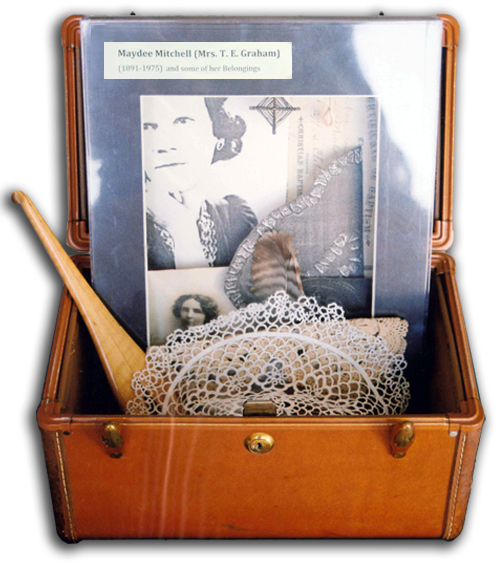 5.MARY (MAYDEE) RANKIN MITCHELL GRAHAM
& some of her Belongings in her Samsonite Cosmetics Kit.
NOTE: Maydee was the daughter of William & Mary Mitchell and later the stepdaughter of Louis Dixon Bolton. She attended Clarendon College where she met her future husband, Thomas Edward Graham. They married in 1908 and had three children: Floyd Edward Lewis Graham, Joseph Ernest Graham, and Catherine Graham. She travelled with him during the “Circuit Rider” years in Oklahoma, Texas, and New Mexico. During most of her later years she lived in Oklahoma City working for the Children’s Welfare League. Unlike many, she was proud of her Indian heritage. She had a special fondness for feathers and said: “There is some of the Great Spirit in every feather, and in each of us.” She was admired for her creativity as a lace maker. She died in 1975.
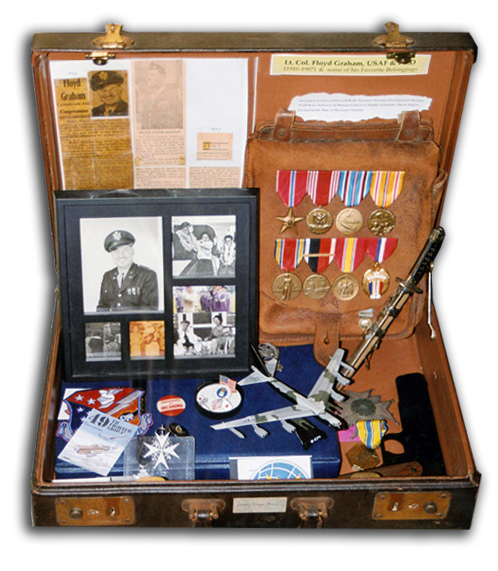 6.LT. COL. FLOYD GRAHAM, Ph.D
& some of his Belongings in his Briefcase
NOTE: He grew up in Oklahoma City and went to the University of Oklahoma at Norman. After an early career in the oil business, he joined the Army Air Corp at the start of World Art II. After serving as Executive Officer of the highly decorated 49th Fighter Group in the Pacific, he was selected by General Macarthur to be the “military mayor” of Tokyo during 1945-46. For this special service he was awarded the Bronze Star. He also was given a pair of Samurai swords by the Japanese who were grateful for their compassionate treatment. He later participated in the formation of the Air Force Academy, and managed the Directorate of Advanced Systems Technology at Wright-Patterson Air Force Base in Dayton, Ohio. This R+D “think tank” was active in the development of the B-52 and early rocket systems. After earning his Ph.D in business management, he had a third career as a professor at American University in Washington, D.C. and Oklahoma City University. He died in 1987.