as Managing Editor or Editorial Consultant
(before 1988)
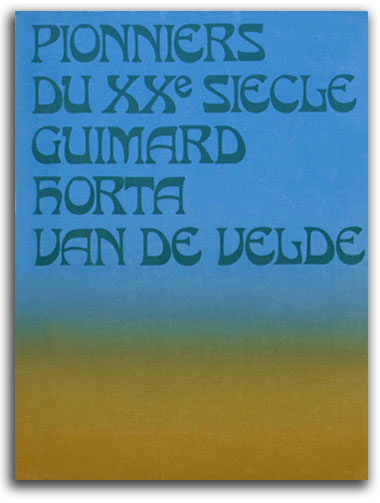
1971 PIONNIERS DU XXe SIECLE:
GUIMARD, HORTA, VAN DE VELDE
Paris: Musée des Arts Décoratifs
(editorial consultant & member of the organizing committee)
NOTE: The heart of this exhibition was the MoMA Guimard show of 1970 which was the first Guimard retrospective ever organized. The most important outcome of this exhibition in Paris is that Guimard’s works (metros, buildings. etc.), which were being destroyed, were declared historical monuments.
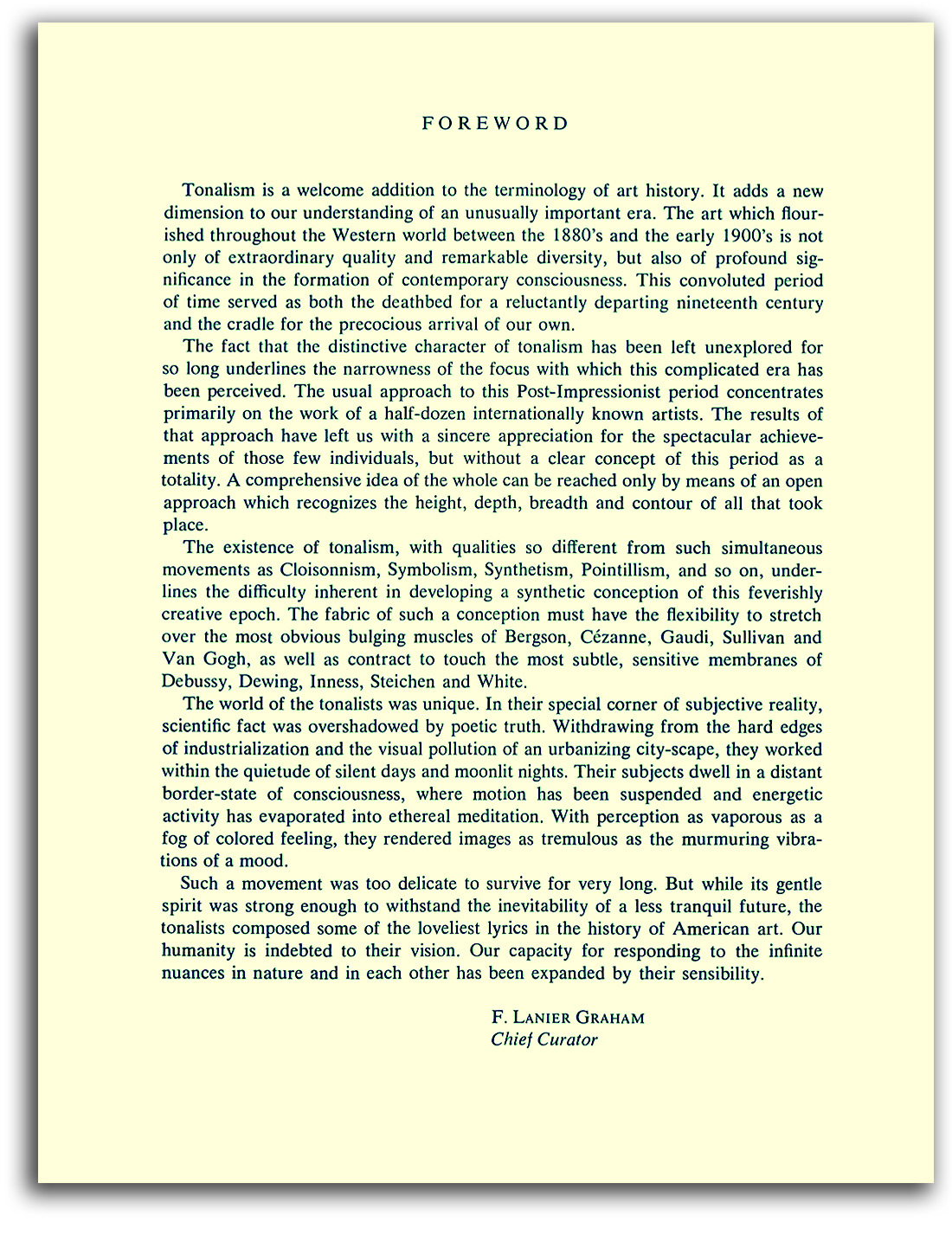
Click here or on above image for closer look at Foreword by FLG
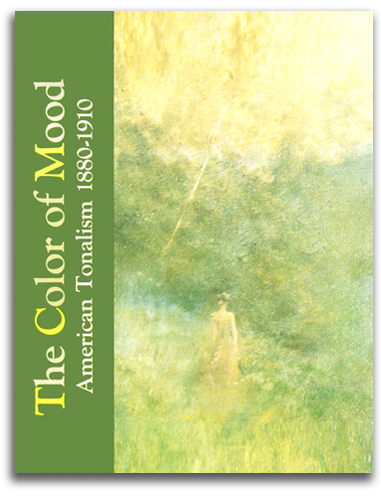
1972 THE COLOR OF MOOD:
AMERICAN TONALISM 1880-1910
by Wanda Corn
San Francisco: Fine Arts Museums
(commissioning editor, managing editor & author of the foreword)
NOTE: The first book on this subject & still a standard reference. The history of the legendary TONALISM exhibition has been told by its curator, Wanda Corn, as a chapter in Simpson, ed., LIKE BREATH ON GLASS: WHISTLER, INNESS, AND THE ART OF PAINTING SOFTLY, 2008.
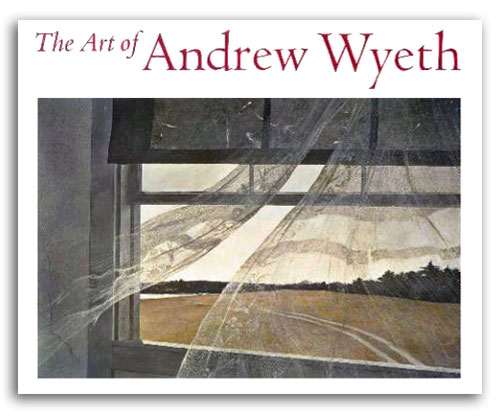
1974 THE ART OF ANDREW WYETH
by Wanda Corn, et al.
San Francisco: Fine Arts Museums & New York Graphic Society.
BOOK OF THE MONTH CLUB
(commissioning editor & managing editor for FAMSF)
NOTE: The first book to place Wyeth in a comprehensive arthistorical context. Over 700,000 copies were sold during the 1970s.
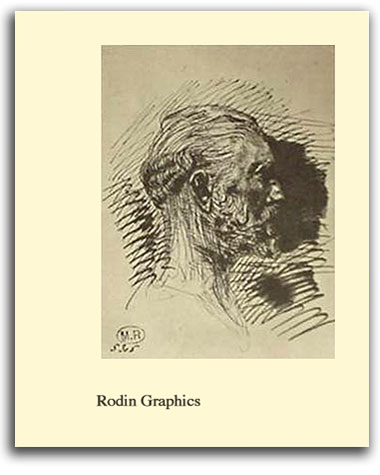
1975 RODIN GRAPHICS:
A CATALOGUE RAISONNE
OF DRYPOINTS & BOOK ILLUSTRATIONS
by Victoria Thorson
San Francisco: Fine Arts Museums
(concept originator, commissioning editor & managing editor)
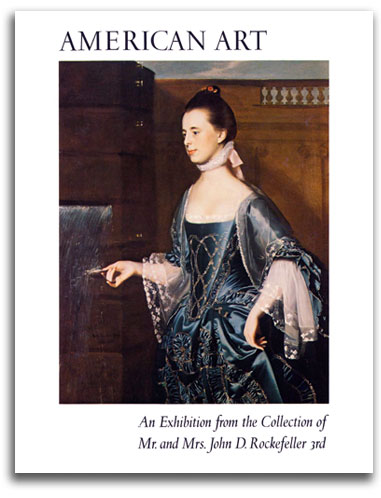
1976 AMERICAN ART:
AN EXHIBITION FROM THE COLLECTION OF
MR & MRS JOHN D. ROCKEFELLER 3rd
by E. P. Richardson
San Francisco: Fine Arts Museums
& Whitney Museum of American Art, New York
(concept originator, commissioning editor & managing editor)
NOTE: This was the first public exhibition of what was considered the world’s most important private collection of American paintings. After a negotiation of several years, a secret negotiation involving only Mr. Rockefeller & his curator E.P. Richardson with Ian White & his curator FLG, the collection was later donated to the Fine Arts Museums of San Francisco.
NOTE: While I was using about half our acquisition funds to enrich the French collection at the Legion, I was using the other half to enrich the American collection at the de Young. That side of the story had an added dimension because looking over my shoulder was John D. Rockefeller 3rd. After completing his Asian collection and donating it to the Asia Society, he had assembled the world’s finest collection of 18th, 19th, & early 20th century American painting. He had been given first refusal on Church’s “Rainy Season in the Tropics” by the dealer, Stuart Feld. However, he thought it was too large for their apartment. When in 1970 he learned that it had been purchased for San Francisco (at my recommendation), he called. I was Acting Director that day, so the call came to me. Mr. Rockefeller started by saying he had heard nice things about me from his wife (who was President of New York’s Museum of Modern Art when I worked there), then asked three pointed questions.
First question: “I know it is a great painting, but the dealer was asking a world-record price. Why did you buy it?” I said because, in my opinion, there is no finer example of the Hudson River School, which is the supreme achievement of American landscape painting. And landscape painting of this quality is one of the greatest contributions the United State has made to World Art. The closest comparison is the great gift China made to World Art in the form of the profound landscape scrolls that crystallized during the Sung Dynasty. “Rainy Season,” I continued, radiates the finest values of the American spirit – solid realism and clarity of vision blended with unlimited hopefulness, and transcendent spirituality. It will inspire visitors for generations.
Second question: “Does this mean you have a major interest in American painting?” “Yes,” I replied. “It does.” I was able to tell him that I was writing a book that would place the San Francisco collection into the wider context of American painting as a whole. And that the first major project of our new collection program was going to be a special exhibition of American paintings. I was going to put the best of the American paintings from the de Young collection and the Legion collection together. I reported that earlier curators in both museums had done a good job in this area. But by combining the two collections, the whole will be greater than the parts. It looked to me like we had the best pre-modern American group on the West Coast.
Third question: “Would your museum be interested in having my American collection?” “Yes, Mr. Rockefeller, we would.” He ended the conversation by saying he would come out to see our American exhibition, and in the meantime I should tell no one of this conversation, not even the Chairman of the Board, except of course for the Director, Ian White, and Mr. Rockefeller’s cousin, Mary Homans (who was on the Board of FAMSF). He wanted absolute secrecy! That request surprised me, but Ian and I honored it for years. (That was not easy to do. The temptation to talk about it was great. I was glad I had been raised in a well-disciplined military family and had a degree in diplomacy.)
Several months later, Mr. Rockefeller and his curator, E. P. Richardson, came to see the show. They were impressed with the depth and breadth of the American collection. In the last gallery, the four of us spent a long quiet time in front of “Rainy Season in the Tropics” which remains the most visited painting in the American collection. The silence was a reverence. As we walked back through the show, very nice things were said about the book I wrote to go with this exhibition, THREE CENTURIES OF AMERICAN PAINTINGS. In short, our secret negotiation for his collection was off to a good start. That negotiation would continue for years, with almost all of the personal conversations and letters being the skillful work of Ian White. My job as Chief Curator was to supervise the museum’s collections & exhibitions programs as a whole, as well as manage the publications program. There was little time for social interactions with potential donors. That was the Director’s job.
When considering what other American paintings to buy, I looked in two directions. There was a tradition in both museums of buying minor paintings for small prices. I felt strongly that it is more meaningful to consolidate funds and buy masterpieces. It is visual greatness that lifts the human spirit to the highest levels. Following the Church masterpiece, my question was: who is the most important artist not yet represented? Answer: Eakins. So I worked hard to locate a fine Eakins, and happily was able to acquire “The Courtship.” The price was high but so was the quality. The price would have been higher but the signature had not yet been discovered. I managed to find it (but did not inform the dealer of this fact until after the purchase had been made.) There was not enough money to buy “great names” very often. I would have liked a haunting Ryder and a sparkling Homer, but that was not possible at the time. I decided the most useful way to use the next round of funding would be to build on existing strength.
We had a good small collection of Trompe l’Oeil (Fool-the-Eye) paintings, centered on Harnett’s famous “After the Hunt.” With the judicious use of the available funds, I felt it would be possible to make a good collection into a great collection. Not every art style can touch the hearts of a wide public. The Hudson River School can, and so can “Fool the Eye” paintings. So I focused on the best painters of the era working in this field of visual magic. I eventually decided to acquire “Still Life with Pitcher, Candle, & Books” (a delicious batch of books) by Peto, Pope’s majestic “Trumpeter Swan,” and a delightful school slate board by Haberle. The result was a very strong gallery with a great deal of popular appeal. With additions made from the Rockefeller Collection, this gallery remains much as I left it, and is still one of the most popular museum experiences in San Francisco. When the new de Young Museum building opened in 2005, the art critic of the SAN FRANCISCO CHRONICLE called this gallery the strongest in the museum.
Ian and I continued to meet with Rockefeller and Richardson from time to time, either in San Francisco or New York. Both were watching our collection program, our exhibition program, and our education program very closely. They were impressed by our innovative exhibitions of American Tonalism in 1972 and of Andrew Wyeth in 1974, along with our extremely successful catalogues for those shows. Being very interested in our educational programs, they were struck by the fact that, as Field Faculty for New York University, I had invited Wanda Corn to curate both exhibitions as part of her graduate work. Tonalism was part of her M.A. work, and Wyeth was part of her Ph.D work. As Field Faculty for Harvard, I was supervising a catalogue of our French drawings that Phyllis Hattis was preparing as part of her Ph. D. work. Rockefeller and Richardson were especially impressed when we were able to persuade the Archives of American Art to locate their West Coast office in our museum.
Mr. Rockefeller was in no hurry to make a decision. He was a deliberate person, and he was considering proposals from museums on the East Coast who wanted his collection. And he was listening very carefully to our arguments for why San Francisco should receive his collection. I gave him three arguments that were particularly meaningful to him. 1) The East Coast did not need it. To balance the artistic resources of the nation, California would be a better choice. 2) San Francisco is the Gateway to America from Asia. 3) Our Board was so committed to American Art, long-term, that they were raising funds to build an American Wing, even though they knew nothing of the possibility of the Rockefeller donation. We later learned that our competition had included the National Gallery of Art and the National Collection of Fine Arts in Washington, D.C., the Whitney Museum of American Art in New York, and the Amon Carter Museum in Fort Worth.
As the years went by, the talk became more and more friendly. Each conversation moved the possibility of a donation a little closer to a decision. On one occasion, Rockefeller was considering the purchase of a Peto: “Still Life with Pitcher, Candle, & Books”. He asked me if I thought it would go well with the Peto we had recently acquired. That told me THE DREAM was coming even closer. During a lunch at Rockefeller Center, to move things along (with Ian’s approval), I proposed that an exhibition of the collection be presented for the first time during the Bicentennial Year (1976) at the de Young Museum. Richardson would write the catalogue and I would edit it. The table broke out in smiles. We had a plan!
Ian continued his increasingly warm personal relationship with Mr. Rockefeller, mostly by long distance. Ian’s charm and deep dedication to American art were going a long way toward cementing the deal. Ian called me in when it was time for both of us to meet with Mr. Rockefeller, or when it was time to plan the next stage in our strategic plan. Our working relationship was exceptional in the museum world where the top two staff people do not always see eye to eye. The trustees called us the Dynamic Duo. Ian said he thought we were like Réné d’Harnoncourt and Alfred Barr at MoMA. He did the people work and I did the art work.
By the time of the Bicentennial Year, Mr. Rockefeller had expanded his circle of trust to include the Board Chairman, first Ransom Cook, and then Walter Newman. To make a long story short, the bicentennial exhibition took place under the brilliant curatorship of Wanda Corn, and the book appeared on schedule. It was the last book I edited for FAMSF. After that, the show and the book went on to the Whitney Museum of American Art in New York. The Rockefellers were very pleased with everything – the exhibition, the educational programs that Wanda and I had developed around the exhibition, and Ted Richardson’s catalogue that I had edited. That book was my farewell to Mr. Rockefeller and to FAMSF. I resigned shortly thereafter.
Mr. Rockefeller was especially pleased when the new American Galleries at the de Young opened on the 4th of July 1977. (At the dinner that celebrated the new galleries, I appreciated the kind words Ian spoke about my role in developing the American Collection and generating the Rockefeller Exhibition.) Mr. Rockefeller had seen all he needed to see. The public announcement of the decision to donate the collection to San Francisco was made by Mr. Rockefeller in 1978 with Dianne Feinstein and Mayor Moscone beside him. With the arrival of the collection in 1979, the Fine Arts Museums of San Francisco had become a world-class museum. As the 1970s began, neither the de Young Museum nor the Legion of Honor had a very high national ranking. As the 1970s ended, the Fine Art Museums of San Francisco was being ranked in the “Top 10.”
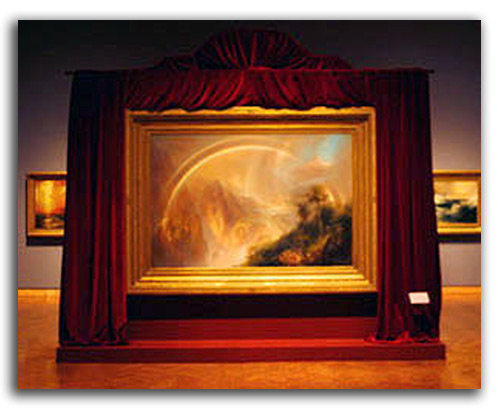
Rainy Season in the Tropics by Frederic Church. 1866
Oil on canvas
Collection: Fine Arts Museums of San Francisco
Mildred Anna Williams Collection
Click here for a detailed recounting of this period in FLG’s tenure in San Francisco
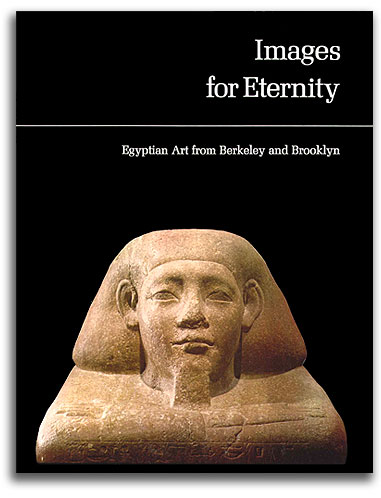
1976 IMAGES FOR ETERNITY:
EGYPTIAN ART FROM BERKELEY AND BROOKLYN
by Richard Fazzini
San Francisco: Fine Arts Museums (managing editor)
1977 RODIN’S SCULPTURE:
A CRITICAL STUDY OF THE SPRECKELS COLLECTION
by Jacques de Caso
San Francisco: Fine Arts Museums
(concept originator, commissioning editor & managing editor until 1976)
1978 “SACRED ART OF THE WORLD” SERIES
Boulder: Shambhala Publications
(concept originator & editorial consultant)
NOTE: Intended to gather into one library set facsimile editions of great books from all spiritual traditions. Owing to copyright issues, only two facsimile editions were published, both by William Blake.
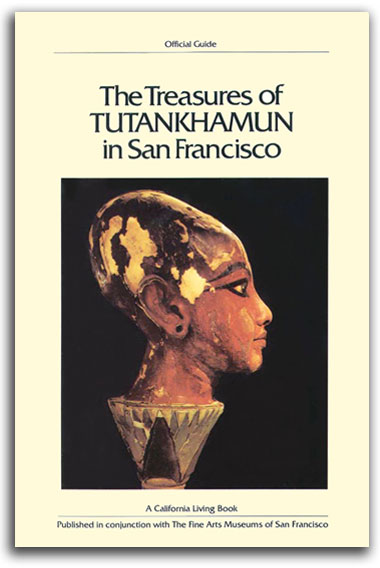
1979 TREASURES OF KING TUTANKHAMUN
IN SAN FRANCISCO: OFFICIAL GUIDE
San Francisco: California Living Books
(concept originator & editorial consultant)
NOTE: Over 300,000 copies were sold during the exhibition. This was the first $1 “color catalogue” by an American museum.
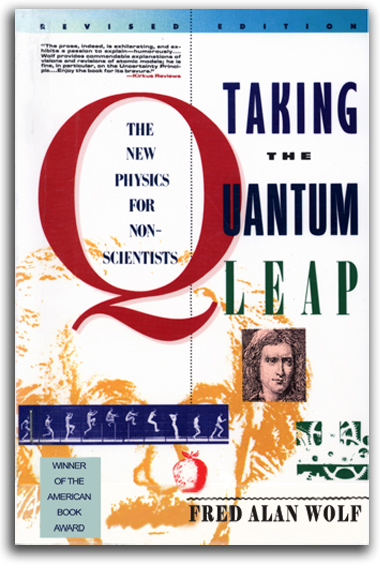
1981 & 1986 & 1989 & 1992 & 1996
TAKING THE QUANTUM LEAP:
THE NEW PHYSICS FOR NONSCIENTISTS
by Fred Alan Wolf
San Francisco: Harper
(agent & editorial consultant)
NOTE: WINNER OF THE NATIONAL BOOK AWARD, 1982
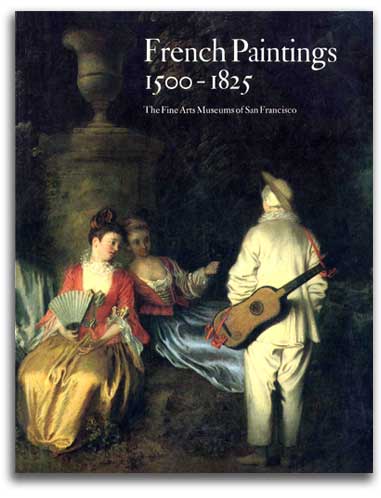
1987 FRENCH PAINTINGS 1500-1825
by Pierre Rosenberg & Marion C. Stewart
San Francisco: Fine Arts Museums
(commissioning editor & first managing editor until 1976)
NOTE: Rosenberg was later Director of The Louvre.
ADDENDA
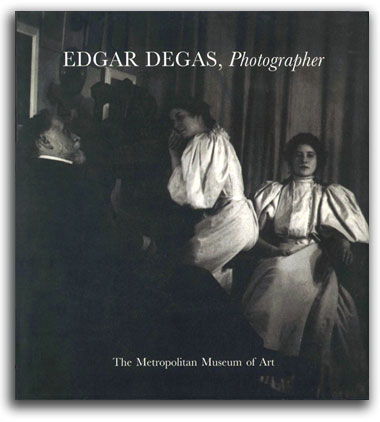
1998
EDGAR DEGAS, PHOTOGRAPHER
by Malcolm Daniel, et al.
New York: Abrams & Metropolitan Museum of Art, in association with the J. Paul Getty Museum, Malibu, & the
Bibliotheque Nationale de France, Paris (editorial consultant)
NOTE: This was the first exhibition of Degas as a photographer. FLG began his study of Degas photographs during the mid 1960s under the guidance of A. Hyatt Mayor, Curator of Prints at the Metropolitan Museum of Art in New York. Because of his expertise in this field, FLG was hired during the early 1990s by The Getty Museum to explore the possibility of an exhibition by compiling a research report on all the surviving original Degas photographs in the United States and Europe as well as a comprehensive bibliography. FLG’s pioneering research papers have been donated to the Photography Department of the MMA.
~ GKS