The following articles by FLG are from SHAMA: A QUARTERLY REVIEW OF SHAMANISM & ART
VOL. 1 THE NATURE OF SHAMANIC ART 1991
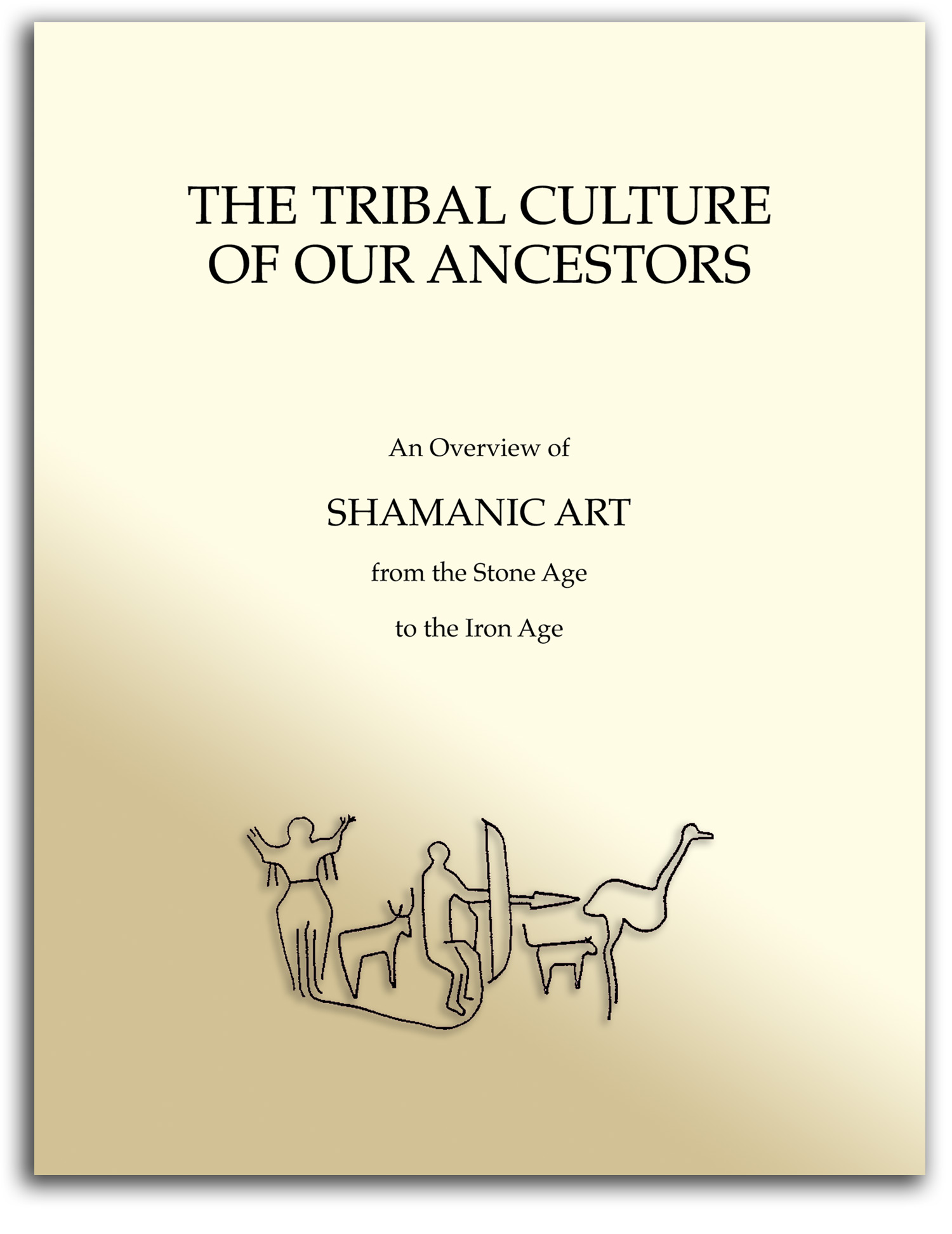
Spring The Tribal Culture of Our Ancestors (Click here to view in PDF format)
Summer Shamanic Fetish Figures
Fall Shamanic Art of the World’s First Religion
Winter Shamanism: A Bibliography
VOL. 2 THE NEOSHAMANIC SPIRIT IN MODERN ART 1992
Spring Surrealism & Shamanism: A Meeting of Spirits
Summer Max Ernst, “Shaman” of Dada-Surrealism
Fall Frederick Sommer, Shamanic Photographer
Winter Barnett Newman, “Shaman” of Abstract Expressionism
VOL. 3 NATURAL VISIONS 1993
Spring/Summer Natural Visions: “Shamanic” Images in Modern Art
Fall/Winter Natural Visions: “Shamanic” Figures in Photography
VOL. 4 VISIONS OF THE SHAMANESS 1994
Spring/Summer Visions of the Shamaness: Beyond the Color is the Light
[ex. cat.]
Fall/Winter Visions of the Shamaness: Beyond the Form is the Symbol
[ex. cat]
VOL. 5 THE GODDESS: SHAMANIC & NEOSHAMANIC 1995
Spring The Goddess: A Bibliography of Books
Summer The Goddess & the Pyramid: Reflections on Symbolism
Fall The Chakras & Tribal Art: Reflections on Symbolism
Winter The Typology of Goddess Iconography in WORLD ART:
An Analysis of Primary Groups
VOL. 6 ART OF THE EARTH 1996
6a Spring A Review of DHARMA GAIA
6b Spring A Review of NAVAJO & TIBETAN SACRED WISDOM
6c Spring Dreaming Eyes: A Review of DREAMING WITH OPEN EYES:
THE SPIRIT OF SHAMANISM IN 20th CENTURY ART & CULTURE
B Earth Art: A Portfolio of Traditional Works
6e Summer Earth Art: A Portfolio of Contemporary Works
6f Summer Earth Art: A Bibliography
6g Winter Tribes of Northwest California
6h Winter Tribal Symbols of the Pacific Northwest
.1 The Sun-Moon Rattle: Hearing the Shaman’s Song
.2 The Tongue-of-Transmission: Raven Rattle Symbolism
.3 Sisiutl: Shamanic Serpent of the Sea
.4 Totem Poles: The Untold Story
.5 Contemporary Fiber Art by Dorothy Grant
.6 Rattles Revisited: Bill Holm replies to SHAMA
.7 Totem Talk: Hilary Stewart replies to SHAMA
VOL. 7 SHAMANISM, SYMBOLISM, & SOCIETY 1997
7a Spring & Summer Shamanic Transformations in World Art
.1 Bird-Man of Lascaux
.2 Bird-Man of Cueva-Pintada
.3 Bird-Man of Wild Horse Canyon
.4 Bull-Men of Minoan Crete
.5 Bull-Men in Modern Art
.6 Falcon -Men in World Art
.7 Alaskan Shaman Masks
7b Fall & Winter Shamanic Echoes in Contemporary Art
.1 Henry Rollins Winter
.2 Betye Saar
.3 Renée Stout
.4 Carlo Villa
.5 Yolanda Lopez
.6 Bill Reid
.7 Robert Davidson
.8 George Morrison
.9 Jimmie Durham
.10 John Hoover
.11 R. E. Bartow
.12 Brian Tripp
.13 Frank LaPenna
.14 Helen Hardin
.15 Abe Anghik
.16 Jaune Quick-to-See Smith
.17 Mariano Valadez
.18 Pablo Amaringo
.19 Isamu Noguchi
.20 Seong Moy
.21 Ruth Azawa
.22 Margo Machida
VOL. 8 THE ART HISTORY & SOCIOLOGY OF NATIVE AMERICAN ART:
A Survey of the Literature for the California Indian Museum 1997
8a Native North American Art History, 1983: A Review
8b The Early Years of Native American Art History: The Politics & Scholarship of Collecting, 1992, edited by J. C. Berlow: A Review
8c Bibliography of Articles & Papers on North American Indian Art, 1969, edited by A. D. Harding & P. Bolling for the IAC Board: A Review
8d The Indian Arts & Crafts Board: An Aspect of the New Deal Indian Policy, 1983, by R. F. Schrader: A Review
8e Native American Art & The New York Avant-Garde, 1995, by W. Jackson Rushing: A Review
8f Native American Architecture, 1989 by Peter Nabokov & Robert Easton
8g Magic Images: Contemporary Native American Art, 1981 by E. L. Wade & R. Strickland: A Facsimile Edition
8h “Contemporary Native Art: A Bibliography” by L. Abbott in American Indian Quarterly, Summer 1994
8i Artists & Shamanism in News from Native California: LaPenna, Tripp, Fonseca, Blake, et al.
8j Tribal Art & Modern Art: A Bibliography of General Surveys
8k Contemporary Native American Art: A Bibliography of General Surveys
8l Artist Profiles in Shaman’s Drum
8m Artist & Museum Profiles in American Indian Art Magazine
8n Native American “Religion”: A Bibliography
8o Traditional Native American Art: An Outline Summary of Arthistorical Characteristics
VOL. 9 THE ART HISTORY & SOCIOLOGY OF NATIVE AMERICAN ART:
A Survey of the Institutions for the California Indian Museum 1997
9a Native American Collections in North American Museums: A Short History & Checklist
9b Native American Museum Collections & Private Collections in California: A Checklist
9c Native American Collections in Northern Califonia: A Checklist
9d Native American National Organizations in the USA with a special interest in Art: A Checklist
9e Native American Libraries & Research Centers in California: A Checklist
9f Native American Studies programs at American Universities: A Checklist
9g Native American Museums recently established on the Pacific Coast: An Illustrated Survey
9h Native American Museum Collections in Europe: A Checklist
9i Native American Art Exhibitions: An Illustrated Chronology of Major Exhibitions in the USA
9j Native American Museum Funding : A Survey of Sources
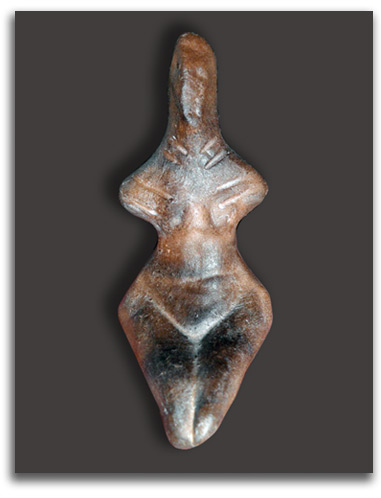
Mother Goddess. Eastern Europe. c.3,000-5,000 BCE
Engraved stone. Collection: IAD, 2011
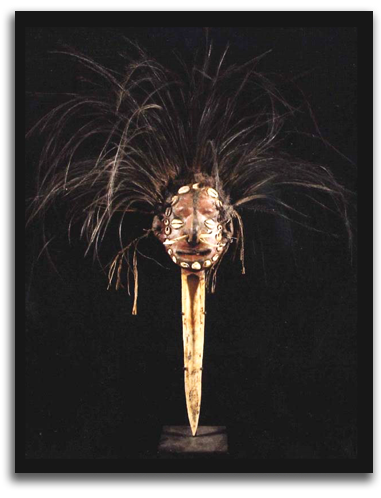
Payback Dagger. Iatmul tribe, Sepik River, Papua New Guinea. 20th century
Mixed media. Collection: FLG on loan to IAD
Published in GLOBAL VISION: A SURVEY OF WORLD ART, Part 1, 2006
NOTE: Various daggers usually made from the bones of cassowary birds are worn in armbands. The ‘Payback Dagger’ is often used in rituals that return the spirit of a creature that has been killed to the source-of-all-things so it can be born again to feed others on another day or to avenge a person who has been wrongfully killed. This dagger has the face is that of a person who will be avenged.
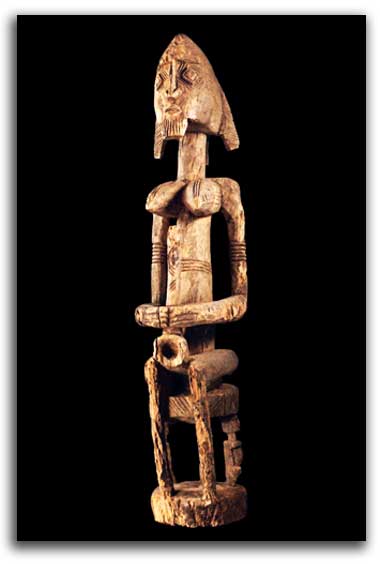
Nommo Figure (Divine Androgyne). Dogon tribe.
Mali, Africa. 19th/20th century.
Wood. Collection: FLG on loan to IAD
Published in GLOBAL VISION: A Survey of World Art, Part 2, 2008
NOTE: The best known Androgyne figures in all of Africa were carved by the Dogon in Mali. This excellent example is filled with male/female symbolism. The genitalia are male, the breasts are female. The spoon in front symbolizes ideal womanhood, the quiver in back symbolizes ideal manhood. The beard represents both. The stool is made up of a round top, symbol of the sky god, and the four legs of the earth goddess. The Dogon came to Mali from the east, probably the Sudan, just south of Egypt. Curiously, their mythology has much in common with that of Bronze Age Egypt. One of their myths is very close to the myth of the Isis/Osiris. The Dogon creator god is a self-created sky god called Amma (Ammo) who created the world with the vibrations of his words. He mated with the earth goddess to produce Nommo who is the primary focus of Dogon worship. Nommo and the bisexual paired offspring of Nommo were self-fertilizing Androgynes who produced the Dogon people and taught them how to live. At the time of initiation, the young Dogon learn these tribal truths and how they too are bisexual Androgynes who must be made into one gender or another. This is done by means of ritual male and female circumcision. Males have their ìfemaleî part (the foreskin) removed. Females have their ìmaleî part (the clitoris) removed. Dogon rituals celebrate the mutual respect of the genders for each other and for their shared cosmic Androgyny.
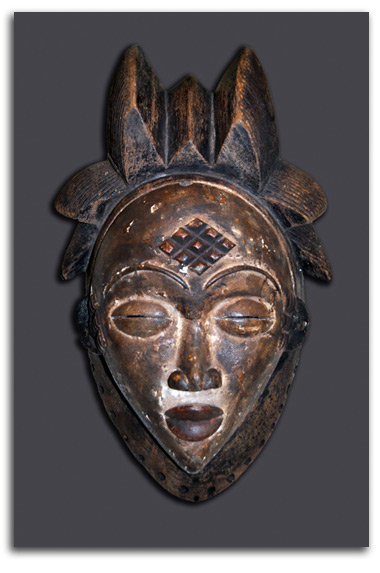
Wedding Mask. Puno tribe. Congo/Gabon
mixed media. Collection IAD, 2011
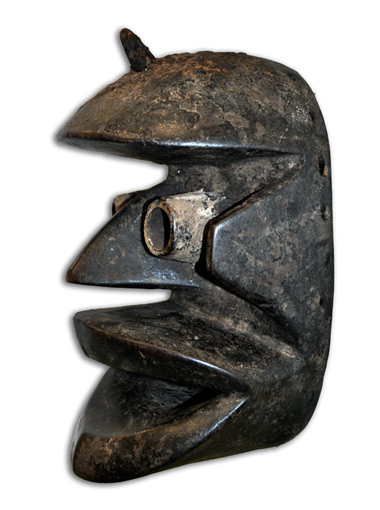
Tribal Police mask. Collection IAD, 2011
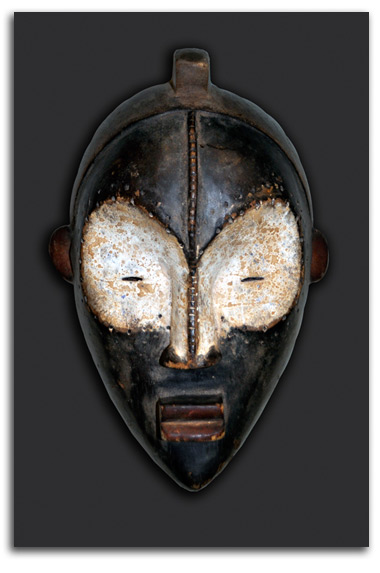
Mask. Fang tribe. Cameroon
mixed media. Collection: IAD, 2011
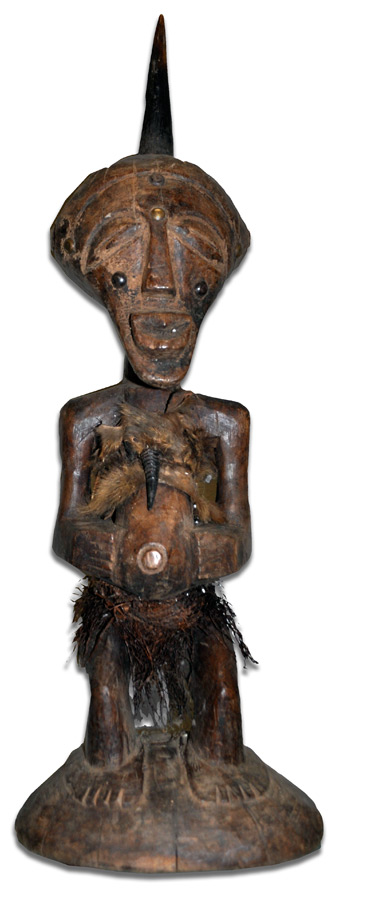
Nkisi (power figure). Songye tribe. Congo
mixed media with a horn. Collection: IAD, 2011
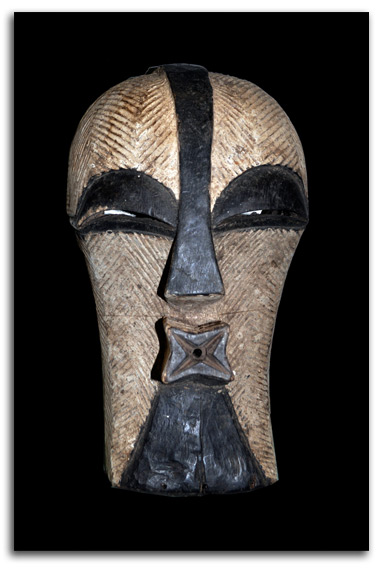
Collection IAD, 2011
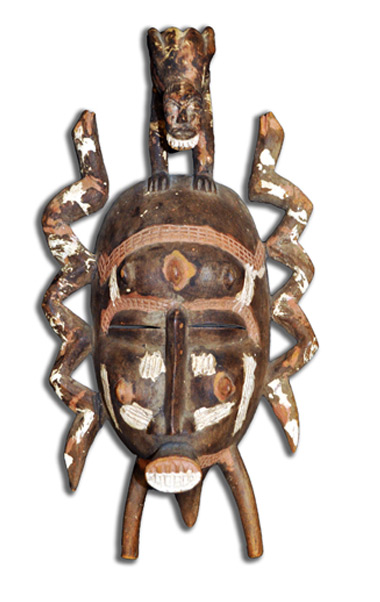
Senufo tribe: Face mask. Collection IAD, 2011
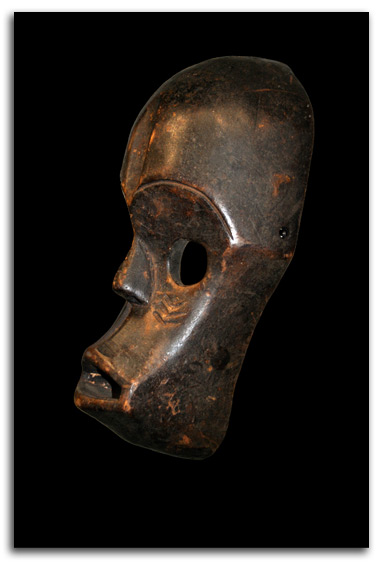
Monkey Mask. Collection IAD, 2011
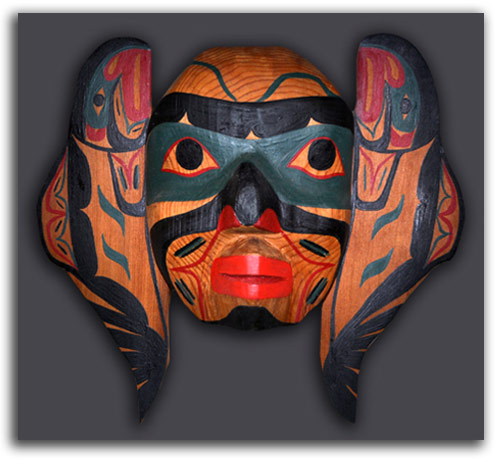
SALMON TRANSFORMATION MASK.
Northwest Coast. 20th century
Collection: IAD
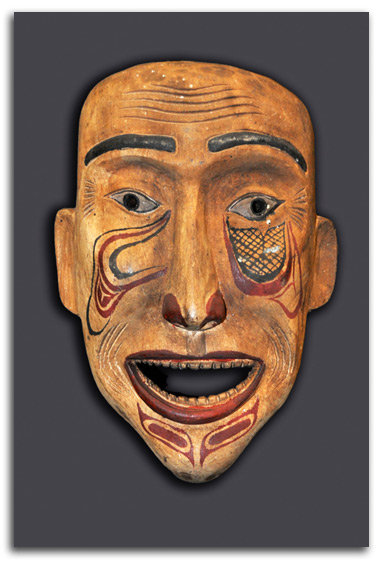
Collection IAD, 2011
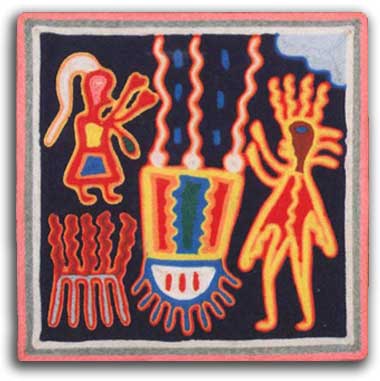
Peyote King. Huichol tribe, Mexico, 20th century (1980s)
Colored yarn on wood. Collection: FLG
Ex. Collection: Southwest Museum, Los Angeles
Published in GLOBAL VISION: A Survey of World Art, Part 2, 2008
[Inscribed with this title in Spanish]
NOTE: The Huichol have managed to maintain more of their traditions than many others in Northern Mexico. They are famous for their ìyarn paintingî which features brilliant colors and symbols that relate to their peyote meditations. This ìyarn painting,î featuring a peyote button, has the title given to it by the Huichol artist who made it to be sold by the Southwest Museum in Los Angeles during the 1980’s.