& THEIR AMERICAN DESCENDENTS
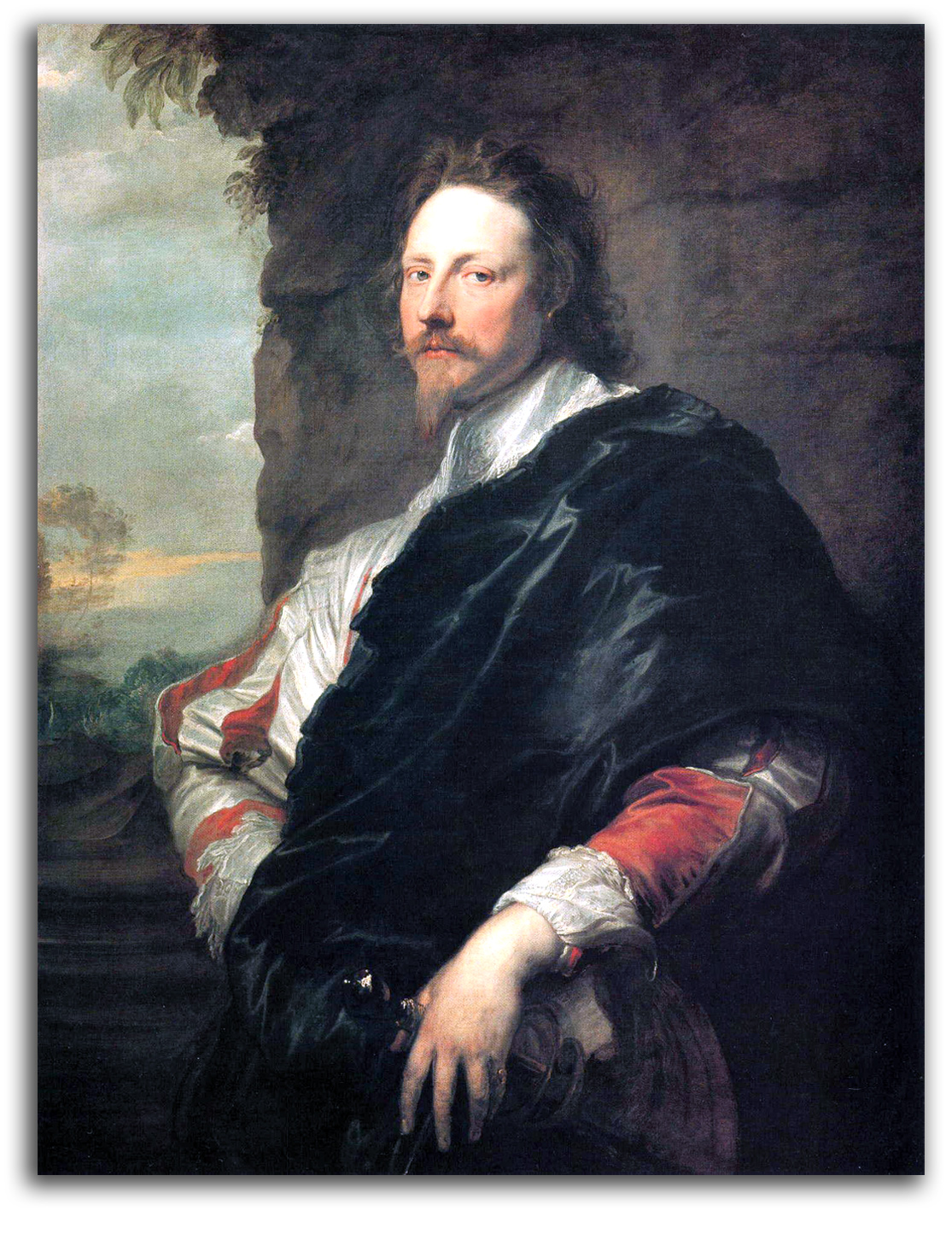
ANTHONY VAN DYCK
PORTRAIT of NICHOLAS LANIER
oil on canvas. c.1632
Collection: Kunsthistorisches, Vienna
Ex. Collection: King Charles I, & then Nicholas Lanier
click here or on portrait (above) for more detailed image
NOTE: Nicholas Lanier (1588-1666) was a prominent member of the court of King Charles the First (1600-1649) where a late phase of the Renaissance flourished in England. As a composer and musician, he was Master of the King’s Music. He collaborated with Ben Jonson and Inigo Jones on masques (as a composer, musician, singer, and set designer), and is credited with composing the first English opera. His singing voice was celebrated in a poem by Robert Herrick in the following lines:
Then if thy voice commingle with the string,
I hear in thee rare Lanier to sing.
He is also credited with composing the first English opera. He also was a painter, poet, and art collector. He is considered one of the first, and possibly the very first Englishman to collect Old Master drawings, especially those of 16th-century Italians. When buying paintings for the king, he bought drawings for his own collection. He engraved and published a number of these drawings himself. As the king’s curator, he is best remembered for selecting and arranging for the acquisition of the legendary “Mantuan Purchase.” This extraordinary collection of Renaissance Italian masterpieces is widely considered the most important purchase of paintings made in the Western world until the 20th century.
This portrait is the reason Van Dyck was invited to move to England. When King Charles saw this elegant portrait (of a man who resembled the king), King Charles asked Van Dyck to be his court painter. An unusually large number of Nicholas Lanier portraits survive, including ones attributed to Isaac Oliver, Guido Reni, Jan Lievans (Rembrandt’s friend), and Rembrandt himself. There also is a self-portrait at Oxford University. My 1966 biographical study of this ancestor was the standard reference for many years. A much more complete biography was published by Michael I. Wilson in 1994. The largest archive of the American and European branches of the Lanier Family is at Johns Hopkins University in Baltimore.
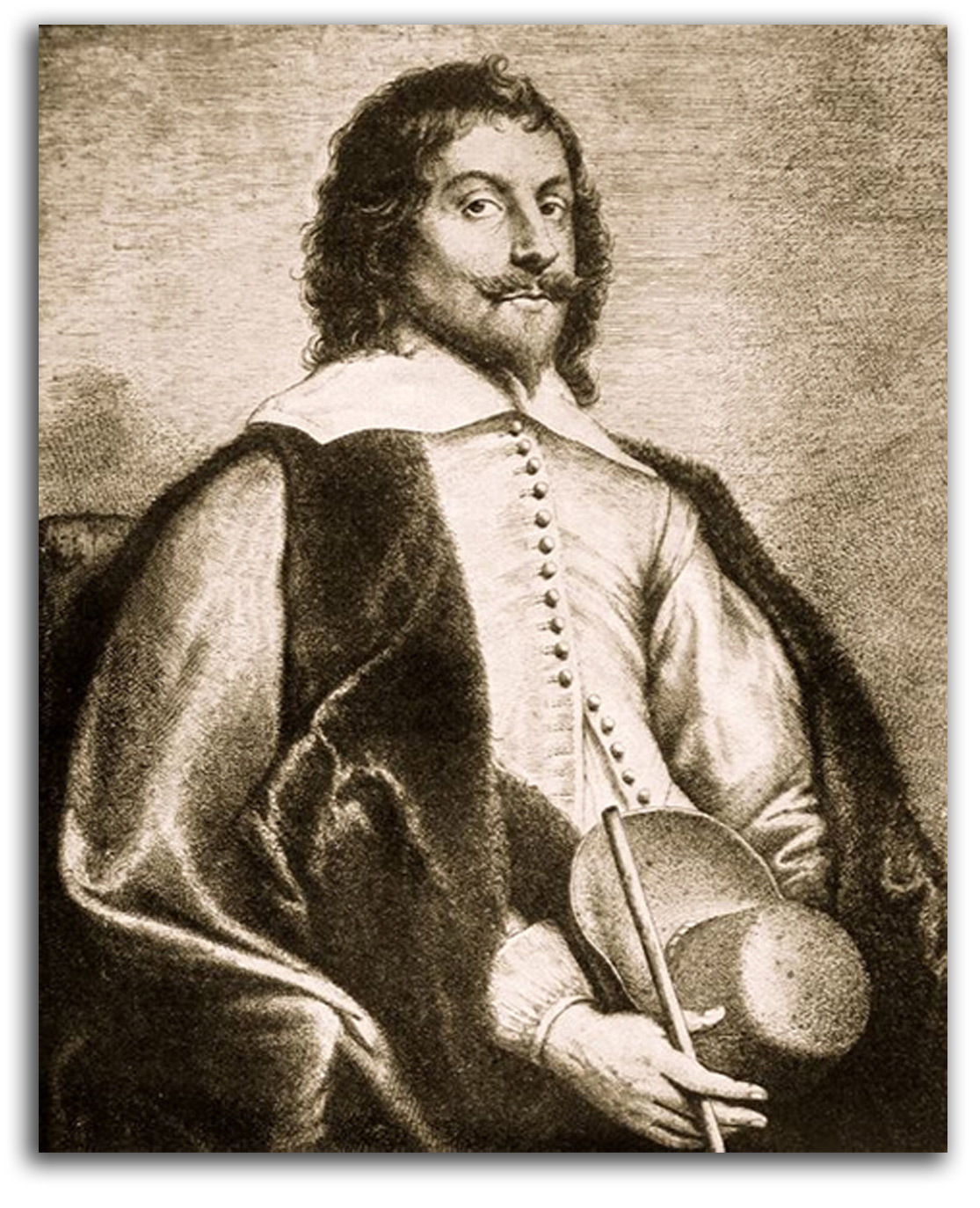
VOSTERMAN (after LIEVENS)
PORTRAIT of NICHOLAS LANIER
engraving. 1630s
Collection: FLG
Click here or on etching (above) for more detailed image
NOTE: Lucas Vosterman the Elder (1595-1675) was one of the most gifted engravers in the workshops of Rubens and then van Dyck. He later collaborated with Nicholas Lanier in England on a book of engravings after Italian drawings from Lanier’s collection. Jan Lievens (1607-1674) and Rembrandt shared a studio in their younger years when it was difficult to tell their work apart. The Lievens portrait of Lanier has been lost.
1 Portraits of Nicholas Lanier:
An Exhibition of Photographs, 1964
2 THE EARLIER LIFE & WORK OF NICHOLAS LANIER (1588-1666): Collector of Paintings & Drawings (M.A. Thesis, Columbia University, NYC, 1966
3 The Etchings of Nicholas Lanier: A Catalogue Raisonné
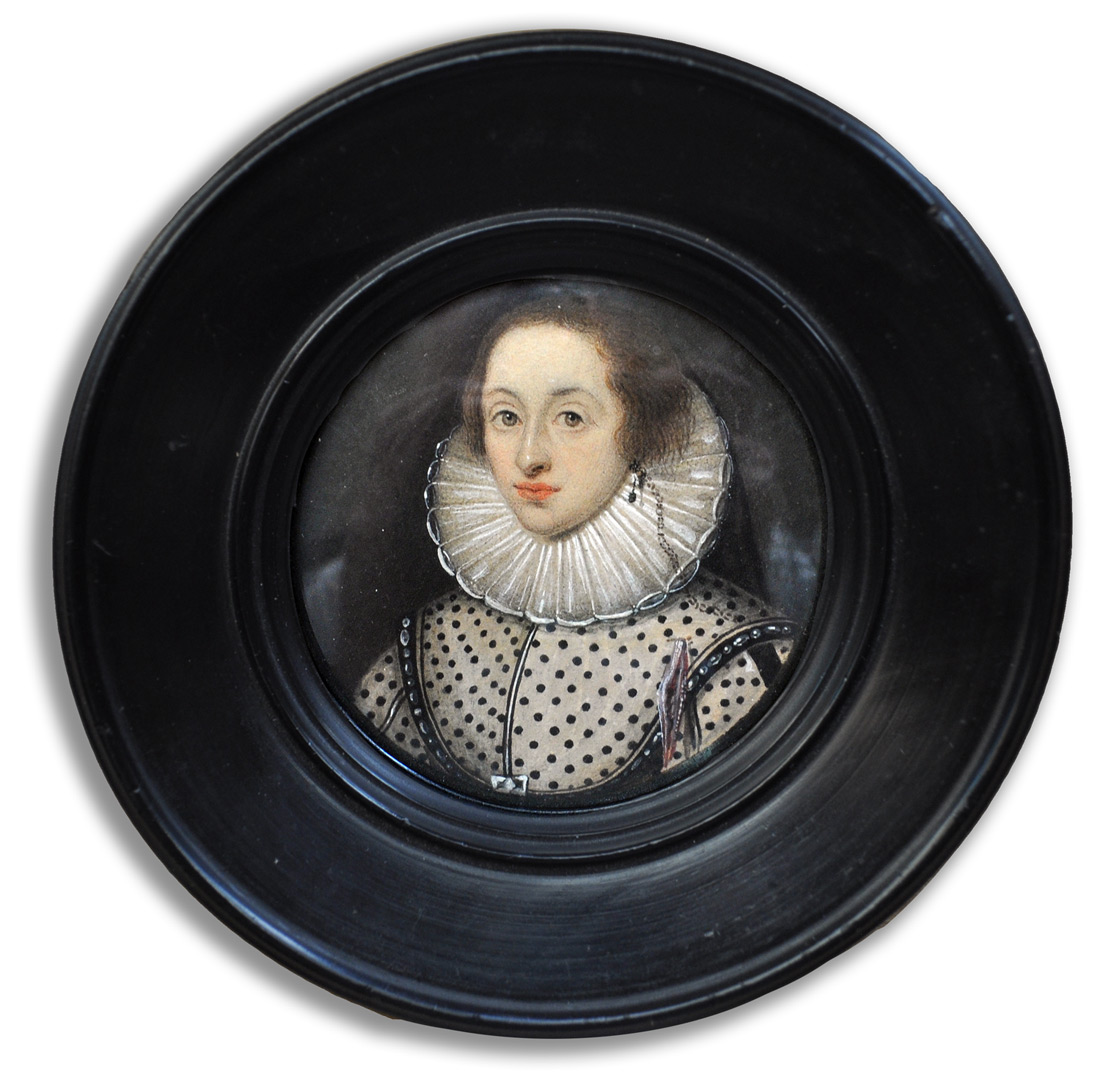
Portrait of an Elizabethan Lady (possibly Emilia Lanier, Shakespeare’s companion)
[sometimes Aemilia Lanyer]
Painted in the circle of Isaac Oliver, c.1600-1610
Watercolor. Collection: FLG
click here or on image for more detailed view of above portrait
NOTE: Attributed to the circle of Isaac Oliver who was close to the Laniers, at least as a family friend and perhaps as a cousin. Edward Norgate, another miniature painter of the time and a good friend of Van Dyck, was married to Nicholas Lanier’s sister Judith. Oliver spoke of Norgate as his “cousin,” but that was a common figure of speech for close friendship at the time, and may or may not have indicated a blood-tie, or a tie by marriage. Many of members of the Lanier family in 16th-century & 17th-century England were musicians, artists, and art collectors. Their American descendents have continued to love music and the arts.
Emilia Bassano (1569-1645) better known as Emilia Lanier (sometimes Aemilia Lanyer) was the daughter of a royal musician but was given a Humanist education and lived quite well as the mistress of Lord Hunsdon, first cousin of Queen Elizabeth and patron of Shakespeare’s theater company. After that affair, she married in 1592 Nicholas Lanier’s uncle, Alfonso Lanier (died 1613), who also a royal musician and later a Captain in the military company of Sir Walter Raleigh. A good deal of scholarly literature has been devoted to her work in recent decades because she was the first female poet to be published in England. Her book, SALVE DEUS REX JUDAEORUM (Hail, God, King of the Jews), was published in 1611. Her sophisticated poetry has a strongly feminist bent. In accord with the noted Shakspearean scholar A. L. Rowse, it has been widely accepted for some time that Emilia also was Shakespeare’s lover, that is to say the “Dark Lady of the Sonnets.” Recently, some have gone farther and suggested she was Shakespeare’s literary collaborator. Michael Posner and John Hudson even claim she wrote many if not most of Shakespeare’s plays! This miniature portrait has been in my family for generations. It was given to me by my grandmother, Alberta B. Lanier, who received it from her mother-in-law, Mary T. Lanier. This was the only early family portrait in the collection she gave me for which Grandmother did not have a name. The oral history she conveyed to me is that the sitter was a member of the Lanier family in Elizabethan England and that she wrote poetry. Mary T. Lanier felt certain that she had inherited her poetry blood from this Elizabethan poet. At the time, I wondered if she might be Judith Norgate, Nicholas Lanier’s sister, who was known to be a painter of miniatures but perhaps also a poet? In the 1970s, the work of Rowse inspired my tentative identification with Emilia Lanier. There are no other portraits that certainly are of Emilia. Therefore, my attribution must remain tentative until further study.
4 Miniature Portrait Paintings of the Lanier Family: An Illustrated Catalogue with Color Plates
5 The Lanier Family in England & America: An Illustrated Genealogy with Color Plates including Miniature Portrait Paintings of the 18th & 19th Centuries in the collection of F. Lanier Graham [Donated to the Lanier Archive, Johns Hopkins University, Baltimore]
6 Emilia Lanier & Shakespeare: An Archive of Facts & Theories about their Intimate Relationship
7 The Discovery of the “Missing Link” between the English Laniers & the American Laniers in the 17th Century with an Archive of Original Documents by F. Lanier Graham [Donated to the Lanier Archive, Johns Hopkins University, Baltimore]
NOTE: FLG made this discovery in England in 1961. It was first published and discussed in Ingersoll, LANIER: A GENEOLOGY OF THE FAMILY THAT CAME TO VIRGINIA AND THEIR FRENCH ANCESTORS IN LONDON, 1965. Mrs. Ingersoll’s monumental book has become a standard reference. FLG’s genealogical research was verified by Mr. Thrapes-Lomax, Windsor Harold at the College of Arms, who also confirmed the right of the English and American Laniers to bear the arms that had been granted to the French Lanier family in the 11th century. It was in the 11th century that European nobles began to use the visual language of heraldry. Falcons appear on this Coat-of-Arms because in French the word Lanier means falcon.
~ GKS
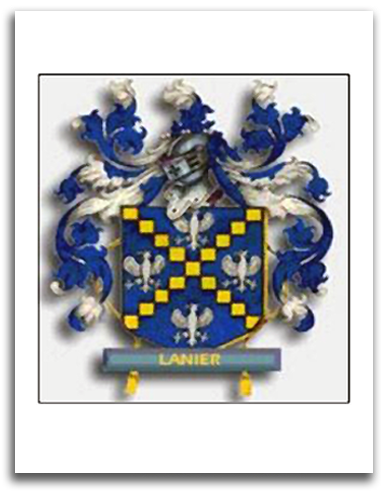
8 Lanier Family Donations to Museums: An Archive of Photographs & Documents (2 volumes)
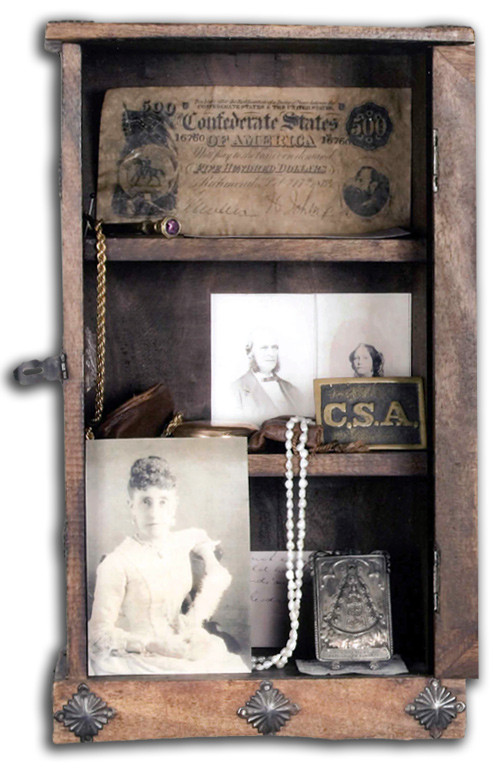
Portrait-Box of Mary Theodora Brown Lanier with some of her Belongings (in her Mexican Box)
Constructed by FLG from objects he inherited, 1958; revised 1976
Collection: East Tennessee Historical Museum, Knoxville
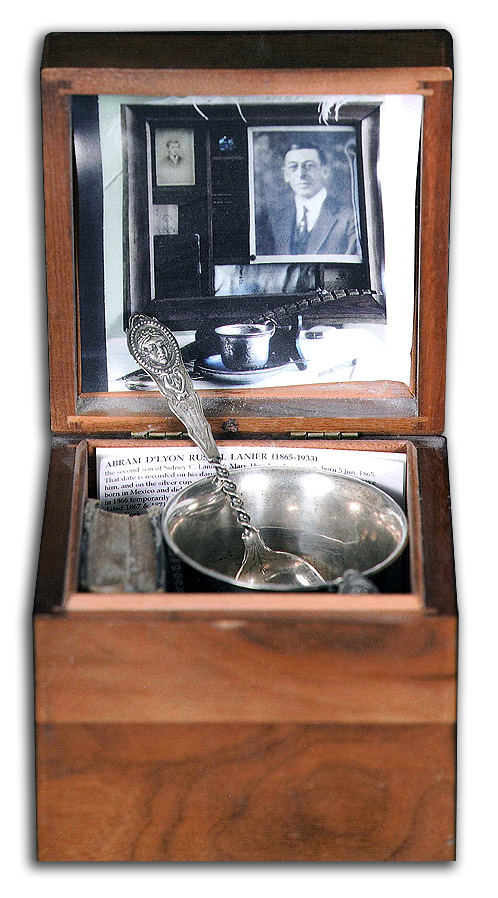
Portrait-Box of A. D. Russel Lanier with some of his Belongings (in his Compass Box)
Constructed by FLG from objects he inherited, 1976; revised 2004
Collection: East Tennessee Historical Museum, Knoxville
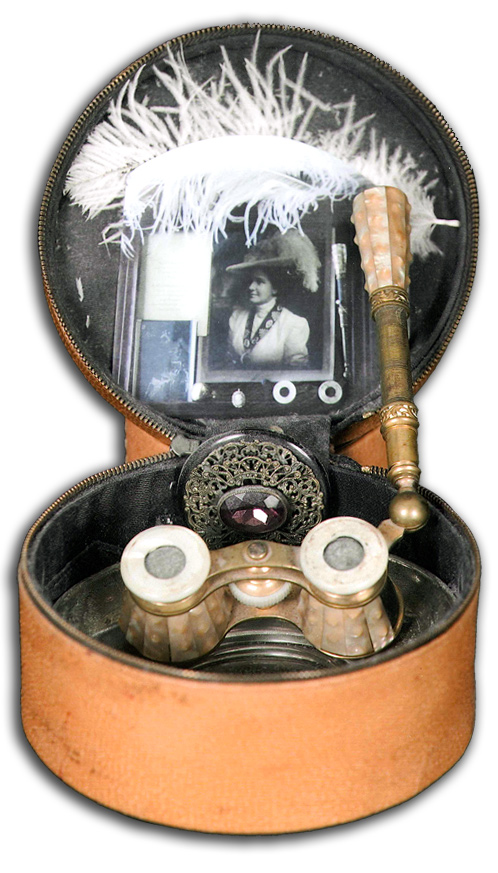
Portrait-Box of Alberta Benton Mankin Lanier with some of her Belongings (in her Trinket Box)
Constructed by FLG from objects he inherited, 1976; revised 2004
Collection: East Tennessee Historical Museum, Knoxville
9 Ancestral Reliquaries of the Lanier Family in the Old South.
Constructed with Biographical Profiles by F. Lanier Graham [Donated to the East Tennessee Museum, Knoxville]
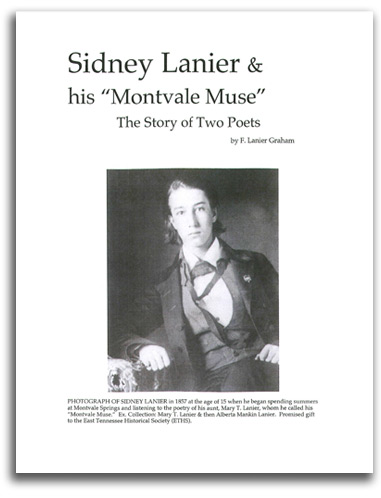
Click here to view this entire publication in PDF format.
10a Sidney Lanier & his Montvale Muse: The Story of Two Poets
NOTE: Mary T. Lanier was the poet’s aunt and a poet herself. She played an important role in encouraging her nephew’s development in his younger years. They remained close, as surviving letters show. This research report documents that relationship. Included are unpublished letters to Mary T. Lanier from the poet and her lifelong friend Jefferson Davis. FLG’s report is on file at the ETHS.
10b Sidney Lanier & his Montvale Muse
(Appendix):
Portraits of Mary T. Lanier & Her Family
Letters to, from, & about Mary T. Lanier
Death Documents for Mary T. Lanier & Her Family
Biographical Documents for Friends of Mary T. Lanier
11 Sidney Lanier’s “Nirvana:” An East-West Vision
Click here to view this entire publication in PDF format.
12 Sidney Lanier & the American Renaissance
Click here to view this entire publication in PDF format.
13 Lanier Family Furniture of the 19th Century: An Archive of Photographs with an Historical Note
14 The Lanier House in Chattanooga: An Archive of Photographs
15 From Chattanooga to the World: The Autobiography of Martha Lanier Graham in a Trunk full of Scrapbooks, 1910-2000 (Donated to the East Tennessee Museum, Knoxville & kept under “The Graham Collection”)
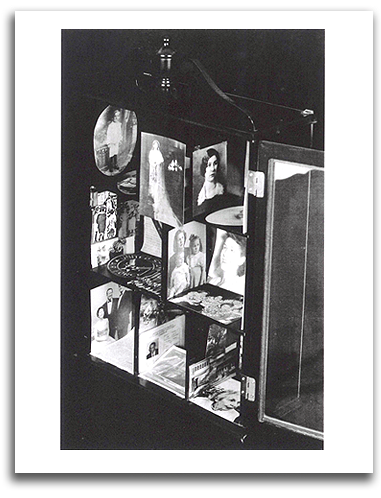
Joint Portrait-Box of Martha Lanier Graham & Dr. Floyd Graham
Constructed by FLG from objects he inherited, 1958; revised 1976
Collection: FLG
16 The Laniers in East Tennessee: An Album of Family Portraits & Original Documents Prepared as a Gift for the East Tennessee Historical Museum in Knoxville (Donated to the East Tennessee Museum, Knoxville & kept under “The Graham Collection”)
17a Mary Rhoda Montegue: The “Queen” of Chattanooga (FLG’s first Godmother)
17b Prabhaprana (Phoebe Nixon): The Ramakrishna Nun from Chattanooga (FLG’s second Godmother)
Edited 2011