Volume 1 – WEST ASIA – Click here
A-D. SUMERIA – Click here
E-G. BABYLONIA – Click here
H. CANAAN/JUDEA– Click here
I. JUDEO-CHRISTIAN BIBLICAL STUDIES– Click here
VOLUME 2 – INDIA – Click here
VOLUME 3 – GANDHARA – Click here
VOLUME 4 – SOUTHEAST ASIA – Click here
VOLUME 5 – TIBET – Click here
VOLUME 6 – JAPAN – Click here
VOLUME 7 – ISLAM – Click here
VOLUME 8 – PAN-ASIAN – Click here

Volume 1 – WEST ASIA
A-D. SUMERIA
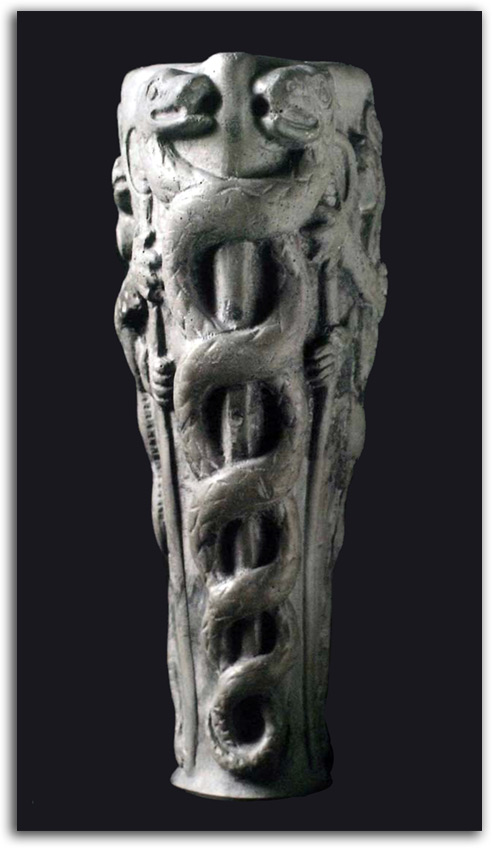
Libation Vessel of Gudea (replica). c. 2100 BCE
Stone Carved Sumerian Iraq. Asia
Commissioned by IAD from Paul White, Australia, 2008
Collection: CSUEB. Gift of IAD
This vessel is one of the most famous objects of the age. Not only is it carved in a beautiful way but the symbolism continues to resonate in modern times. The iconography shows a pair of Feathered Serpents opening a portal to reveal the divine presence of a Double-Serpent whose name is Ningishzida (Ningizzida). The iconic image of the Double-Serpent continued in the cultures of Egypt with Thoth and in Greece with Hermes, and is still seen regularly in the modern world as a symbol of health and healing. It appears on TV almost every day in association with medical reports and ads. Many scholars have noted the emphasis given to the central vertical column and the number of spaces around which the serpents wrap. This could be symbolic of the kundalini chakra system. If so, this is further evidence for a possible Indo-Sumerian culture. The original vessel is in the Louvre, Paris.
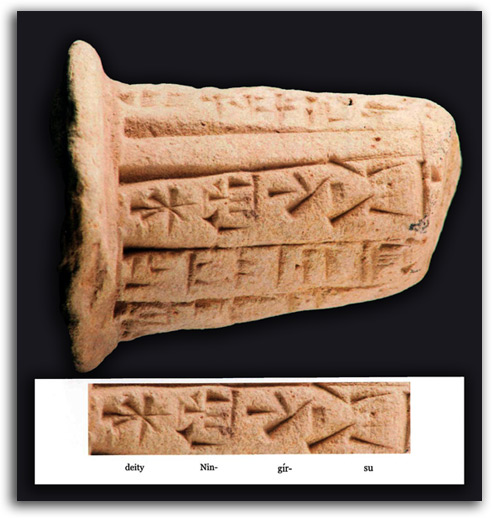
Temple Cone. c. 2100 BCE
Terracotta Molded & Fired Sumerian Iraq. Collection: IAD
NOTE: In each of the temples that Gudea built or rebuilt, he placed a ìtemple coneî or ìdedication nailî such as this one inside the walls. A similar tradition continues in the foundation stone of modern construction. Many are of a similar shape and carry a similar inscription which reads: “Gudea built [or restored] this temple for Lord Ningirsu, his Lord.”
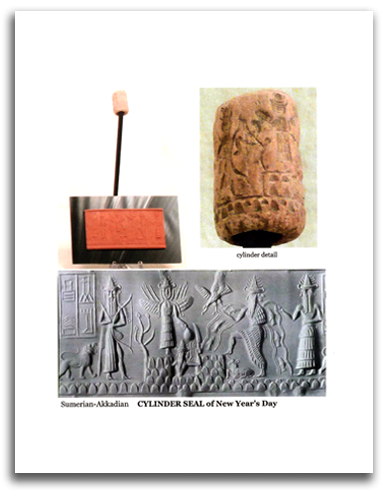
Cylinder Seal picturing “New Year’s Day.” Sumerian/Akkadian, c.2300 BCE
Stone. Collection: FLG on loan to IAD
Published in GLOBAL VISION: A SURVEY OF WORLD ART, Part 3, 2008
Illustrated with the roll-out of an almost identical seal in the British Museum, London
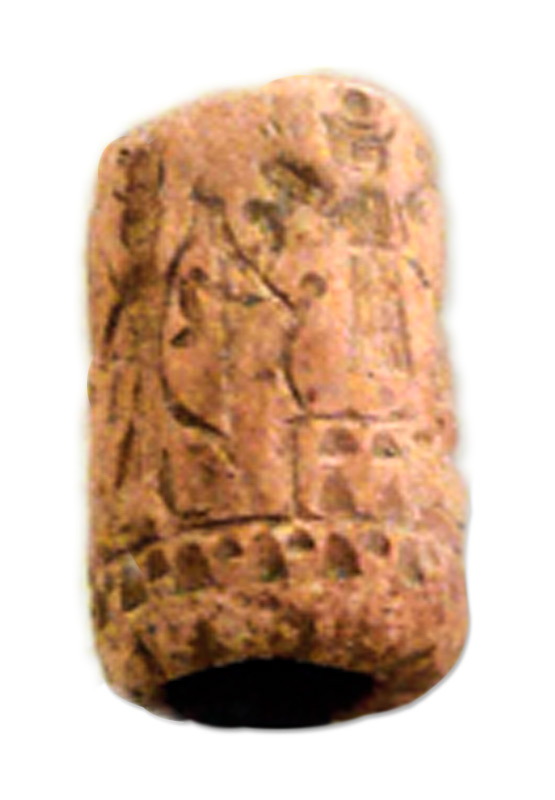 Click here for detail of Mesopotamian cylinder seal
NOTE: This is probably the most widely published seal of the Sumerican era. In the dramatic composition are many deities occupying narrative positions on the morning of New Year’s Day. The Sun God is rising between the mountain peaks, on top of which stands Ishtar. Nearby is the Water God, and others. The inscription names the owner as Addaî who is called a scribe. The famous version of this seal is in the British Museum, London. This carving has been examined by an expert who concluded the engraving is identical with the British Museum version except for a small part of the name. When the very well executed version in this exhibition was made is not known. It was common for replicas to be made thousands of years ago. Replicas also have been made in the 20th century. More study is needed.
A. Sumerian & West Asian Cylinder Seals: A Bibliography of Books
B. Which Star is Which? Notes on the Symbols of Sumerian Deities
C. The Caduceus Symbol in Sumerian Art
D. The Sun-Moon Symbol in Sumerian Art
E-G. BABYLONIA
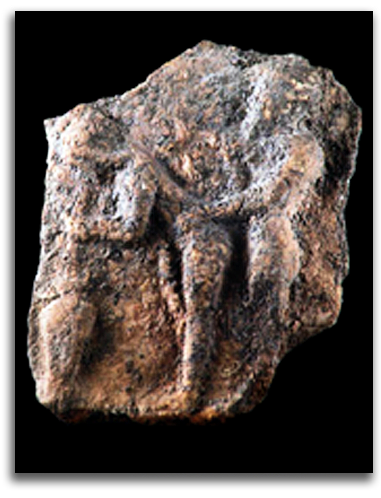
Sacred Marriage Plaque. Babylonian. c.1800 BCE
Moulded Terracotta. Collection: FLG on loan to IAD
Published in GLOBAL VISION: A SURVEY OF WORLD ART, Part 3, 2008
NOTE: Pictured here is the most holy of Babylonian rituals. At the very top of the Sumerian ziggurat was the most sacred space, a shrine holding a statue of the principal deity, a shrine in which there were daily rituals and every year the most holy of rituals, the Sacred Marriage. This World Renewal ritual took place on New Yearís Day. The high priest & high priestess, personifying the high god & high goddess of the cult, would have sex. In doing so they were reenacting their Creation Myth. It was believed that this mystical act would ensure the rebirth of time and the fertility of the fields. Without this mystical act, the new year would not come into being. Surviving are a number of the sacred songs that were sung on this occasion, as well as several pieces of sculpture visualizing the supreme moment of this sacred ceremony. During their sexual embrace, she drank sactified beer through a long straw. Some form of the Sacred Marriage ritual continued in Mesopotamia until the 1st century BCE. Similar rituals were common around the world during the Bronze Age and early Iron Age. The curators of the British Museum date their example of this Babylonian plaque c1800 BCE, and note such plaques were mass-produced. This suggests they were used in domestic shrines. Former collection: Mark Goodstein, Stanton Island, New York.
E.The Sacred Marriage Ritual in Sumerian Art
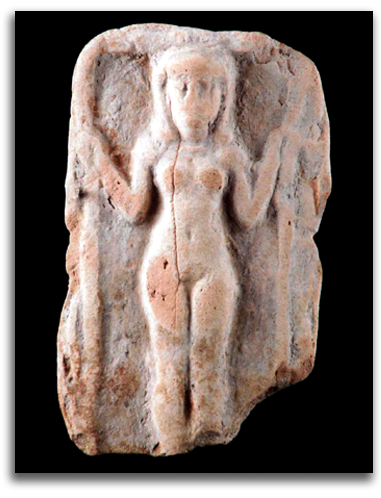
Goddess, probably Ishtar or Astarte. Babylonian or Phoenician/Canaanite,
c.1800-1600 /1200-1000 BCE
Moulded Terracotta. Collection: FLG on loan to IAD
Published in GLOBAL VISION: A SURVEY OF WORLD ART, Part 3, 2008
NOTE: This domestic plaque is thought to be a Babylonian image of Ishtar, the primary goddess of Mesopotamia for many centuries. It was mass-produced and made for private shrines. Her earliest know manifestation in this region was as Inanna, the Great Goddess of the Sumerians, who was about sex, love, and regeneration. Transformed by the Semites, Inanna became Ishtar. She also was about sex, love, and regeneration. Indeed her priestesses regularly engaged in sacred sex with the faithful. Like Inanna, she annually mated with a dying male whom she revives each year after a dramatic descent into the underwrold. As she moved from world to world, she took off 7 articles of clothing as she passed through each gate, and then puts them back on. Ishtar also was a War Goddess. In the lands of Phoenicia and Caanen Ishtar became Astarte. In time the spirit of Astarte transformed into the spirit of Aphrodite in Greece and Venus in Rome.
F.From Inanna & Ishtar to Astarte & Venus: A Genealogy of Goddesses
G.The First Civilization? Notes on the Indo-Sumerian Question
H. CANAAN/JUDEA
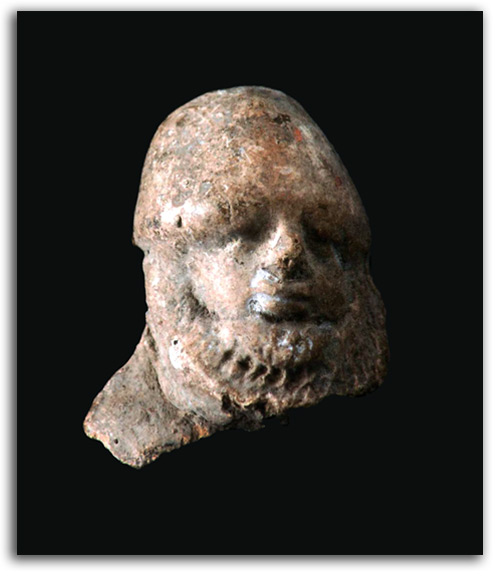
Head of a Man with a Beard. c. 1000 BCE
Terracotta Modelled Canaanite (or Hebrew?) Canaan. Ancient Asia
Collection: IAD
NOTE: This head has some similarities to Babylonian heads, but it could also be from farther west. Cultural traditions west of Babylon overlapped in various ways. The Hebrews settled in Canaan after the Exodus, then were foced to live in Babylon during the 6th century BCE. The oral tradition among the family that has owned this head for five generations is that it is Hebrew. Further study is needed. It was collected by Judge A. D. Russel, Justice of the Supreme Court of New York, in the 1850s. He had a large collection of ancient art, especially West Asian and Greek. He was Jewish. The head passed down through his step daughter, Mrs. Sidney Cooke Lanier, to her son, A.D.R. Lanier, and then to his daughter, Martha Lanier Graham.
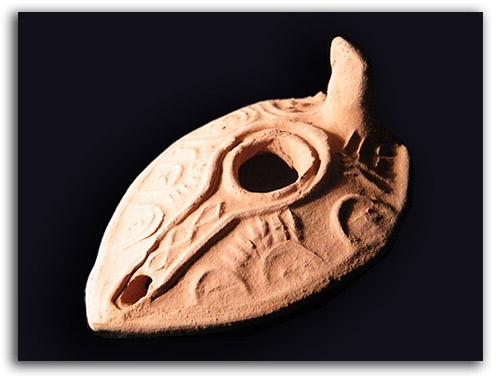
Oil Lamp (Judea). c.1st century CE
Terracotta
Collection: IAD, 2011
I. JUDEO-CHRISTIAN BIBLICAL STUDIES
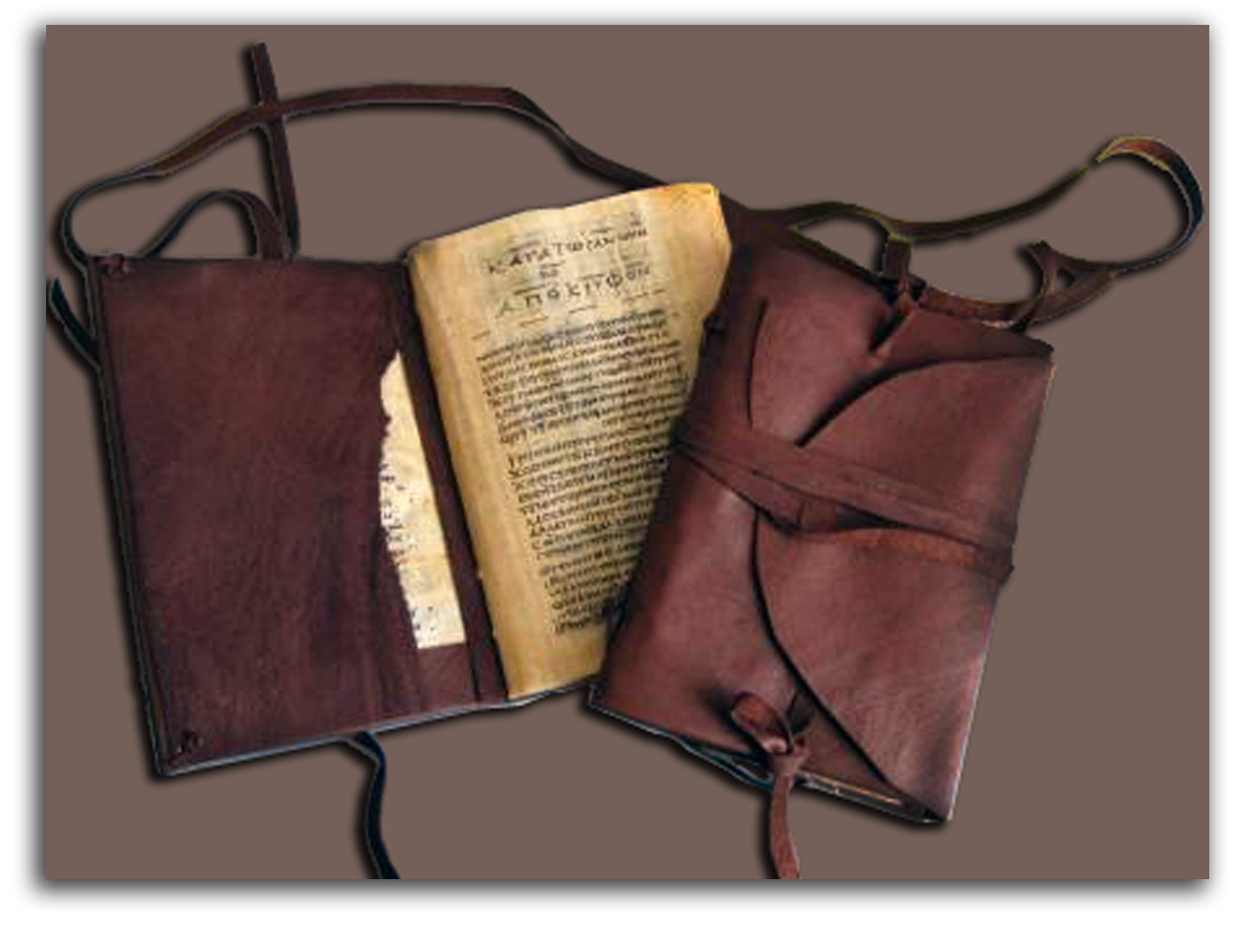
NAG HAMMADI CODEX (Replica)
Texts relating to the GOSPEL OF THOMAS
Date of Original Document: 4th century
Date of Composition: c2nd century
“papyrus”
Edition of the Institute for Biblical & Scientific Studies
Collection: IAD (2013)
NOTE: The Nag Hammadi Library is the name that has been given to a group of 13 codexes found in Egypt in 1945. These 53 Gnostic texts appear to have been written in Coptic by Gnostic monks during the 4th century, copying Greek texts of the 2nd century. These Gnostic monks hid them in jars and buried them because such thoughts, that were once widespread among early Christians, had been declared heresy by a Church was becoming more and more bureaucratic. By the 3rd century, there were official ranks of bishops, priests, and deacons who were in favor of uniformity among the often diverse Christian groups. By the 4th century, under the leadership of Constantine the Great, a common creed was written, and the “official” books of the NEW TESTAMENT were selected.
Some of the Gnostic texts in this group are quite similar to the sayings of Jesus as recorded in the NEW TESTAMENT the books of which were written between c50 & c110 CE. However, some of the statements and quotations are radically different in content and tone. The NEW TESTAMENT speaks of Jesus coming to save the world from sin and suffering. Here the teaching is that Jesus came to guide the world toward Enlightenment, in a manner that sounds very much like Buddhism. Because there were connections between India and Athens and Alexandria during the Roman era, a Buddhist influence on the Gnostics is possible. The emphasis of these texts is not on miracles. Some passages go so far as the question the doctrines of Virgin Birth and Bodily Resurrection. The most famous text in the group is the GOSPEL OF THOMAS. Among the best known of the 114 sayings of Jesus in this text are:
1: “Whoever discovers the interpretation of these sayings will not taste death.”
22: “When you make the two into one…, and when you make male and female into a single one…, then you will enter [the Kingdom of Heaven].
113: “… the Father’s Kingdom is spread out upon the earth, but people do not see it.”
114: “… I will guide her to make her male, so that she too may become a living spirit… . For every female who makes herself male will enter the Kingdom of Heaven.”
The mystical teachings in this Gospel have never been accepted as canonical. However, similar teachings are seen again in the works of Teresa of Avila and St. John of the Cross. The best general introduction to this astonishing collection is Elaine Pagels, THE GNOSTIC GOSPELS, 1979. The texts themselves are available online. Almost every codex in the group was protected by leather in the manner of this replica. The collection of about 1,200 pages is now in the Coptic Museum of Cairo.
Another particularly important Gnostic text from another source of a similar age is the GOSPEL OF MARY – probably Mary Magdalene. She is pictured as a particularly important disciple of Jesus to whom He has given special teachings.
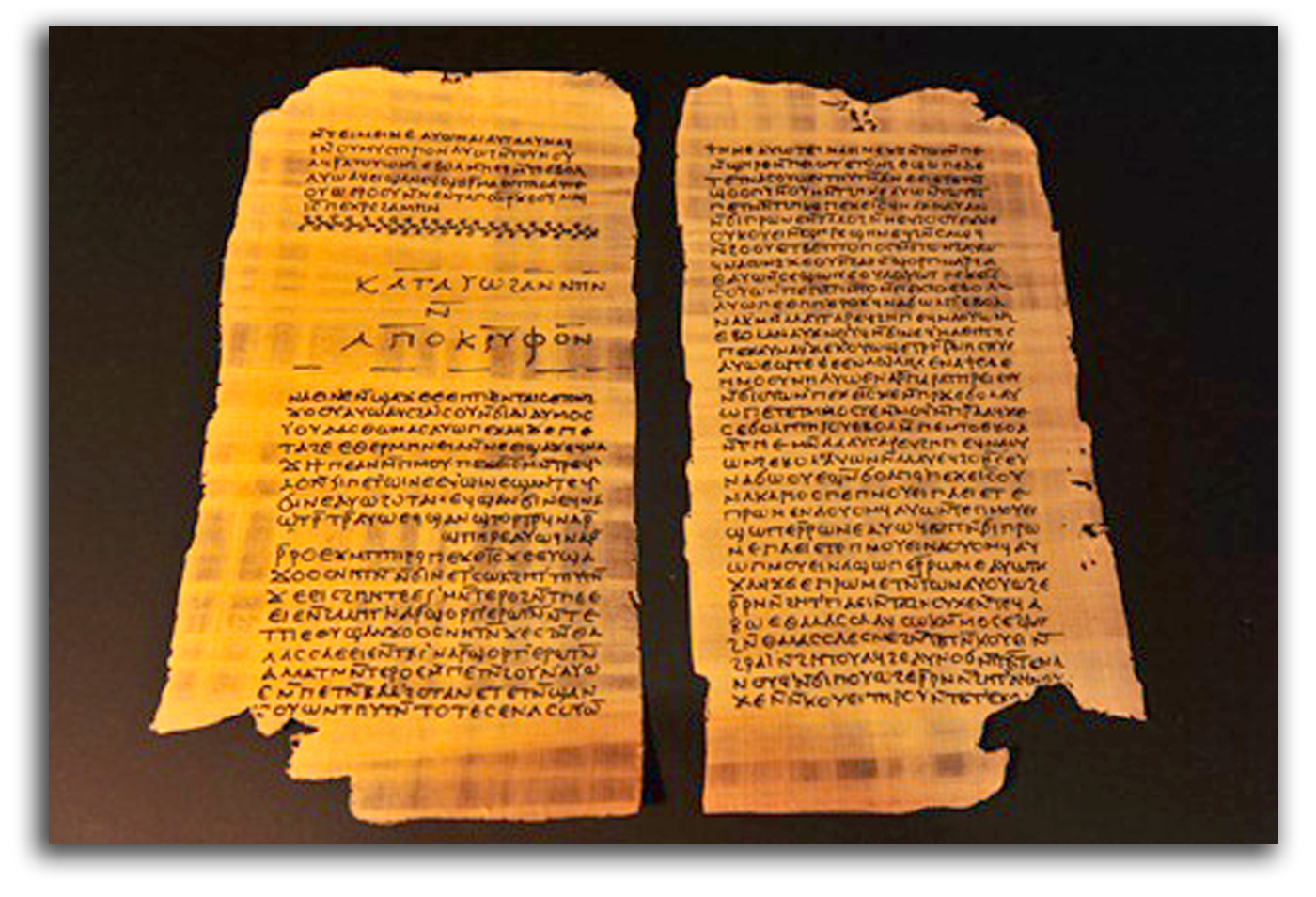
GOSPEL OF THOMAS (Replica)
from the NAG HAMMADI LIBRARY
Date of Original Document: 4th century
Date of Composition: 1st century
“papyrus”
Edition of the Institute for Biblical & Scientific Studies
Collection: IAD (2013)
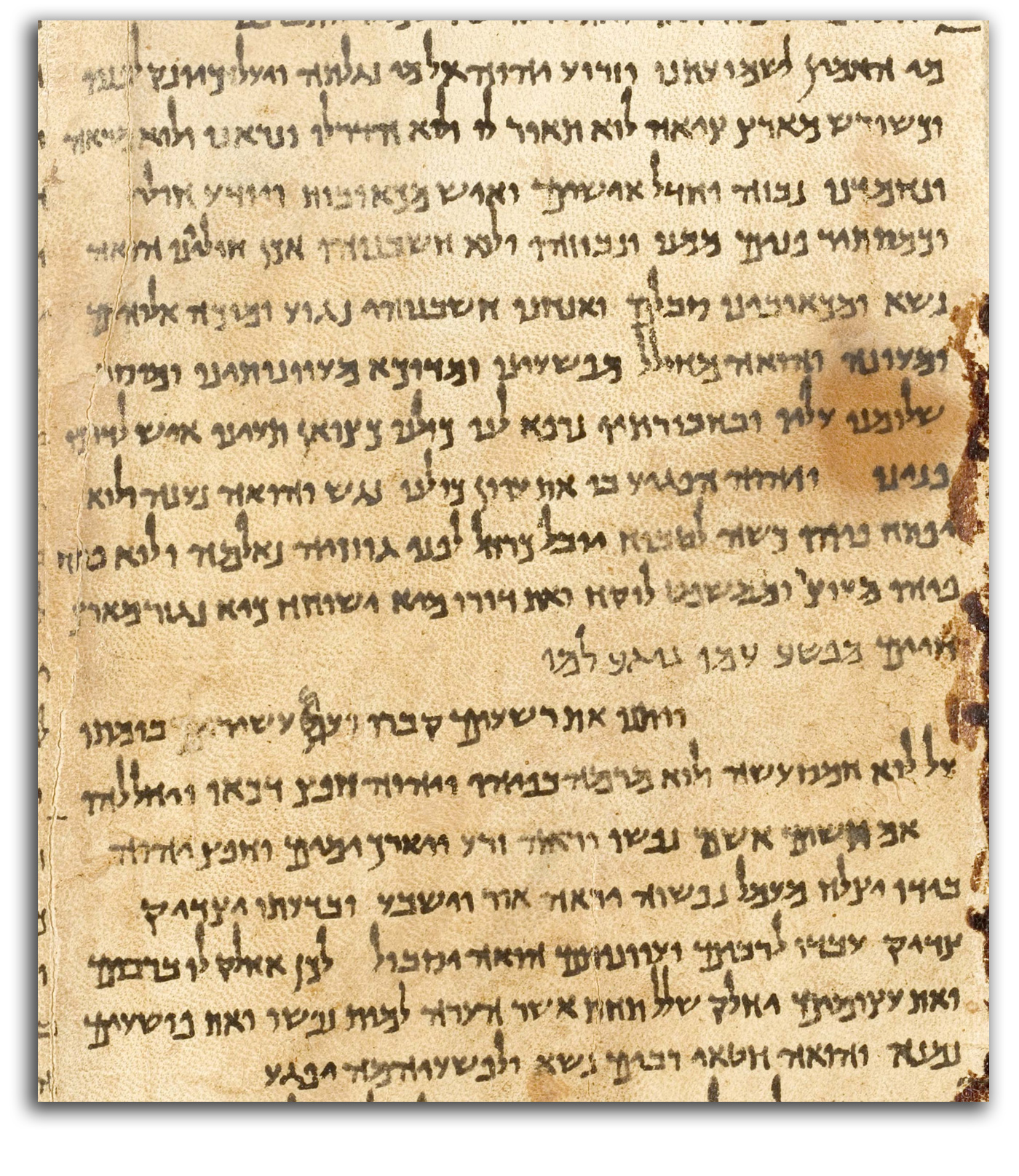
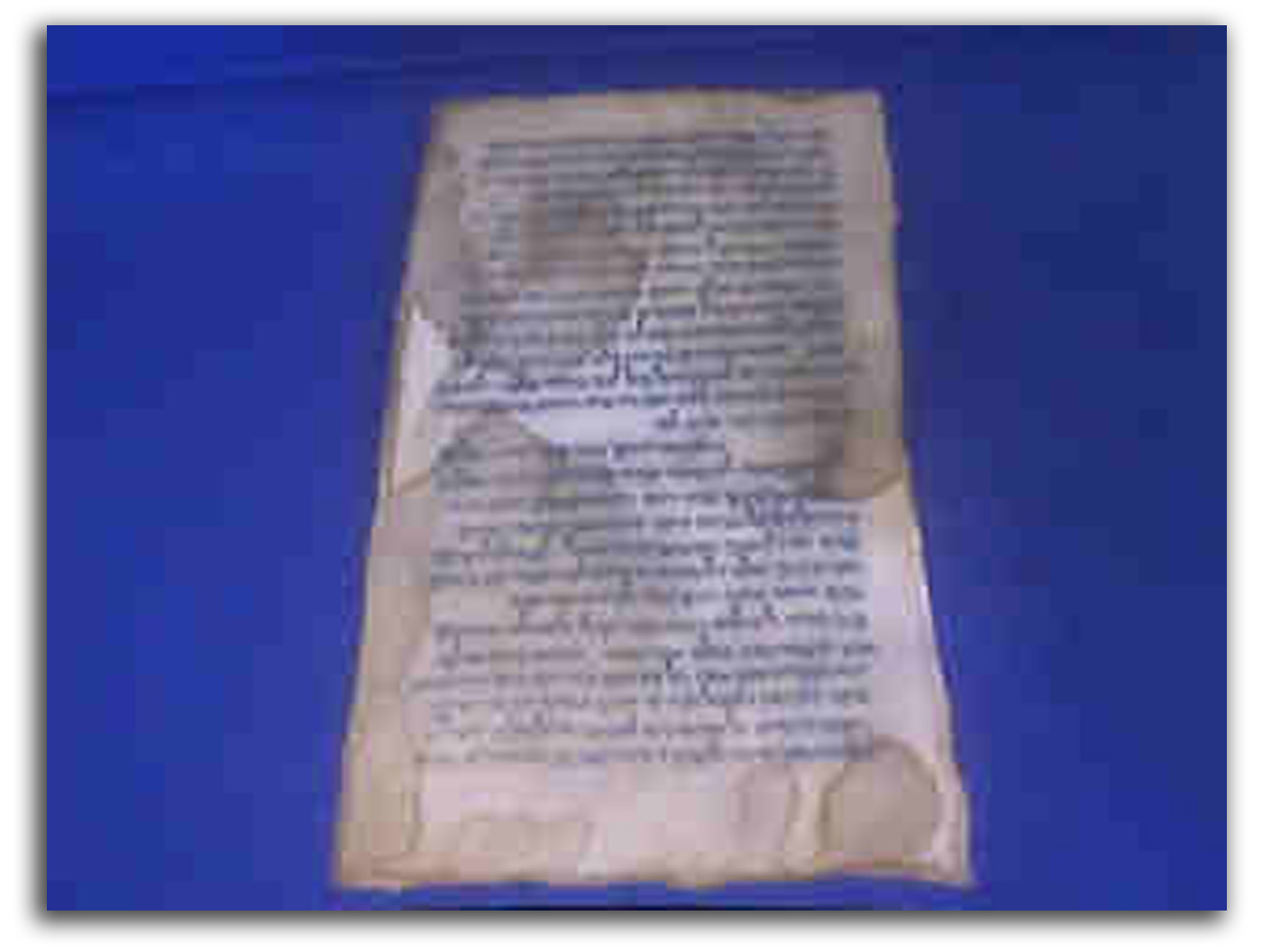
DEAD SEA SCROLL (Replica): ISAIAH 53
Date of Original Document: c200 BCE-c200 CE
Date of Composition: 6th century BCE
“parchment”
Edition of the Institute for Biblical & Scientific Studies
Collection: IAD (2013)
NOTE: The Dead Sea Scrolls is name that has been given to a collection of hundreds of ancient texts, written mostly in Hebrew, that were discovered near the town of Qumran on what is now the West Bank of Israel between 1946 and 1956. Included are fragments of almost every Book of the OLD TESTAMENT, and some related texts. It is thought that they were written in a community of Essenes who then hid them in caves. They have been firmly dated to between c200 BCE and c200 CE. Until this momentus discovery, the earliest known Hebrew manuscript versions of the Books of the OLD TESTAMENT were from the 10th century. All the ancient evidence has been well published in facsimile editions and online. Most of the fragments are now in the Shrine of the Book in Jerusalem. There are more copies of ISAIAH in this group than any other book of the OLD TESTAMENT. It is thought that ISAIAH had three authors rather than the one 8th century prophet of that name. The middle section (chapters 40-55) was written by the anonymous “Second Isaiah” around the time of the Babylonian Captivity. This section is of special importance for both the Judeo-Christian tradition and for the history of World Religions. Until that time (6th century BCE), the Jews had revered Yahweh above all other deities, but any number of Jews continued to worship other gods and goddesses as well. The very first evidence that the Jews had become firmly commited to monotheism is ISAIAH 44:6 “I am the first and I am the last; beside me there is no god.”
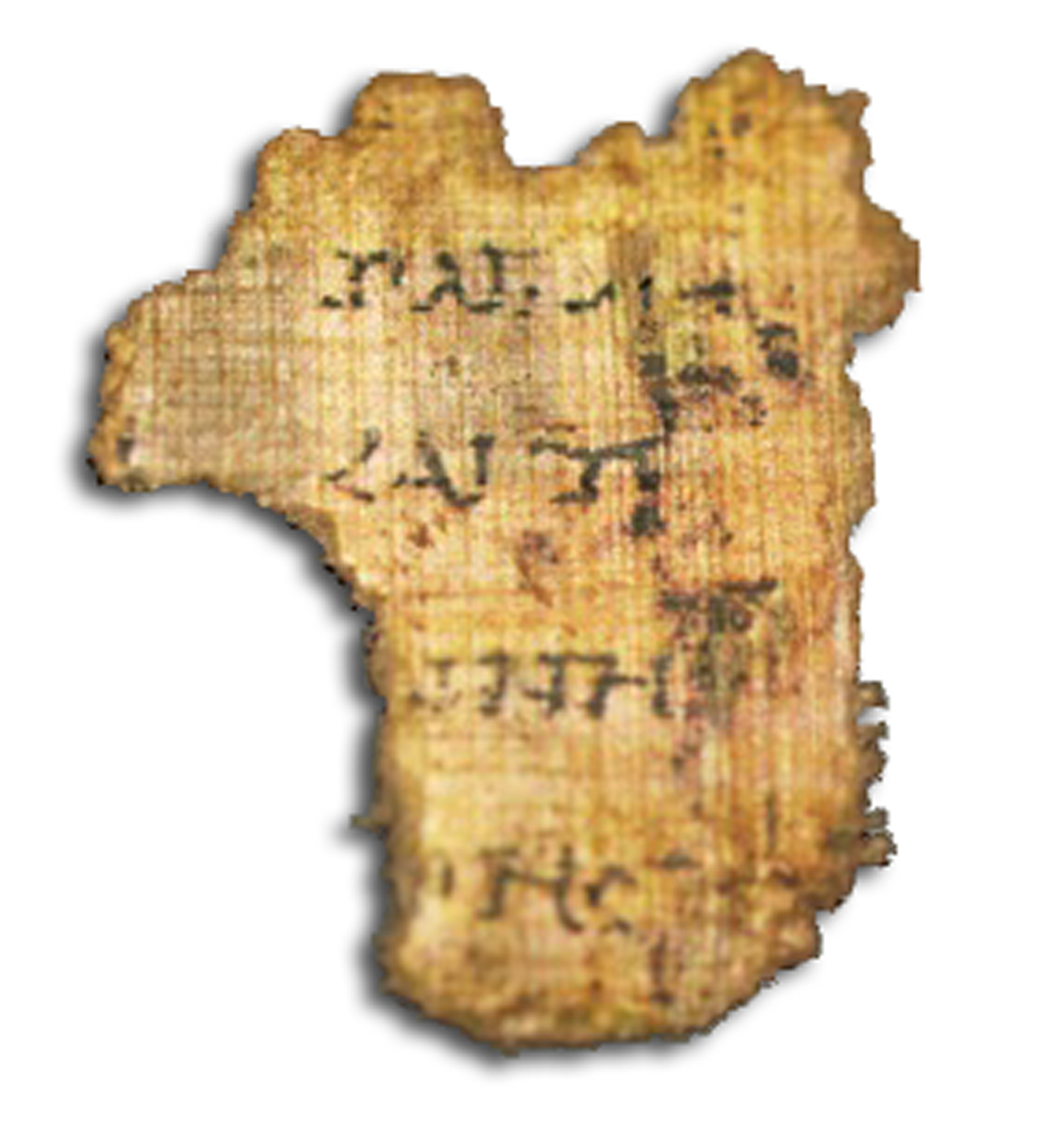
DEAD SEA SCROLL, 7Q5 (Replica):
GOSPEL OF MARK 6:52-53 (?)
Date of Original Document: c200 CE
Date of Composition: 1st century
“papyrus”
Edition of the Institute for Biblical & Scientific Studies
Collection: IAD (2013)
Volume 2 – INDIA
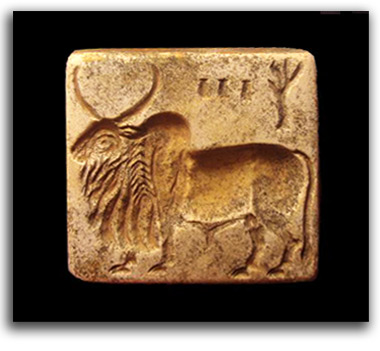
Seal with Sacred Bull and Three Counting Marks. Indus Valley. c2500-2000 BCE
Steatite. Collection: FLG, 2011
NOTE: Seals such as this are from the Bronze Age in South Asia. Some of the elements of the iconography on these seals continue into Hindu India, e.g., Bull worship, and a triple-faced figure in a yoga position who appears to be Shiva. The mysterious writing on these seals is one of the few Bronze Age scripts that has not yet been deciphered.
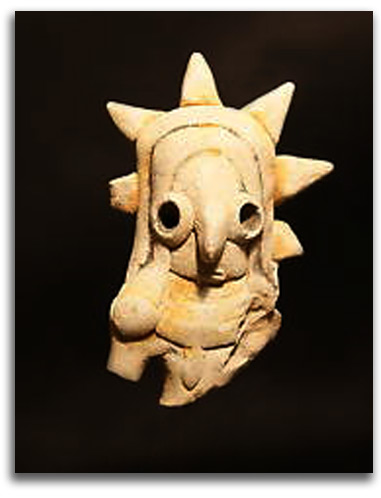
Mother Goddess with a Star Halo. Indus Valley. c3000 BCE
terracotta: Collection: IAD, 2011
A. Indus Valley Seals & the Symbolism of Shiva
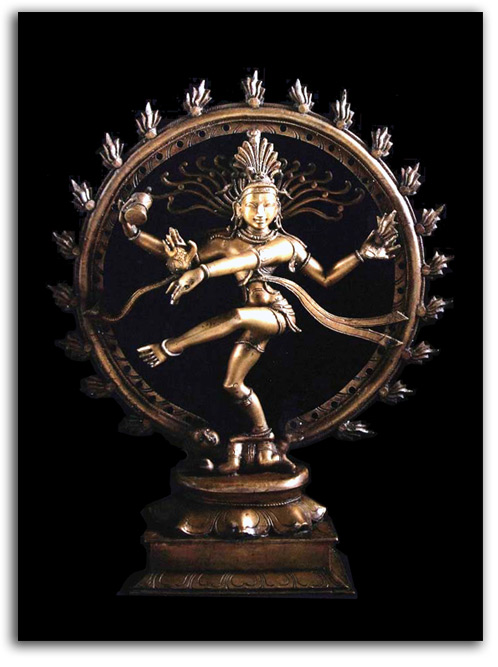
Shiva Nataraja, Chola style of the 12th century. 19th/20th century
Bronze. Collection: CSUEB. Gift of IAD
Published in GLOBAL VISION: A SURVEY OF WORLD ART, Part 1, 2006
NOTE: This iconic image of Shiva may well be the best-known image in all of Indian art. It is called Shiva Nataraja Lord of the Dance. Variations of this basic composition were first made during the Chola Dynasty in southern India during the 11th and 12th centuries. Shiva dances with dynamic grace standing on a personification of egotistical ignorance. Around him is the universe as a whole a flaming circle that represents the glowing globe of the material world. In his right hand is a rattle drum. Its sound activates each moment of time. In his left hand is the flame that burns up each moment at the end of its time. The core concept is that Shiva is doing an endless dance of creation and destruction and re-creation again and again and again. This particular bronze was cast in the 19th or early 20th century but was very well done and has a good deal of the character of the earlier bronzes. This sculpture was done in the 12th century Chola style.
B. Shiva-Shakti: Reflections on Nonduality
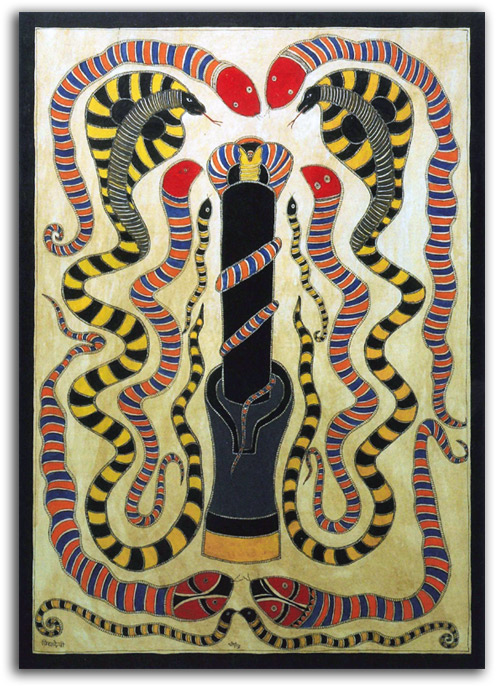
Yoni-Linga and Snakes. c. 1900-1999
Paper: (Color: Cow Dung?) Painting India India. IAD
NOTE: At the center of this composition is the image of a Yoni-Linga one of the most revered icons in Hinduism. Early forms appear in the Indus Valley during the Bronze Age. Tiny shrines with such objects at their center can be found by the thousands all over the Indian countryside today. The larger temples also are usually centered on this simple but profound form. The image combines a semi-abstract form representing Shiva the “male energy” of origination and a semi-abstract form representing Shakti the ‘female energy’ of generation. The two energies are perceived as aspects of each other interacting continuously. Linga means phallus. Yoni means vagina. Here the physical act of sexual union is used as a symbol for the metaphysics of Hindu theology. To the faithful this image is more than a symbol. It is a living reality a transcendent reality worthy of worship. Male scholars name this icon a Shiva Linga but that is only partly accurate because the Goddess is equally present. A better name would be Linga-Yoni or Yoni-Linga. This painting is a traditional tribal vision of the invisible forces at work around a Yoni-Linga. It was recently painted by women of the Mithila region near Madhubani in Northern India next to Nepal. In popular mythology the Shiva serpents bring fertility. Esoterically the dynamic ‘serpent energy’ pictured here in a symbolic way corresponds to the esoteric teachings of Kundalini yoga which state the subtle energy that rises up a pathway parallel to the spine is like serpents that pass through each chakra on the way to the Liberation of consciousness.
C. Lingam-Yoni: Reflections on Nonduality
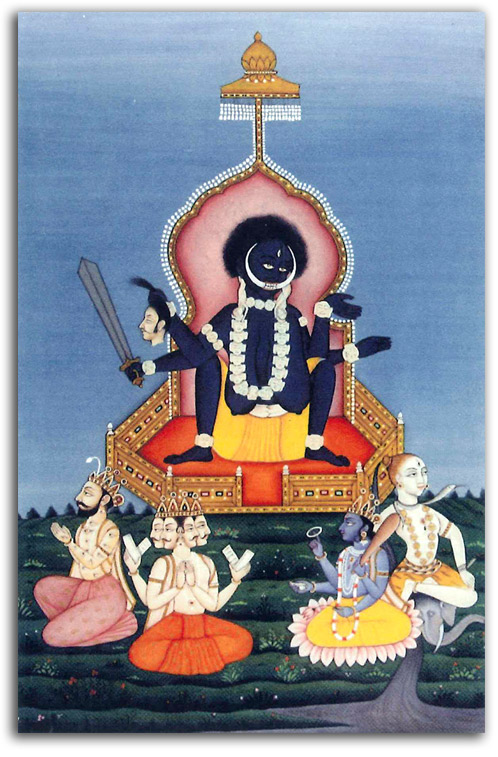
Kali, Mother of the Four Great Gods. Brahma, Vishnu, Shiva, and Indra. c. 1900-1999
Paper: Watercolor: Gold Painting Hindu India. IAD
NOTE: Shown here is the Holy Trinity of classic Hinduism: Brahma Vishnu and Shiva. Brahma the Creator of the universe looks in all 4 directions. He is also god of wisdom while his partner Sarasvati is the goddess of wisdom learning and music. He is not to be confused with Brahman the world soul with which every individual soul (atman) seeks to reunite. Blue Vishnu on a lotus is the Preserver of the universe. His partner Lakshmi is beauty. Shiva with a snake is the Destroyer of the universe. Shiva’s partner Uma is perishable matter. The activities of the Holy Trinity are all happening all the time. The main point of this image is that Kali (in the birth giving position with her necklace of skulls) is the mother of them all. Such a theology is a continuation of the Stone Age and Bronze Age traditions of the Great Goddess ‘Giver & Taker of All’ before the male principle became dominant in India with the arrival of the Indo-Europeans. The fourth god pictured is Indra ‘King of the Gods’ in ancient Vedic mythology with eyes on his body. He appears to have come to India with the Indo Europeans. This modern replica was commissioned from the esteemed artist Shri Kailash Raj who continues the rich tradition of his ancestors. This painting is done in an 18th century style. ~ FLG
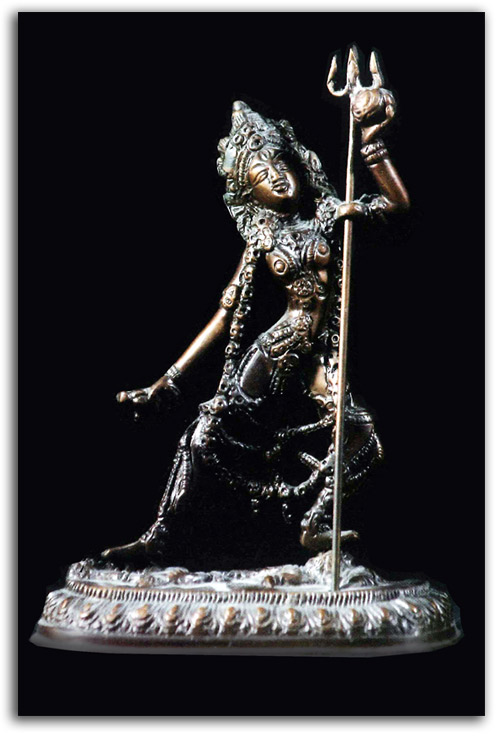
Kali Dancing. c. 1800-1999
Bronze Sculpted Hindu India. IAD
NOTE: Kali is one of the major goddesses of Hinduism. Her name roughly translates as ‘Time’. She wears a garland of skulls and holds a chopper a trident and a skullcup full of blood. She is the goddess of the end of time and its rebirth. In the oldest layers of her mythology like so many Great Goddesses of the Stone Age and Bronze Age she gives birth to all that is and then devours it all again at the end of its time. The devouring aspect came to be emphasized as male deities were given the creative role in later centuries. Kali has many names and forms. In gender-balanced mythologies she is the partner of Shiva. In Bengal where her cult is most widespread every village seems to worship a slightly different image of her. Her devotees often meditate in grave yards Being close to death rather than pretending it does not exist is said to make their meditations more effective as they work towards transcending the fear of death and ultimately reaching Enlightenment.
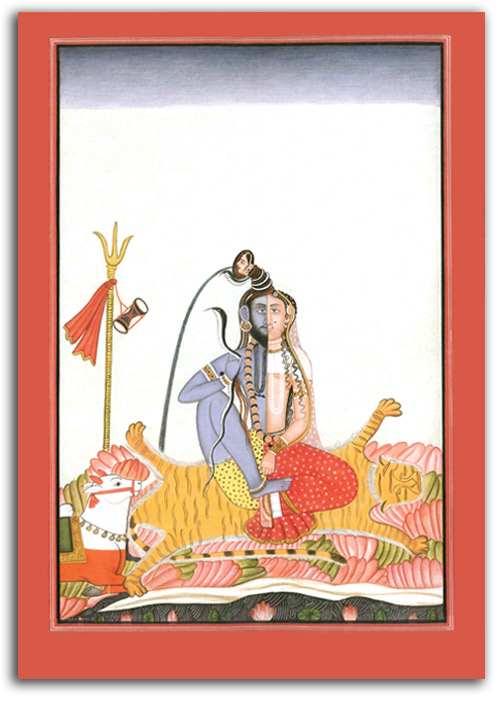
ARDHANARISHVARA (The Divine Androgyne)
18th century
miniature watercolor painting
20th century replica by Kailash Raj
Commissioned by FLG
Collection: FLG
NOTE: This is a Hindu Androgyne. There are more Androgynes in the sacred art of India than there are in any other spiritual tradition. Some think that this particular symbol of bi-singularity originated in India thousands of years ago. The symbolism has nothing to do with sexuality; it is about Transcendence. The Divine Androgyne is not a person. He/She is a mythic being whose dual character symbolizes the essential unity of the so-called “male” element of the mind (logic/rationality), and the so-called “female” element of the mind (intuition/feeling). Another way to express this ancient teaching is with the Tibetan phrase “Wisdom & Skillful Means” – the ability to do useful things in this world, and the capacity to do those things with love – unconditional love. All men and all women are able to being together these two dimensions of consciousness. It is said that it actually can be accomplished in a single lifetime; but it is not an easy task. It requires a total commitment to transcend the ego, and usually an advanced teacher to show the way. If all goes well, the result is that luminous state-of-mind called Enlightenment.
D. Ardhanarishvara, the Divine Androgyne of India: A Bibliography of Books
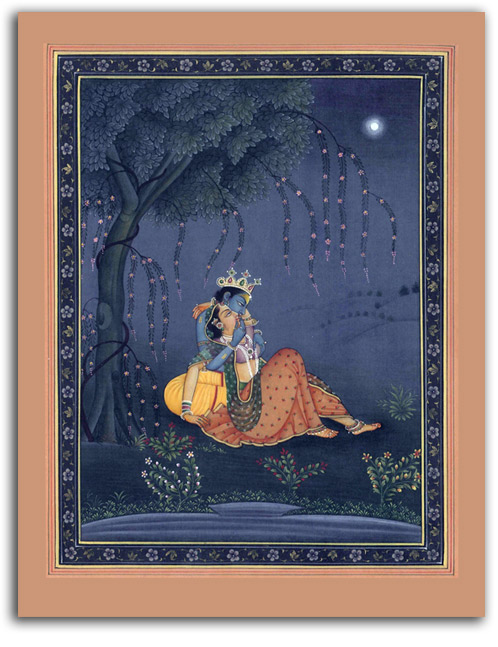
KRISHNA & RADHU IN THE MOONLIGHT
18th century
miniature watercolor painting
20th century replica by Kailash Raj
Commissioned by FLG
Collection: FLG
NOTE: In Indian mythology, the very special love of Krishna & Radhu was a popular image in the Kangra School of Rajput miniatures during the 18th century. This painting is a fine example of that beautiful style. Krishna (usually painted blue) is a deity. Radhu is one of his mortal lovers, a cowherd. The narrative is that of two lovers, as if they were ordinary lovers on earth; but the symbolism is that of questing for the Transcendent, longing for Unity with the Divine. The mortal aches for unity with the god. The god aches for unity with the mortal. Eventually the two do unite and thus became the immortal goddess-god, the Divine Androgyne who represents the primal condition of the universe – the original condition of consciousness. This double level of meaning (part erotic and part mystical) has long been a common element in the art and poetry of India and Persia.
E. D.G. Sharma & the Living Tradition of Indian Painting
Preface to FORM OF BEAUTY:
THE KRISHNA ART OF D. G. SHARMA, 2005
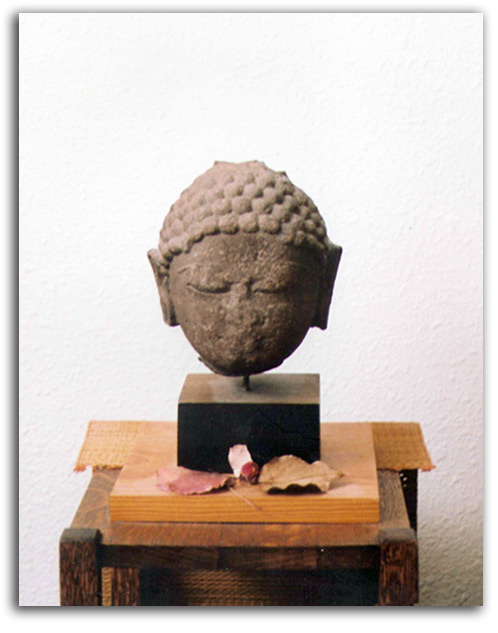
HEAD OF A TIRHANKARA (“Holy Man” or “Bridge Builder”). Jain tradition
Carved in southern India, c800-1000 CE. Stone
Collection: FLG
Ex. Collection: Rudi Rudrananda, New York
NOTE: A Tirthankara (or “Bride Builder” or “Ford Maker”) guides the faithful toward Nirvana. For centuries, these figures have been the primary objects of reverence in Jain temples. This deeply beautiful head has been at the center of my main altar most of my adult life. It was authenticated and dated by my friend Sherman Lee, America’s best-known authority in Asian art. I purchased this head in 1963 (when I first came to New York) from Rudi Rudrananda, one of the best Asian dealers in New York City. His place was right around the corner from my apartment in Greenwich Village. I spent many hours talking about sacred symbolism with Rudi, entranced by the art in his gallery. Most galleries have only a few great pieces. Almost every one of Rudi’s pieces radiated remarkable aesthetic power.
I later purchased from him three more of the most extraordinary works in my Asian collection: the stone Tang Buddha, the wooden Sung Kuan-Yin, and the astonishing landscape scroll ascribed to Mu Chi. (All three are illustrated in the CHINA section of ASIAN STUDIES.) I knew Rudi was a special person, but at the time I did not know how special. I was not surprised to learn that he later became a widely respected teacher of Kundalini Yoga. When I was student with little money, Rudi let me buy this small $100 head with payments of $10 a month. Only when I became a salaried curator was I able to afford larger Buddhist masterpieces from his New York and San Francisco galleries.
F. The Jain Tradition
Volume 3 – GANDHARA
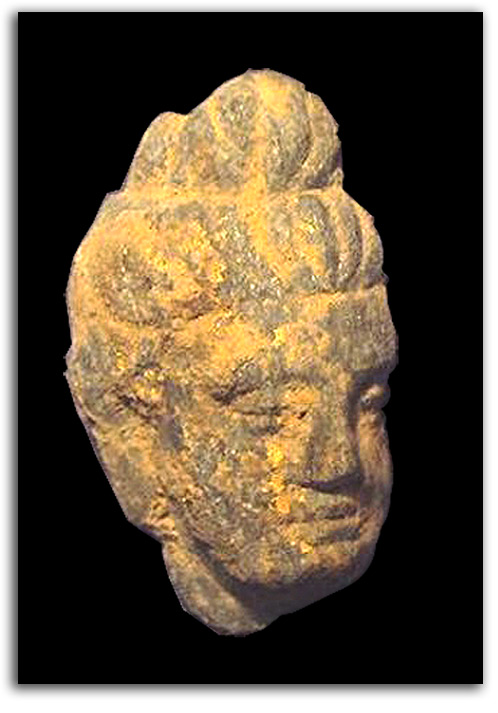
HEAD OF BUDDHA. Gandhara. c200 CE
Stone. Collection: IAD, 2011
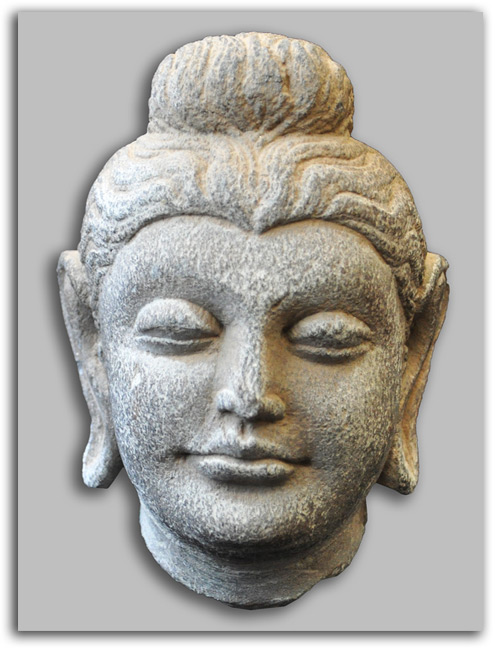
Head of Buddha, Gandhara, 2nd/4th century
Stone. Collection: FLG on loan to IAD
Published in THE HERITAGE OF AFGHANISTAN, 2011
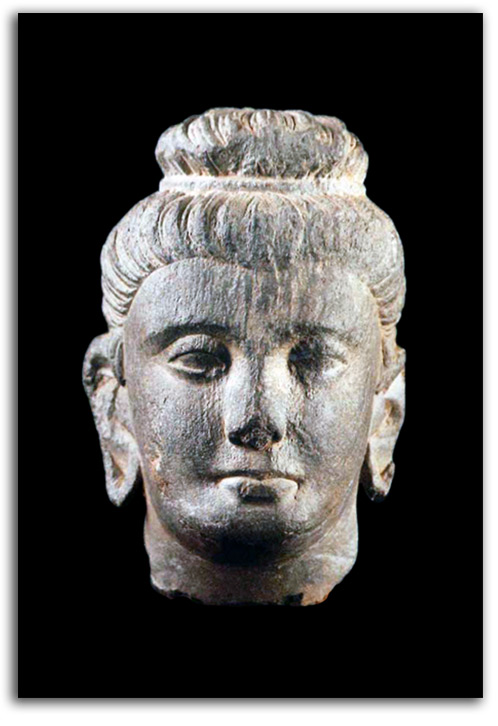
Buddha Head. Gandhara stone. 2nd/4th century
Collection: FLG on loan to IAD
Published in GLOBAL VISION: A SURVEY OF WORD ART, Part 1, 2006
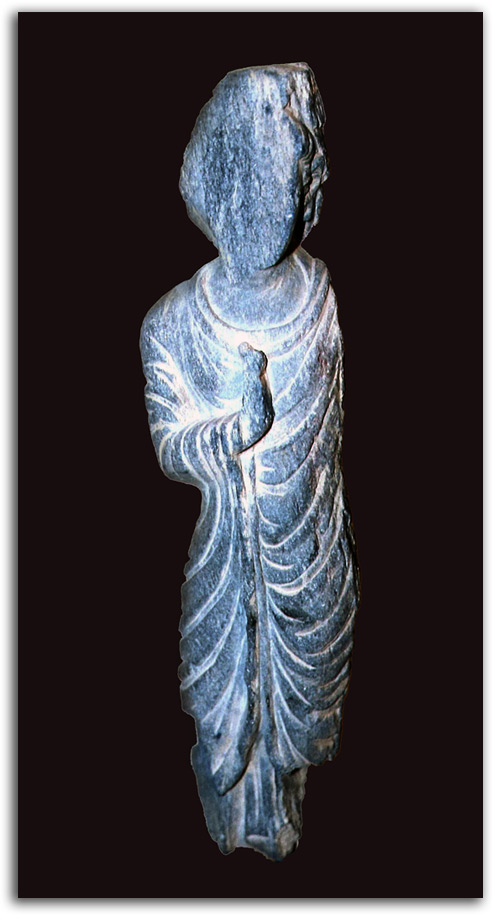
GANDHARA
Buddha Standing & Blessing
c2nd/3rd century
Collection: FLG
F. The Buddhas of Gandhara
Volume 4 – SOUTHEAST ASIA
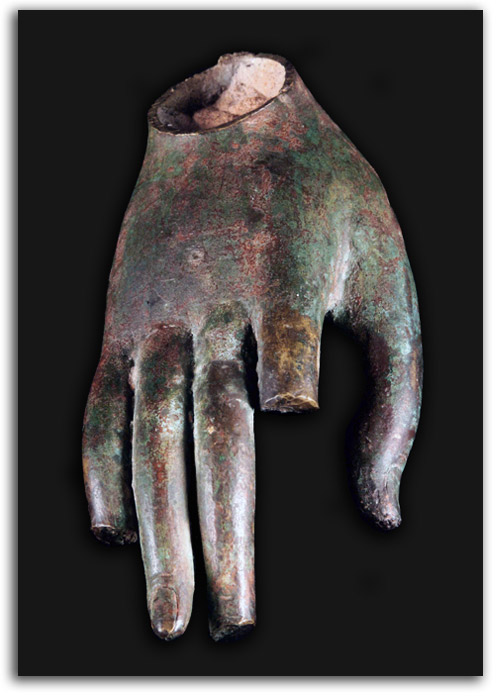
HAND OF BUDDHA
c.17th/18th century. bronze
Collection: FLG on loan to IAD
NOTE: The extraordinary grace of a classic Thai figure resides in every part, even in small portions such as this hand.
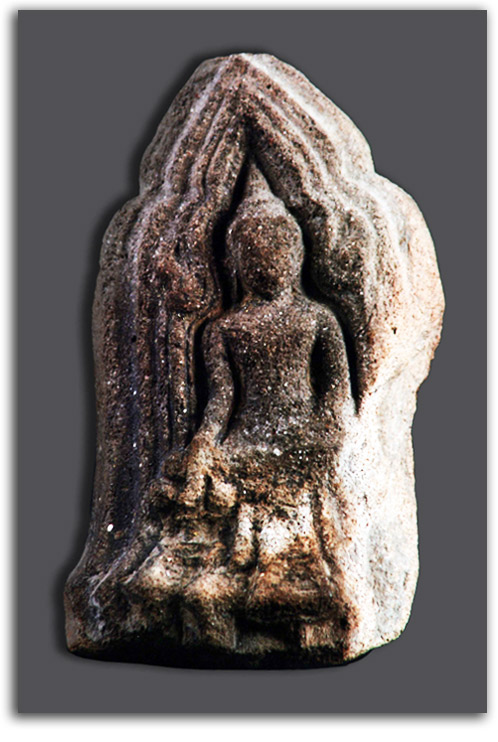
SEATED BUDDHA MEDITATING (Small Tile)
c.19th/20th century. terracotta tile
Collection: FLG on loan to IAD Gift of Robert C. Caples, 1966
NOTE: This small temple title is a fine example of how detailed the multi-layered symbolism of the full-body aura often is in Asian sacred art. The symbolism of the full body aura is quite rare in the sacred art of the West which usually represents only the strong portion of the aura (the halo) that envelops the head. Exceptions to this rule are scenes of The Last Judgement and the Transfiguration.
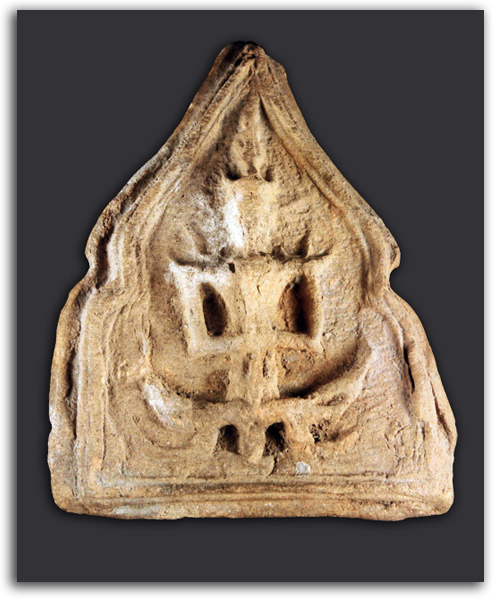
SEATED BUDDHA MEDITATING (Large Tile)
c.19th/20th century. terracotta tile
Collection: FLG on loan to IAD Gift of Robert C. Caples, 1967
NOTE: This large temple tile is a dynamic vision of a deep meditative state. The general form is the shape of a flame. Flames radiate from various parts of the aura around the body. The subtle flames of this energy field are not visible to most people, but are said to be quite visible to advanced practitioners of meditation.
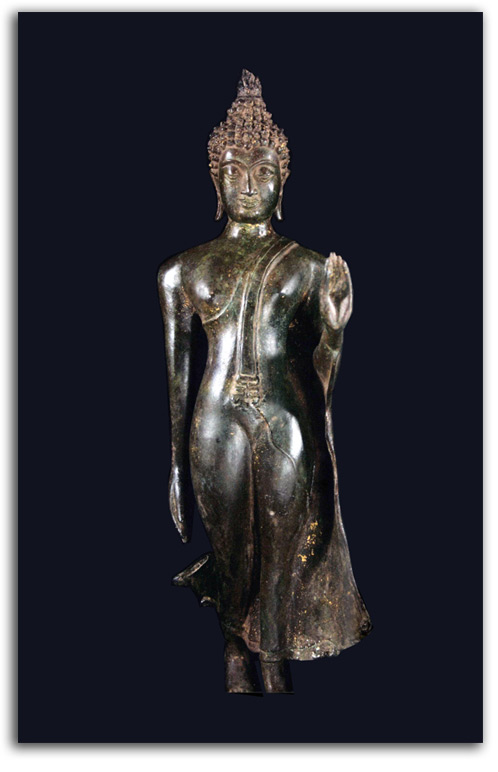
Walking Buddha. Thailand. Sukhothai tradition. 15th/16th century
Bronze. Collection: CSUEB. Gift of IAD
Published in GLOBAL VISION: A SURVEY OF WORLD ART, Part 1, 2006
NOTE: An early Thai culture called Dvaravati who practiced Buddhism was forming in the 7th century possibly under the influence of the great Indian center of Nalanda. Their art shows influence from Gupta India. Khmer influence started in the 10th century and became dominant in the 11th and 12th centuries. After freeing themselves from the Khmer the Sukhothai style began to develop in the 13th century and continued through the 14th and15th centuries and has been replicated ever since. In this civilization Hindu deities were respected but Buddha was always primary. The great Sukhothai invention was the freestanding walking Buddha. Walking meditation is an important part of Theravada Buddhism. These Buddhas are more graceful than any ordinary human being could ever be. The androgynous form is a teaching in itself the integration of opposites. The lines are extremely fluid. The tiny fingertips transition from the material world to the invisible world. The body seems to be swaying under the gentle pressure of a sweet wind. ~ FLG
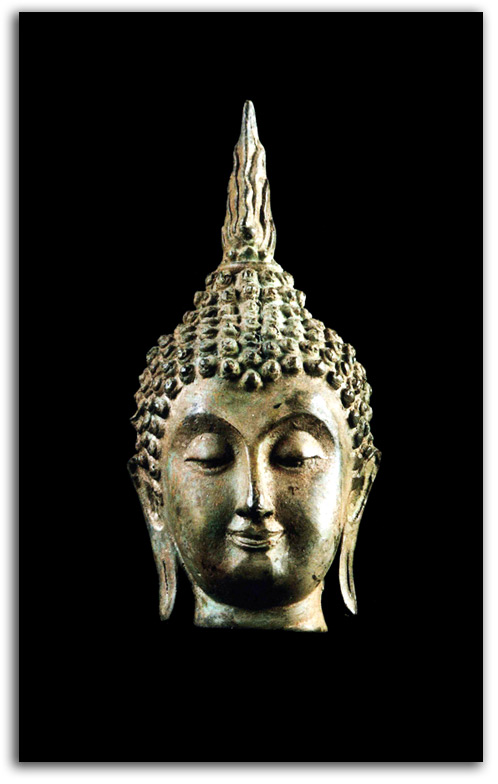
Head of Buddha with a Flame from the Crown Chakra. Thailand. Sukothai tradition. 17th/18th century
Bronze. Collection: FLG
Gift of Martha Lanier Graham
Published in GLOBAL VISION: A SURVEY OF WORLD ART, Part 1, 2006
NOTE: The flame rising from the top of the head represents the transcendent light of true wisdom. Sometimes called the Lotus Blossom Flame this dynamic ushnisha was continued in Thai art for centuries. The traditional teaching is that the rise to Buddha-Consciousness involves raising awareness from its lowest levels to its highest levels. The energy-centers or gateways known as ‘chakras’ are levels in the ladder of awareness that must be climbed. The number of levels varies from one meditative tradition to another but 7 is a common number in meditative traditions world-wide. In this way of counting the so-called Third Eye at the center of the forehead is the 6th chakra marking a very high level of spiritual understanding. It usually is marked by a dot called an urna. The level above that- the ‘7th Heaven’ where Buddha-Consciousness unfolds is said to be located just above the top of the head. If the cranial protuberance on the top of a painted or sculpted Buddha is simply a rounded shape that shape has come to be called a ushnisha. The urna and the ushnishna are common in Buddhist art from India to China. But the “flaming chakra” is particular to the art of Thailand. It is a beautiful way to symbolize not only ‘Golden Consciousness’ in general and in particular to visualize in a material way the dynamic luminous non-material energy that is said to connect the physical body with the non-physical body just above the head.
G. The Buddhas of Thailand
NOTE: Sukothai, the old capital of Thailand, was founded in the 13th century. The name means “Dawn of Happiness.” ~ GKS
Volume 5 – TIBET
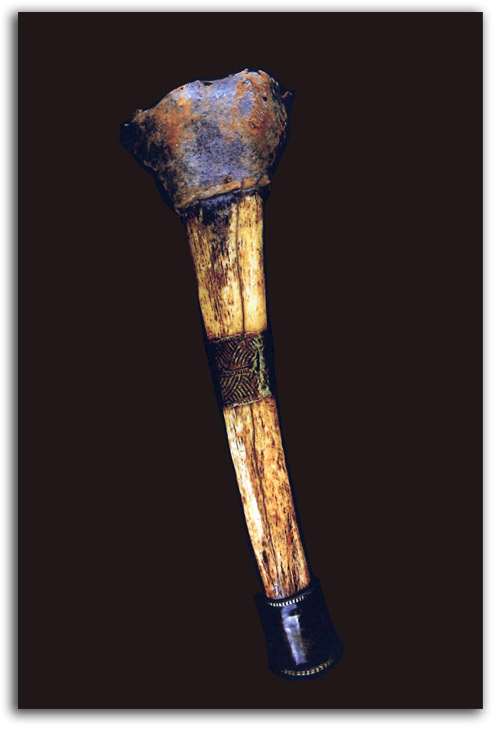
KLANGLING (Trumpet)
Thigh bone of a Lama & leather & copper
Collection: CSUEB. Gift of IAD
Ex. Collection: The Family of the Dalai Lama
Published in GLOBAL VISION, Part 1, 2006
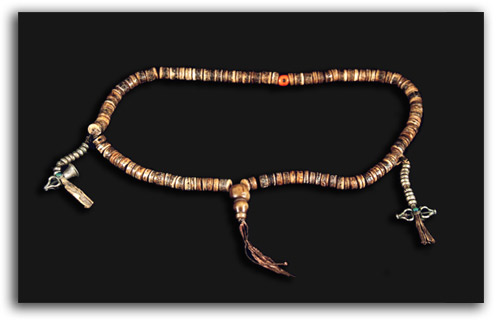
MALA (Rosary)
Scull bones of a Lama & Silver dorje and bell & a red stupa bead
Collection: FLG
Gift of Lama Govinda, 1975
Published in GLOBAL VISION, Part 1, 2006
NOTE: Mala in Sanskrit means garland or necklace. The mala is a widespread tool for meditation in many Buddhist and Hindu societies. In addition to non-theistic meditation it is used in prayerful ways which are similar to the uses of the Christian rosary. The Tibetan mala has 108 beads. Malas are made in many materials- often seeds. This mala also has silver miniatures of the ‘primal pair’; the dorje and the bell; and is said to have been made from the most powerful of possible materials; the bones of a Lama. That these are the bones of a Lama was confirmed by Lama Anagarika Govinda. From the collection of Lama Anagarika Govinda 1975.
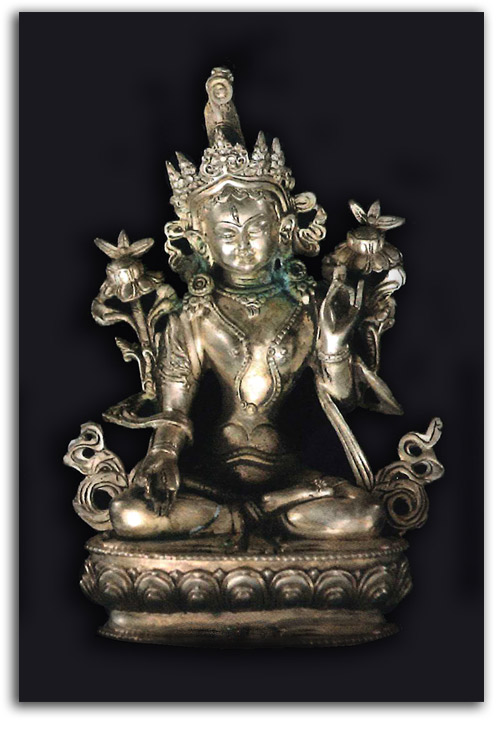
WHITE TARA with Lotus Flowers
Silvered brass
Collection: CSUEB. Gift of IAD
Published in GLOBAL VISION, Part 1, 2006
NOTE: Tara- partner of Chenrezi- is the Goddess or Bodhisattva of Mercy and Compassion when regarded as a deity or Bodhisattva of Compassion when regarded in a non-theistic manner. She has many forms- the best known of which are White Tara and Green Tara. Green Tara is younger and represents dynamic energy itself. White Tara has seven eyes to see all suffering. She like Chenrezi responds to all who call. The Lotus is a symbol of wisdom and or spiritual purity. Her open palm is a boon-granting gesture while the three upward fingers of the other hand represent the three Jewels: Buddha- Dharma (the teachings Sanga (the community). The beatific smile on the faces of such statues is the face of true serenity which is the promise of the Buddhist path.
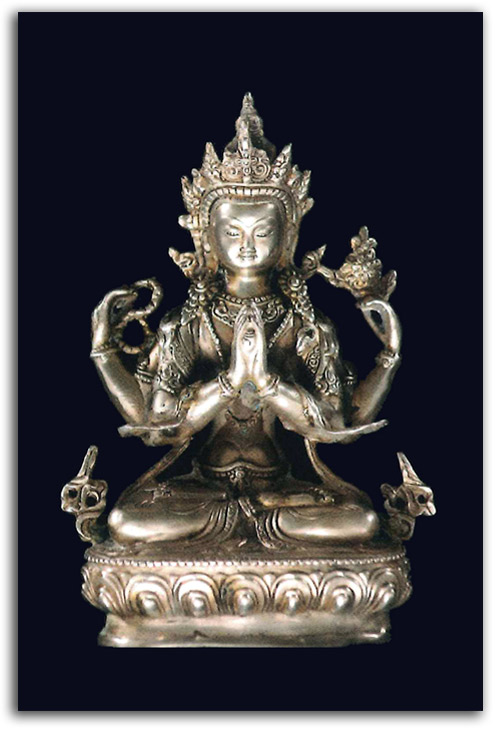
CHENREZI/AVALOKITESHVARA with Four Arms
silvered brass
Collection: CSUEB. Gift of IAD
Published in GLOBAL VISION, Part 1, 2006
NOTE: Avalokiteshvara (Chenrezi in Tibetan) is the Lord of Compassion and primary Patron Deity of Tibet when regarded as a deity. He is also regarded as a Bodhisattva. That term has several meanings. At first it referred to earlier incarnations of the Buddha but now means one who has reached a certain degree of Enlightenment and could move on to Nirvana but has chosen to remain on earth to help everyone attain Buddhahood. The term also means an embodied aspect of Buddhahood. Chenrezi manifests that aspect of Buddha which usually is called compassion. As Buddha is the Lord of Infinite Light and Unqualified Love- Chenrezi is the Lord of Qualified Light- the Light of the Sun and Moon- the Light of Space and Time- in other words love in a relationship. The purpose of his multiple arms (and sometimes multiple heads) is to reach all who suffer. It is said that his partner Tara was born from a tear of compassion that fell from his eye.
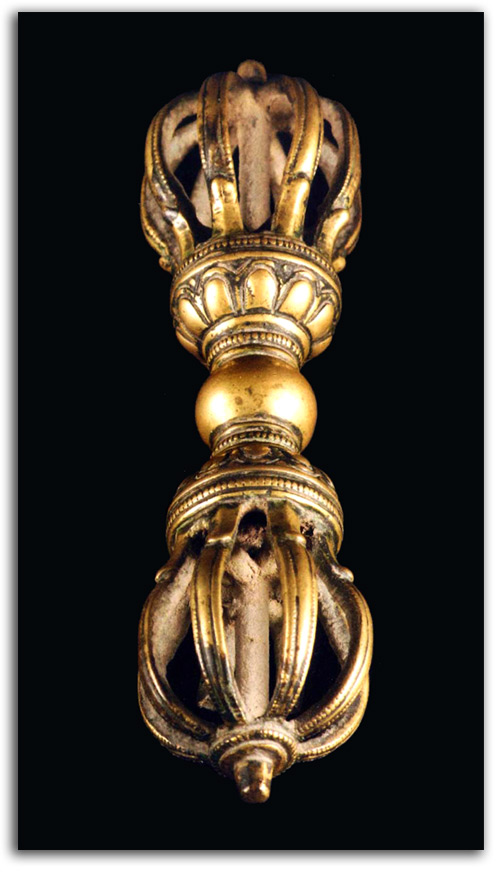
DORJE (Thunderboldt)
brass
Collection: FLG
Ex Collection: Family of the Dalai Lama
Published in GLOBAL VISION, Part 1, 2006
B. The Dorje of Tibet: Reflections on Nonduality
NOTE: Dorje/Vajra usually is translated as ‘thunderbolt.’ In Hinduism it is the weapon of Indra just as is the thunderbolt hurled by Zeus- the King of the Gods in Greek mythology- who uses it to show his aggressive power. But in Tibet the vajra (dorje in Tibetan) translates as “diamond” or “adamantine.” It symbolizes the higher- peaceful truth of that still center of purified consciousness from which all dualities spring- the indestructible diamond-like consciousness of Buddhahood. From the collection of the Dalai Lama’s brother 1974.
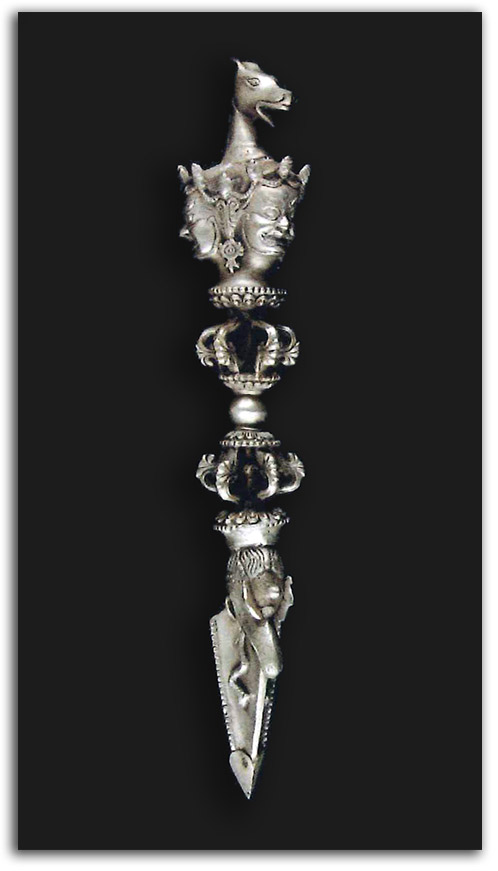
PHURBA (Dagger to stab Negative Energy)
silvered brass
Collection: IAD. Gift of IAD
Published in GLOBAL VISION, Part 1, 2006
NOTE: A phurba is a spiritual dagger that is used to stab to death negative energy. Ganesha is worshipped in both Hinduism and Buddhism. In Hinduism he is the son of Shiva and Parvati and has the head of an elephant. He is the God of Wisdom who removes all obstacles. He may well be the most widely loved deity in all of India. Only a few of the older Hindu deities became Bodhisattvas in Tibetan Buddhism. Ganesha is one of these. Hayagriva is a wrathful manifestation of Chenrezi (Avalokiteshvara).
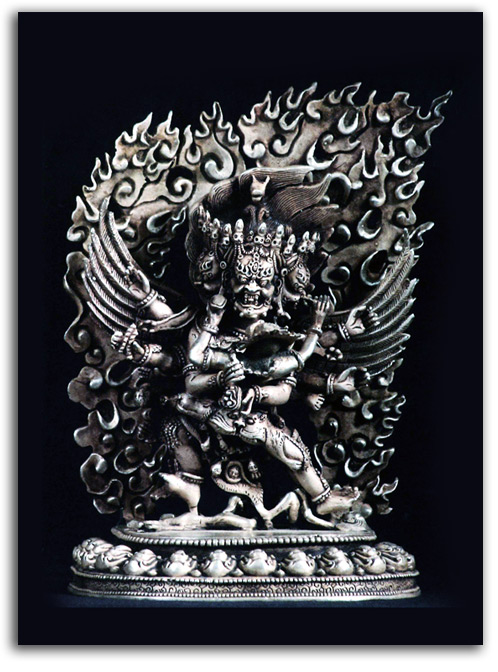
YAB-YUM (Farther-Mother of the Universe)
silvered brass
Collection: FLG
Published in GLOBAL VISION, Part 1, 2006
A.The Yab-Yum of Tibet: Reflections on Nonduality
NOTE: Some Yab-Yum visualizations are peaceful; some are wrathful. These combined deities appear to devotees in whichever form will open those individuals to Truth. This wrathful Yab-Yum is the 1000-armed Yamantaka Diamond Terrifier and Destroyer of Death. He does not make death disappear but helps us conquer our fear of death. In other words he eats our fearful idea of death. He is a manifestation of Manjushri and a Protector of the Dharma (teachings).
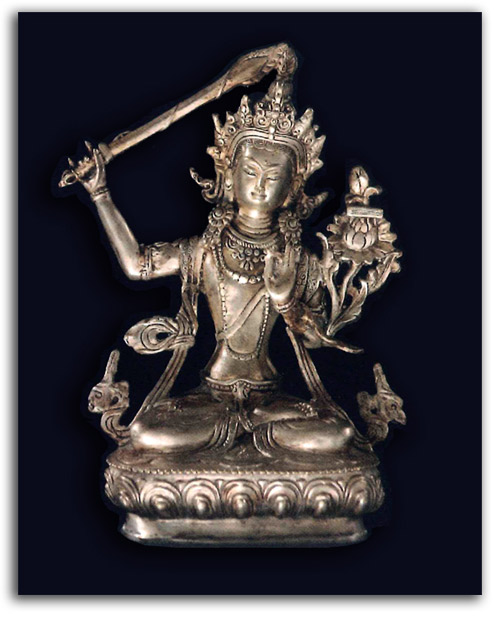
MANJUSHRI with the Flaming Sword of Wisdom
silvered brass
Collection: CSUEB. Gift of IAD
Published in GLOBAL VISION, Part 1, 2006
NOTE: Manjushri is a Bodhisattva who manifests the wisdom aspect of Buddha. He usually holds the Flaming Sword of Wisdom which cuts through the ignorance that keeps us from Enlightenment.
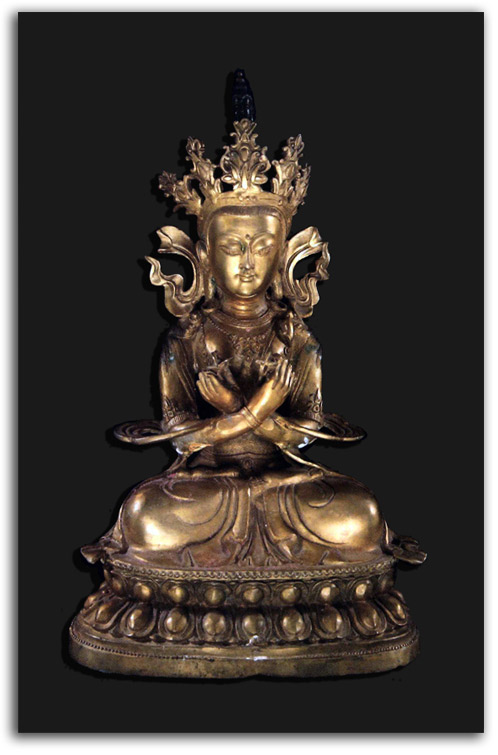
VAJRASATTVA (The Ultimate Buddha) with Dorje & Bell
gilt brass
Collection: CSUEB. Gift of IAD
Published in GLOBAL VISION, Part 1, 2006
NOTE: Tibetan sacred art includes some of the most subtle and complex ideas of any spiritual tradition. Partly because Tibetan Buddhism has incorporated many shamanic features from the native Bon tradition of Tibet its visual art is extremely dynamic. In this tradition all its beings or deities are regarded as manifestations of Buddha as indeed are all things. “Buddha is mind. Mind is Buddha.” For religious Buddhist who believe in gods and goddesses statues represent deities who are worshipped. For philosophical Buddhists who respect gods and goddesses but do not worship them statues represent aspects of the mind or particular energies on which is it useful to meditate. In this group of sacred objects the arrangement is intended to suggest the way Tibetan Buddhists visualize different aspects of Buddha-hood. This image is of Vajrasattva (‘Diamond Being’) and personifies absolute Buddhahood. Vajrasattva holds a bell (dribu in Tibetan) and a vajra (dorje in Tibetan) which may be translated as “Diamond Scepter.” They are used together in rituals that symbolize the total harmony of compassion and skillful means which together form the nature of Buddhahood.
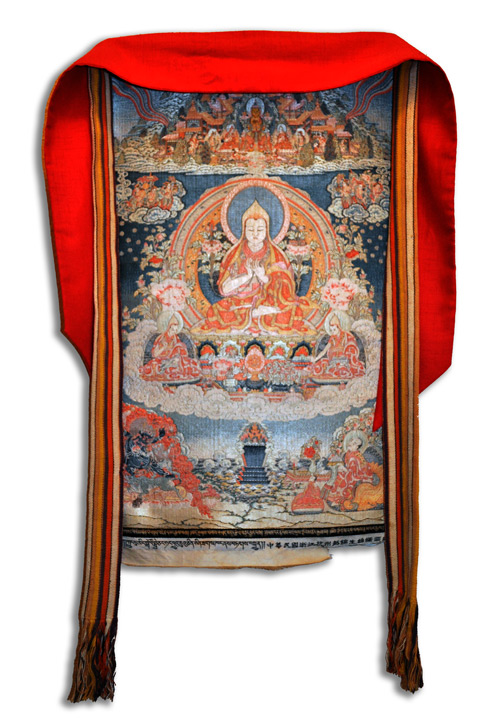
GURU RINPOCHE THANKA
Silk, 1904
Made for the Empress Dowager of China
by Tibetan Monks in Peking
Gift of The Venerable Chogyam Trungpa Rinpoche, 1976
Collection: FLG
Click here for closer view in PDF format
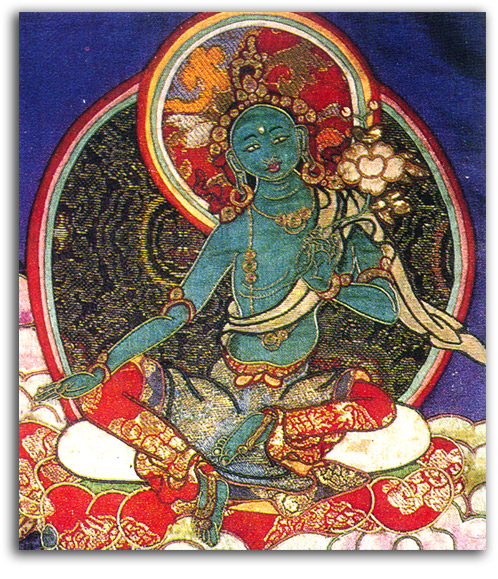
GREEN TARA TANGKA (detail)
fabric
Collection: FLG
C. The Lion’s Roar: Tibetan Thangkas from the Sakas
Volume 6 – JAPAN
Calligraphy
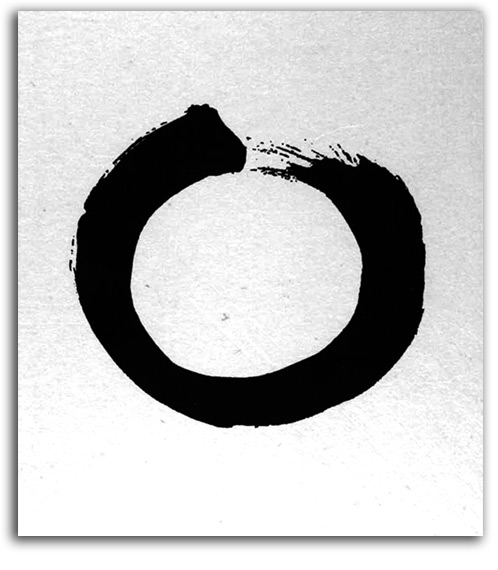
Enso brushed by Suzuki roshi, 1966
Lithograph. Collection: FLG & GKS on loan to IAD
Gift of David Chadwick of Zen Center, San Francisco
Published in GLOBAL VISION: A SURVEY OF WORLD ART, Part 1, 2006
A. The Legendary Enso of Suziki roshi:
An Historical Note on the World’s Best Known Zen Circle
NOTE: The enso or Zen circle has been a major symbol in Zen art for centuries. It is made with a single brushstroke. It can be said to symbolize both everything and nothing. To be aware of both at once is a central goal of Zen. This particular enso is probably the best-known enso in the world. It has been published millions of times. It was made by Suzuki Roshi in 1966 to be made into an open edition lithograph the same year. It was made to be sold for the benefit of San Francisco’s Zen Center founded by Suzuki Roshi. It was the first Zen monastery in the U.S. Now there are Zen Centers in most major cities in the U.S. This impression is from the first edition.
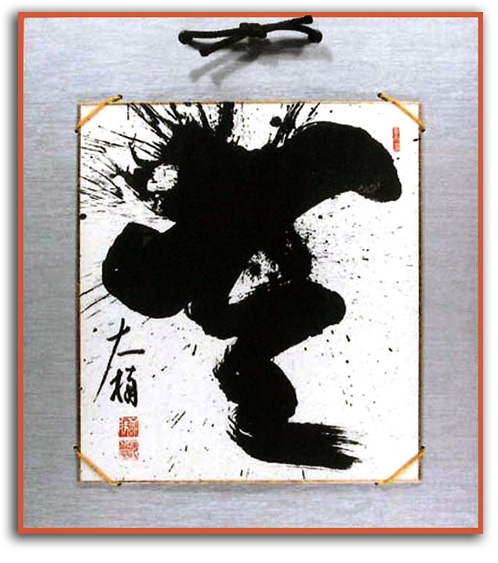
Mu (Nothingness) brushed by Bunsho roshi, 20th century (signed)
Calligraphy. Collection: FLG on loan to IAD
Published in GLOBAL VISION: A SURVEY OF WORLD ART, Part 1, 2006
NOTE: Bunsho Roshi was one of the most respected Zen calligraphers of the 20th century. This is the character ‘mu’ which in a Zen context means nothingness. Few are aware of nothingness until after years of meditation clears the mind of the constant rationalizing need to force experience into abstract concepts. Only a still mind knows nothingness. In Western metaphysics it is some kind of being that is regarded as absolute. In Asian metaphysics it is nothingness that is regarded as absolute. This kind of spontaneous brushwork was an important influence on Abstract Expressionists such as de Kooning and Motherwell.
B. Bunsho roshi, A Modern Zen Master
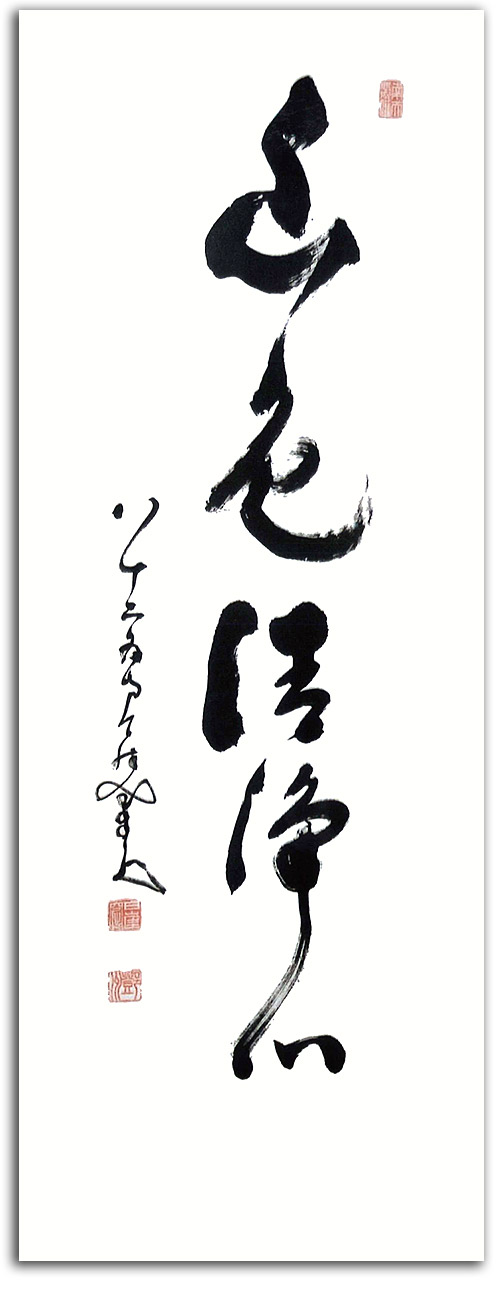
Mountain Colors ~ Buddha Mind brushed by Nantenbo roshi, 1920s (signed)
Calligraphy scroll. Collection: FLG & GKS
Ex. Collection: Professor John Stevens & Shambhala Zen Gallery
C. Nantenbo roshi, A Modern Zen Master
Picture Scrolls
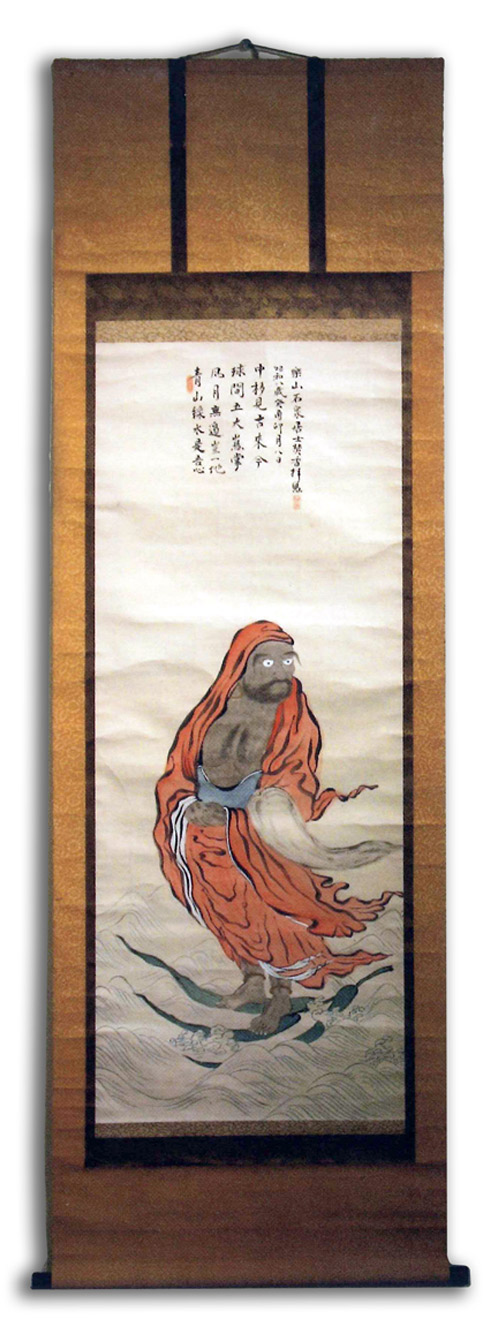
Daruma on the Water. c. 1800-1999
Paint: Paper Painting Zen Japan. IAD
NOTE: Daruma is the Japanese name of the Buddhist teacher known in China as Bodhidharma. He is considered the 28th Patriarch in a direct line from the historical Buddha. He is thought to have brought a special form of Buddhism to China in the 6th century a form known as Chan in China and later as Zen in Japan. It is said that he arrived by sea rather than by land.
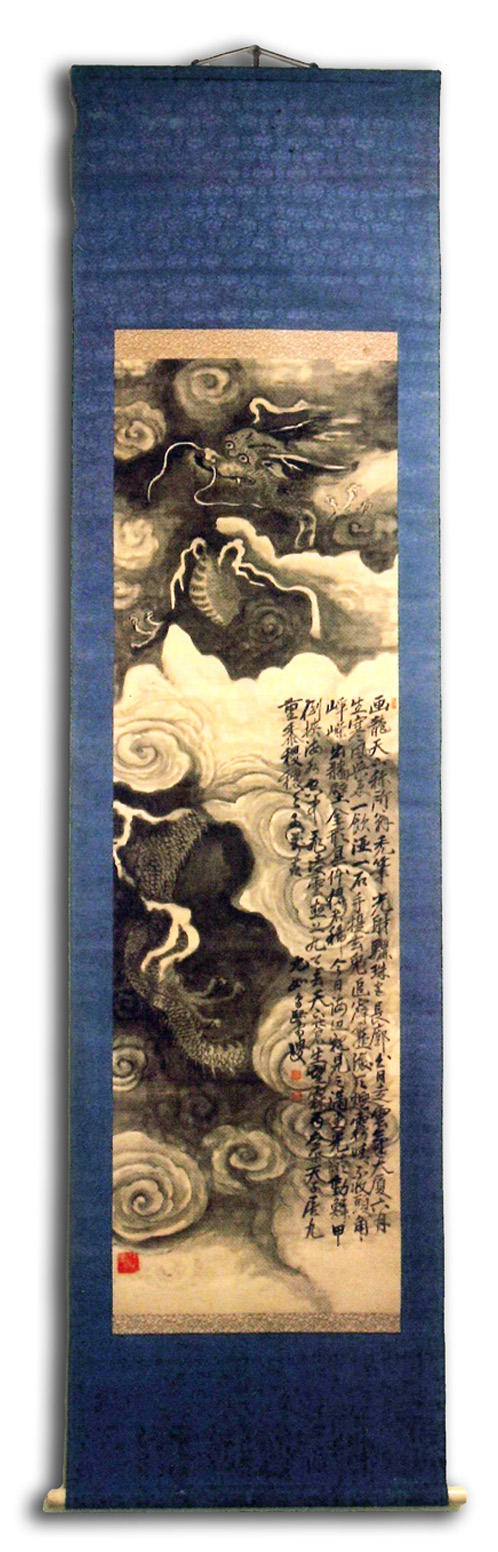
Dragon in the Clouds. c. 1800-1999
Paint: Paper Painting Edo Japan. IAD
NOTE: No image in Japan or China activates the mythic mind more than the Dragon. Its magical spirit has been articulated in many media but some of the most enduring images have been painted on scrolls such as this one.
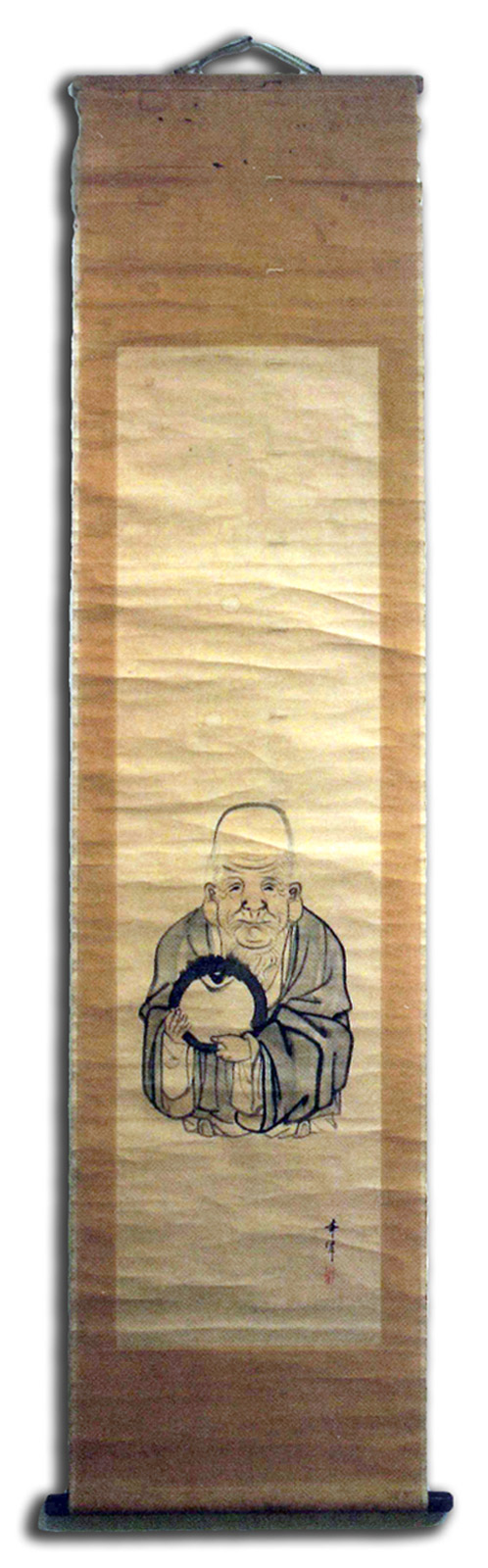
Zen Priest with a Flaming Enso (Zen Circle). c. 1800-1999
Paint: Paper Painting Zen Japan. IAD
NOTE: The enso is a well-known Zen symbol. It is an almost complete circle rendered with a single brushstroke. The white circle worn by Zen monks on their robes is a related symbol. The form of this image has many levels of symbolism including the primal relationship between spirit and matter thingness and nothingness etc. The mode of rendering is itself symbolic of the goal of the Zen path: the fearless- spontaneous fluidity of an Enlightened mind. Young monks might spend many years learning (or un-learning) enough to be spontaneous enough to make an enso which reveals that one’s mind has become totally spontaneous. Then the monk may be qualified to leave the monastery and go out to be of selfless service to the world. This artist shows us the enso in flames. This burning metaphor probably refers to the flaming truth (Dharma) that burns away ego and to the teaching that attachment to all symbols must be burned away even symbols of Buddha. Hence the dramatic Zen saying: ‘If you see Buddha kill him.’
D. Zen ~ What Is It All About?
E. Zen Calligraphy ~ A Brief History
F. A Short History of Zen & the Art of Zen
G. ZEN & WESTERN ART: ECHOES OF BUDDHISM IN WESTERN PAINTINGS & PRINTS (the brochure)
H. ZEN & WESTERN ART: ECHOES OF BUDDHISM IN WESTERN PAINTINGS & PRINTS (the book – in progress)
I. The Samurai Sword awarded to Major Floyd Graham,
Military Mayor of Tokyo, 1946
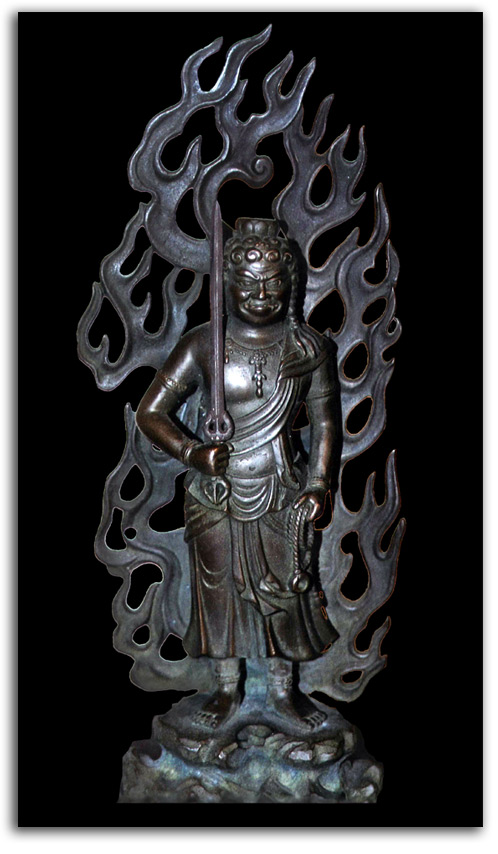
Fudo Myoo with the Sword of Wisdom & a Flaming Aura
(King of Luminous Knowledge, Defender of Divine Truth,
Guardian of Shamans, & Giver of Tranquility)
19th century. Bronze. Collection: IAD, 2011
J. BUDDHIST SCULPTURE
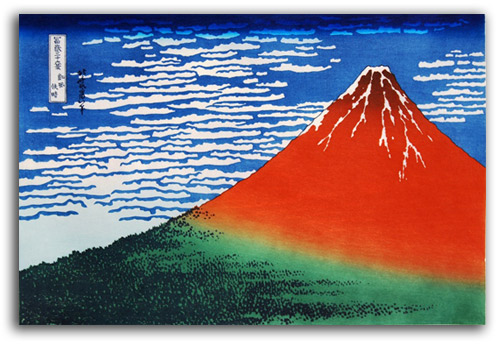
HOKUSAI
Red Fuji (cut 1827)
woodblock print
Old edition, 19th century
Collection: FLG
Click here for closer view of above image in PDF format
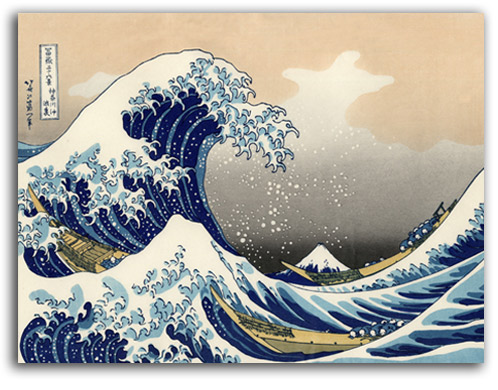
HOKUSAI
The Great Wave… Cut c1827
woodblock print
modern edition, 20th century
Collection: IAD
NOTE: This probably is the most famous image in Japanese art.
Click here for closer view of above image in PDF format
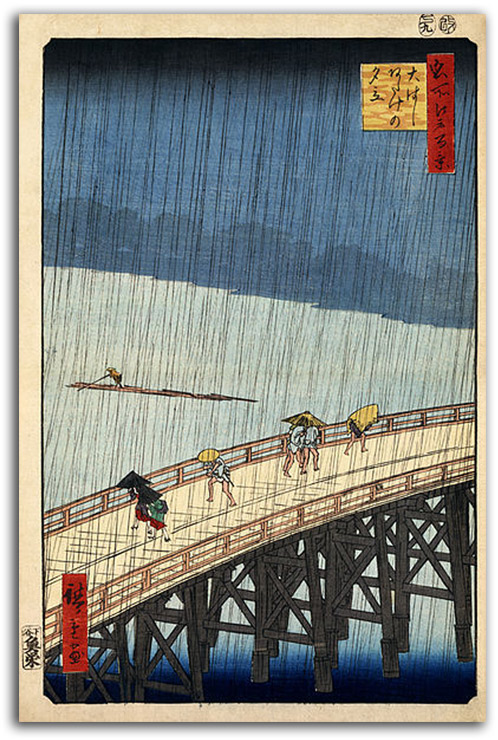
HIROSHIGE
Sudden Shower. Cut 1857
woodblock print from 100 FAMOUS VIEWS OF EDO, 1857. Old edition
Old edition, 19th century
Collection: FLG
Click here for closer view of above image in PDF format
K. JAPANESE PRINTS
Volume 7 – ISLAM
A.Burning Light: Persian Paintings of Muhammad’s Night Journey
B.Buraq: She who raised Muhammad to Heaven
C.Islamic National Flags: Notes on Sources
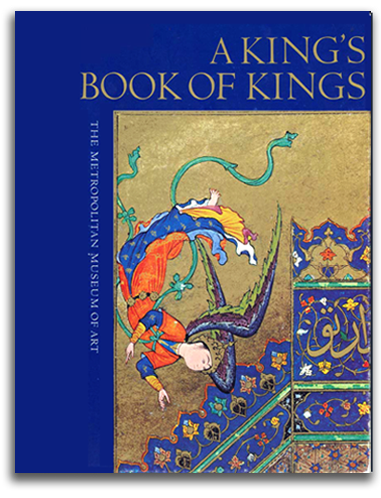
A KING’S BOOK OF KINGS (SHAH NAMEH). 16th century (facsimile edition)
Collection: FLG on loan to IAD
Published by the Metropolitan Museum of Art, New York, 1972
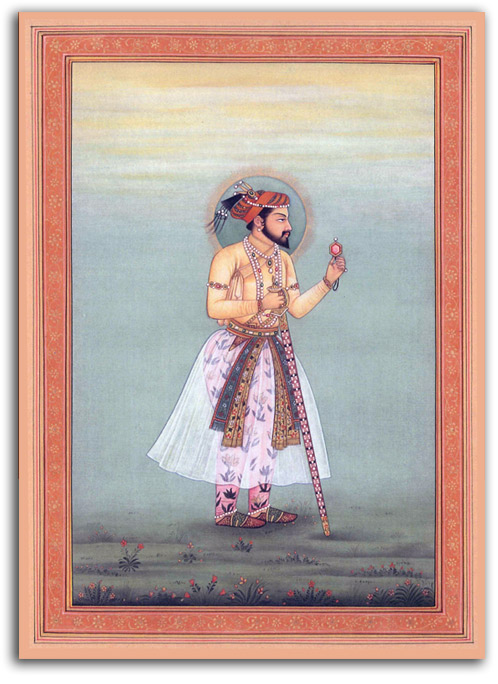
Shah Jahan, Emperor of India and builder of the Taj Mahal
Early 17th century. watercolor
Collection: CSUEB. Gift of IAD
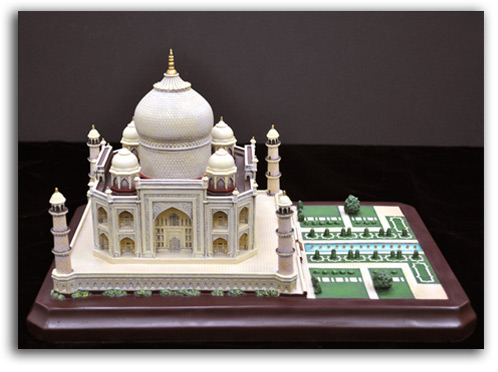
TAJ MAHAL
c.1632-53 (miniature scale model)
“white marble”
Collection: IAD, 2011
NOTE: The Taj Mahal is the most famous example of Muslim architecture in India, and is widely regarded as one of the most beautiful buildings in the world. Located in Agra, near Delhi, and made of white marble, it was built by the Mughal emperor Shah Jahan in memory of his beloved wife Mumtaz Mahal. The Mughals were Islamic Turks whose powerful armies had gradually conquered Persia and northern India. They had a special love for Persian painting and and architecture. The design of the Taj expands on princely Persian prototypes. Thousands of artisans worked on the construction. Millions of people visit every year.
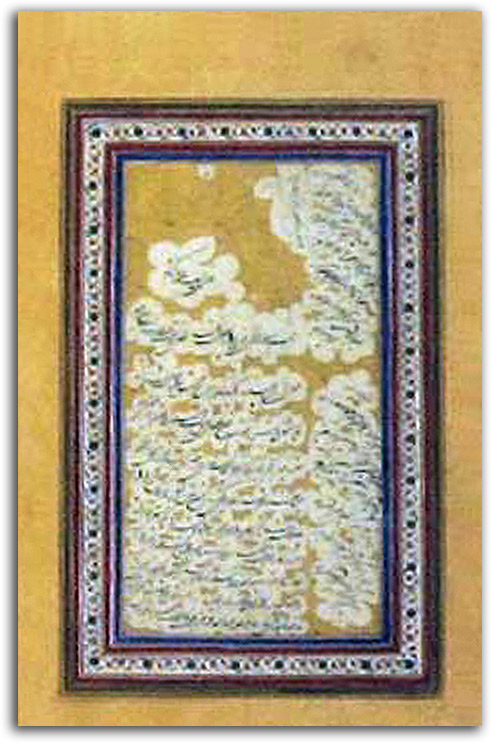
Calligraphy. c. 1800-1899
Paper: Ink Brushwork Phahlavi Iran. IAD
NOTE: Arabic script is widely regarded as one of the most beautiful in the world. Persian variations are highly celebrated for their rhythmic fluidity. This book page was painted in the 19th century using a traditional style.
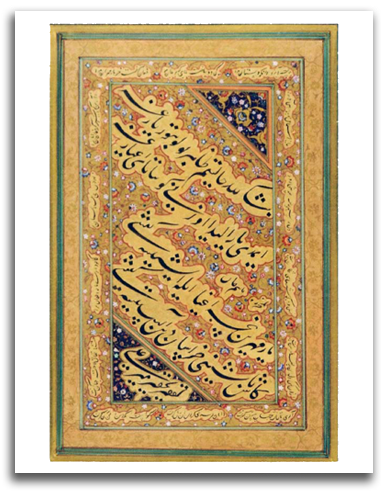
ISLAMIC BOOK PAGE. 16th century (replica)
Commissioned by FLG
Collection: FLG on loan to IAD
D.The Heritage of Afghanistan
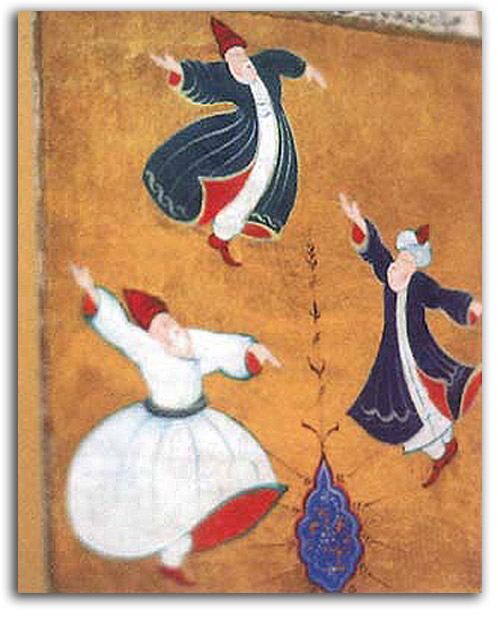
Three Sufi Dancers. c. 1800-1899
Paper: Watercolor: Gold Painting Turkish Turkey. IAD
NOTE: The Sufi tradition is an esoteric tradition within Islam. They are famous for their ‘dances’ which actually are moving meditations. As Islam moved east through central Asia and India; the Sufi played a major role in converting people to Islam.
Volume 8 – PAN-ASIAN
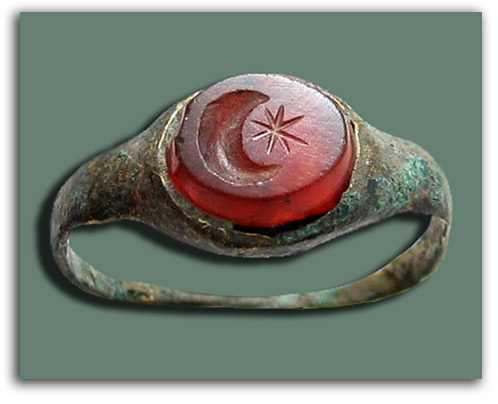
A.Psycho-cosmic Harmony: Sun-Moon Symbolism in Asian Sacred Art
Collection: FLG
[edited 2010]